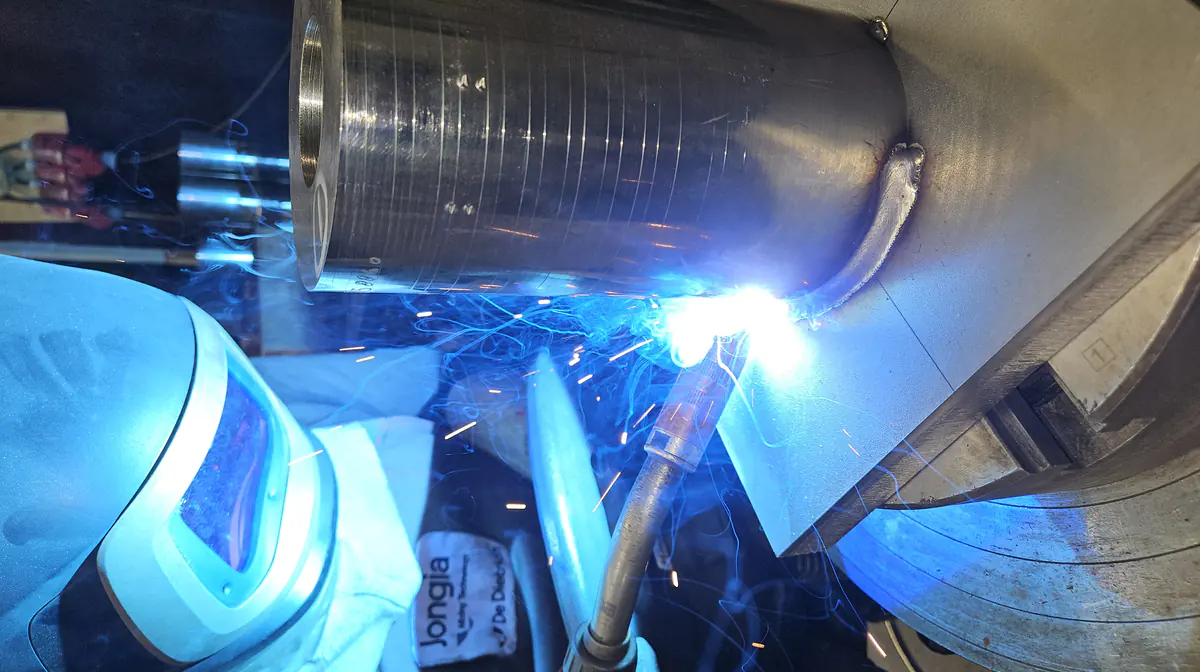
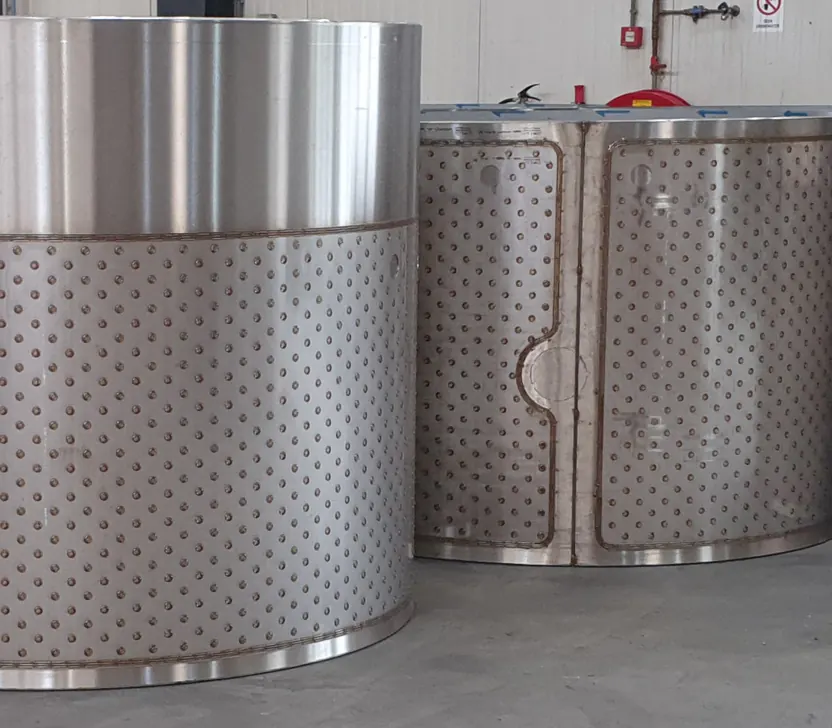
Machine building
In machine building, welding is rarely the end product but almost always the critical step. A frame that distorts costs hours of alignment; a weld that fails after six months costs a customer downtime. At the same time no standard forces your hand: the Machinery Directive prescribes no welding standard, so the manufacturer decides which quality level is needed.
- Establishing weld quality level per component
- Designing welded joints for fatigue
- Dimensional stability and distortion control
- ISO 3834 assurance without needless paperwork
That freedom is precisely the problem. DEHAAS helps machine builders choose a justified quality level per component, control distortion and keep the quality system as light as is responsible.
Choosing a justified quality level
Having everything made to quality level B of ISO 5817 is expensive and usually unnecessary. Putting everything at D is cheap until something fails. The right approach is to assess each joint on its loading: static or cyclic, the consequences of failure and accessibility for inspection.
That usually produces a mixed picture: critical, cyclically loaded joints at level B with NDT, load bearing but statically loaded joints at C, and non structural attachments at D with visual inspection only. See selecting the weld quality level.
Fatigue is the real enemy
Machines rotate, vibrate and cycle. Under fluctuating load it is not the strength of the weld metal that governs but the shape of the weld toe. A sharp toe with a small transition radius is a notch, and that is where the crack starts, even in an otherwise flawless weld.
The gain therefore lies in design and post-treatment: full penetration instead of fillet welds at critical locations, moving attachments out of stress concentrations, and where needed treating the weld toe by grinding or peening. See fatigue of welded joints.
Distortion and dimensional stability
On thin walled frames and machined faces, shrinkage is the biggest cost driver. Every weld pulls, and the sum of all shrinkage decides whether a frame still falls within tolerance or has to be reworked.
Control starts with welding sequence and fixturing, not with straightening afterwards. A considered sequence, balanced welding, minimum weld metal and sensible clamping often save more than the best straightening work. See controlling weld distortion and planning the welding sequence.
Qualifications that cover the range
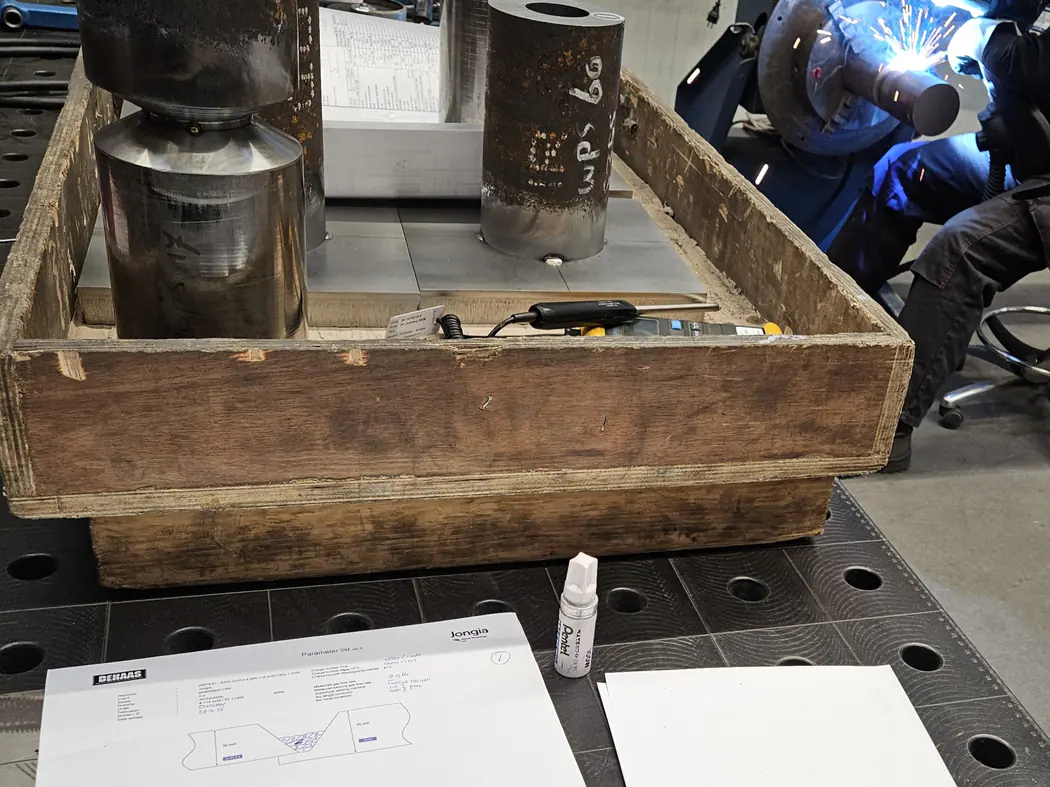
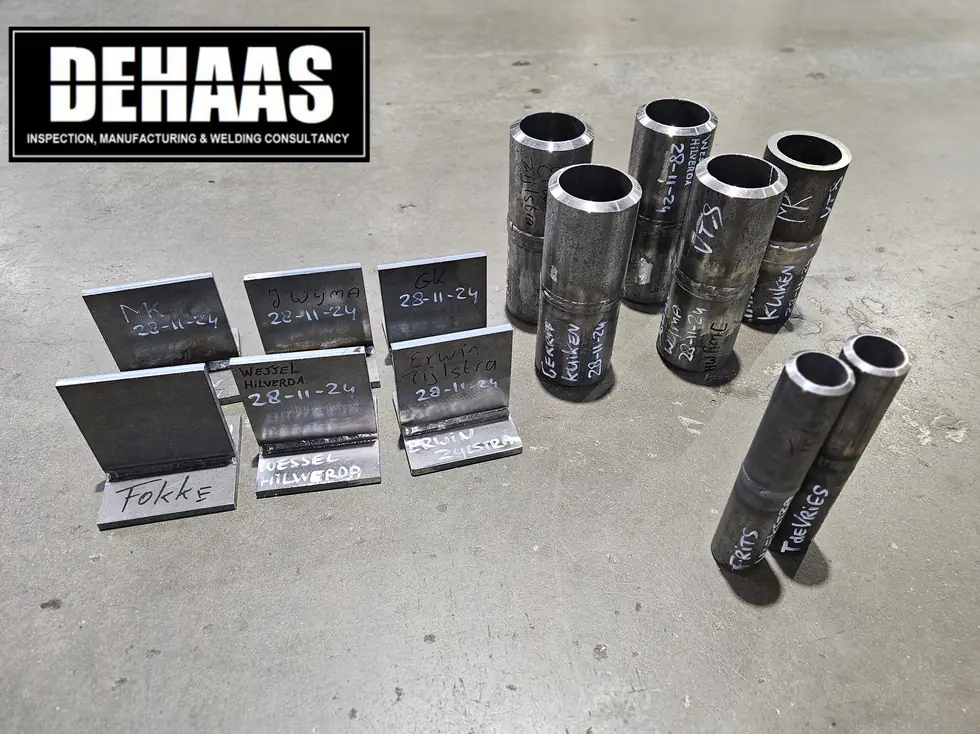
Machine builders often weld a wide range: from 3 mm plate to 25 mm, from structural steel to stainless and aluminium. A set of WPQRs covering all of that is, with intelligently chosen coupons, far smaller than commonly assumed, because the qualification range of one coupon can be wide.
If you supply customers requiring ISO 3834-2 or EN 1090, the step to a formal system is small once the procedure book is in order. DEHAAS sets that up and keeps it current. See ISO 3834 support.
Frequently asked questions
The Machinery Directive prescribes none. In practice ISO 5817 is used for quality levels and ISO 3834 for quality assurance. If you supply a customer with their own requirements, their specification governs. Record the choice in writing, otherwise it becomes a dispute after a failure.
Only if a customer or standard requires it. For many machine builders a demonstrably working welding system without certification is sufficient. Once you supply load bearing steel structures covered by EN 1090, it becomes mandatory as part of the FPC system.
By designing the welding sequence rather than letting it happen: balanced welding, in stages, with sufficient tacks and solid fixturing. Also, minimum weld metal: a fillet two millimetres oversized gives considerably more shrinkage and costs welding time as well.
Not legally, unless a standard or customer requires it. But qualification to ISO 9606-1 is the only objective measure of skill, and in a liability claim it is the difference between demonstrable diligence and an assumption. See welder qualification.
More from the knowledge centre
Have a welding or QA/QC question?
Ask the DEHAAS Welding & Quality Assistant, have your case reviewed by a specialist, or call us directly.