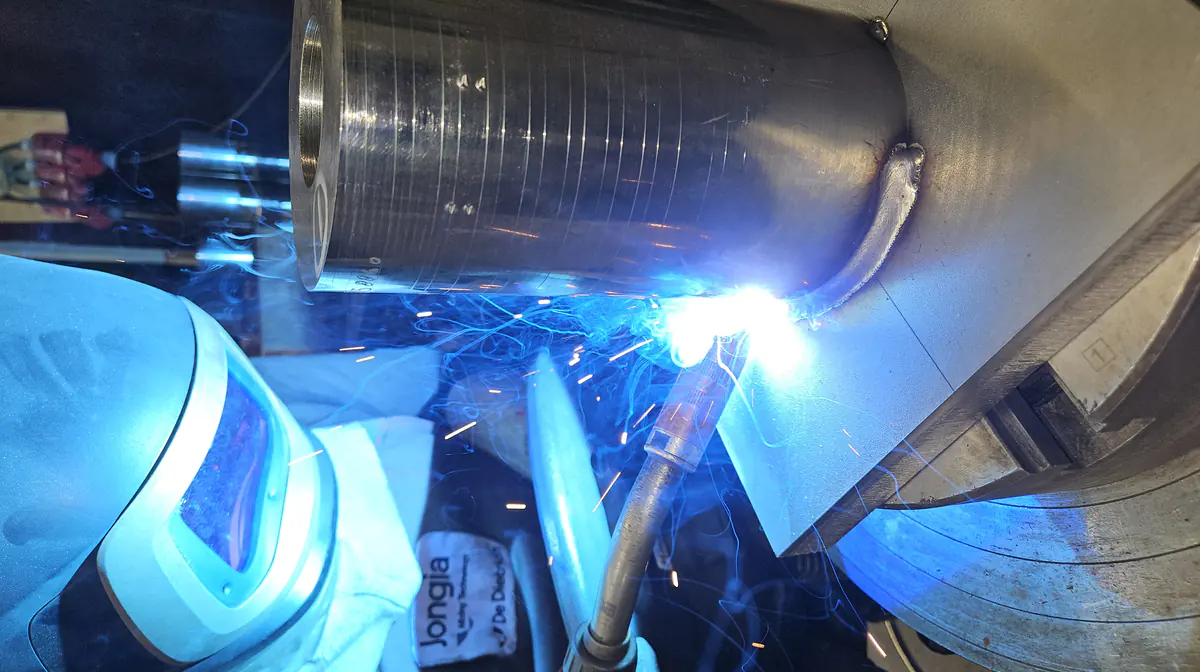
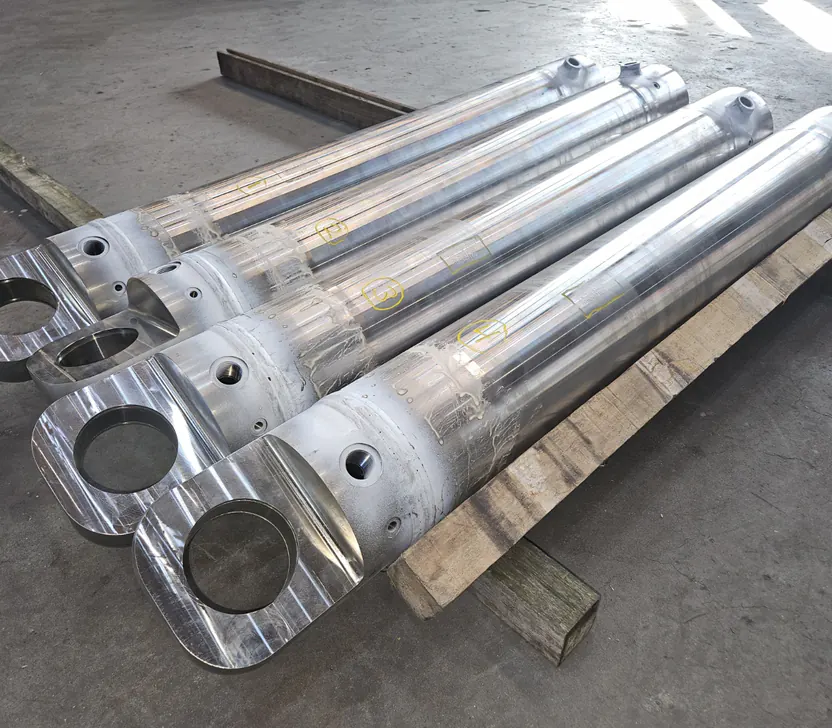
WPS development and management
Writing a WPS is more than filling in a form. A good welding procedure specification translates the qualification into clear instructions a welder can work from directly, while staying demonstrably within the range of the underlying WPQR. DEHAAS develops WPSs, reviews existing documents and organises their management so your package still holds up at the next audit.
- From pWPS to final WPS
- Demonstrably within the WPQR
- Realistic welding variables
- Management and revisions covered
DEHAAS is an independent welding consultancy based in Menaam, Friesland, working throughout Europe and North America for structural steelwork, machine building, shipbuilding, the process industry and pressure equipment. We know the standards and the shop floor, and write WPSs that stand up in both worlds.
From pWPS via WPQR to the final WPS
The route starts with a preliminary welding procedure specification, the pWPS, in which the welding engineer records the intended combination of material, process, consumables and parameters. A test piece is then welded to that pWPS and tested in accordance with EN ISO 15614-1: non-destructive testing, tensile and bend tests and, where required, impact tests and hardness surveys.
If the results pass, the WPQR records the qualification and its range. Only then is the final WPS written, within the limits of that WPQR. DEHAAS manages the whole route: drafting the pWPS, arranging test pieces and testing, and issuing the final documents.
Guarding the WPQR qualification range
The most common fault in WPS packages is a WPS that strays outside the range of its underlying WPQR. That range is determined by, among other things, the material group, thickness range, joint type, welding position, filler material and heat input. A WPS outside it is an immediate finding at any audit or acceptance.
DEHAAS checks every WPS line by line against its WPQR and records the link traceably, so you know your production is covered. How the two documents relate is explained in our article on the difference between WPS and WPQR.
Welding variables that work on the shop floor
A WPS is only useful if the welder can genuinely work to it. We write variables that are correct and achievable:
- current, voltage and travel speed per pass, with realistic ranges
- heat input, preheat and interpass temperature where the material demands it
- joint design, number of passes and welding sequence matching the actual preparation
- shielding gas, wire diameter and stick-out for the equipment in use
Paper values that cannot be welded in practice lead to deviation from the WPS and therefore to uncovered production. Wherever possible we verify our specifications at the machine, together with your welders.
Reviewing and cleaning up an existing package
Over the years many companies accumulate a sprawl of procedure specifications: outdated revisions, duplicates and WPSs whose underlying qualification can no longer be found. DEHAAS audits your existing package and maps out what is valid, what can be repaired and what must be replaced.
Often a large part of production turns out to be covered by existing WPQRs, and only a limited number of new qualifications is needed for the rest. That is considerably cheaper than blindly welding new test pieces. The result is a compact, correct package that matches what you actually build.
WPS management and revisions
A WPS package is never finished. New products, other materials, new equipment and standard changes all require updates, and every update must be controlled. DEHAAS sets up the management for you: a complete register of all WPSs and WPQRs, unambiguous numbering, revision control with date and reason for change, and distribution so only the current revision circulates on the shop floor.
This management meets the requirements of ISO 3834-2 and 3834-3 and the execution classes of EN 1090-2. If you prefer, we take on the management permanently as part of external welding coordination, see welding engineering and coordination.
WPSs for certification and client requirements
For EN 1090 or ISO 3834 certification, and for pressure equipment under the PED 2014/68/EU, the WPS package is a fixed part of the assessment. We make sure the documents follow the correct format, the qualification basis is sound and the whole is consistent with your welder qualifications to ISO 9606-1. For work to American specifications we prepare WPS and PQR documents in accordance with ASME IX.
The full qualification and certification route is described on our page on WPS, WPQR and qualification. A specific question about a single WPS is easily raised through the DEHAAS Welding & Quality Assistant on this site.
Frequently asked questions
It depends on your materials, thicknesses, processes and positions. The aim is the most compact package that fully covers your actual production. We first take stock of what you build and which qualifications already exist, and then determine how many specifications are genuinely required.
Yes. Within the range of a single WPQR you can write multiple WPSs, for example for different joint types or products that fall within the same range. That is precisely the strength of a well-chosen qualification: one test piece covers a broad scope of work.
Then production is formally uncovered on that point and it will surface as a finding at audit. Often the WPS can be adjusted to fit within the existing range. If not, an additional qualification to EN ISO 15614-1 is required. We advise the cheapest route that is demonstrably correct.
More from the knowledge centre
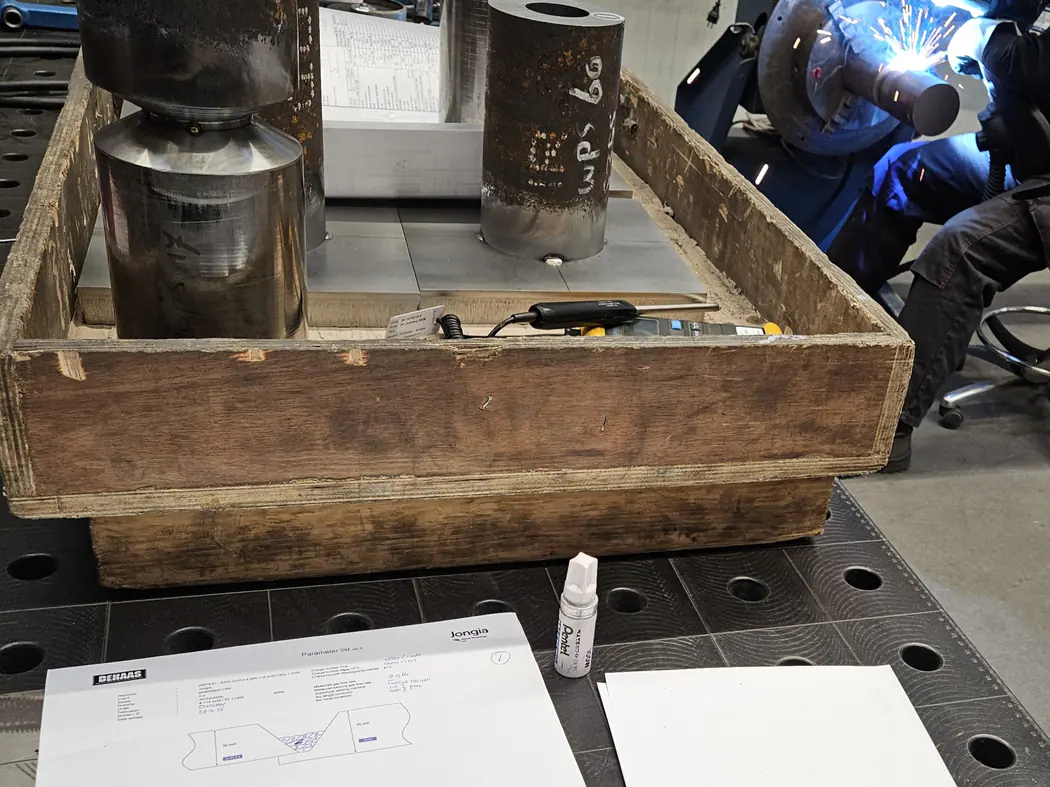
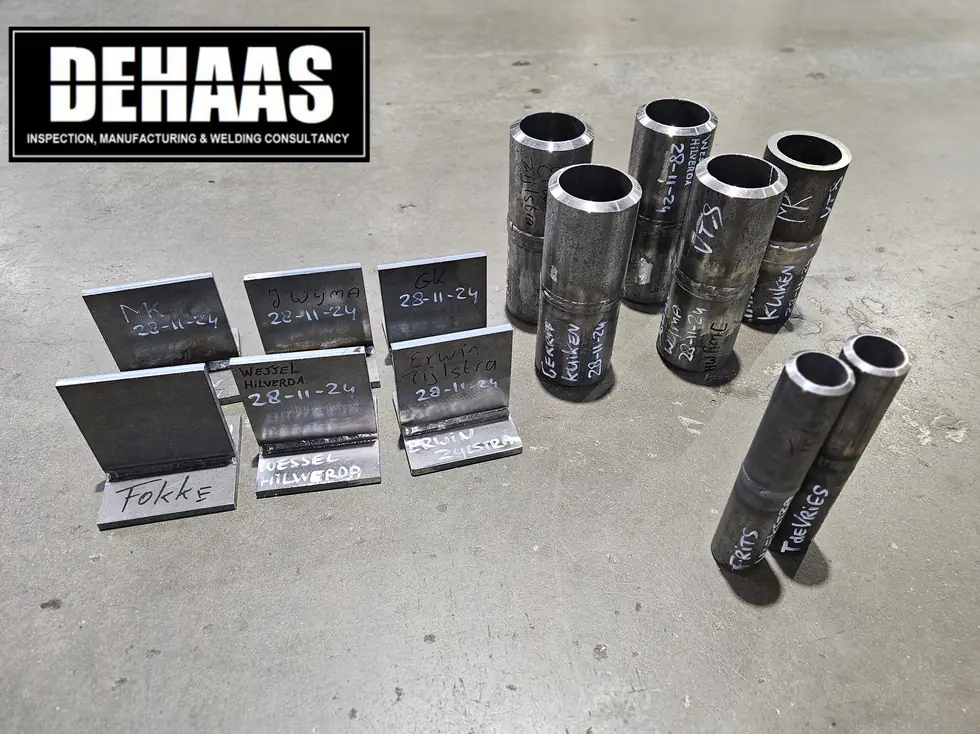
Have a welding or QA/QC question?
Ask the DEHAAS Welding & Quality Assistant, have your case reviewed by a specialist, or call us directly.