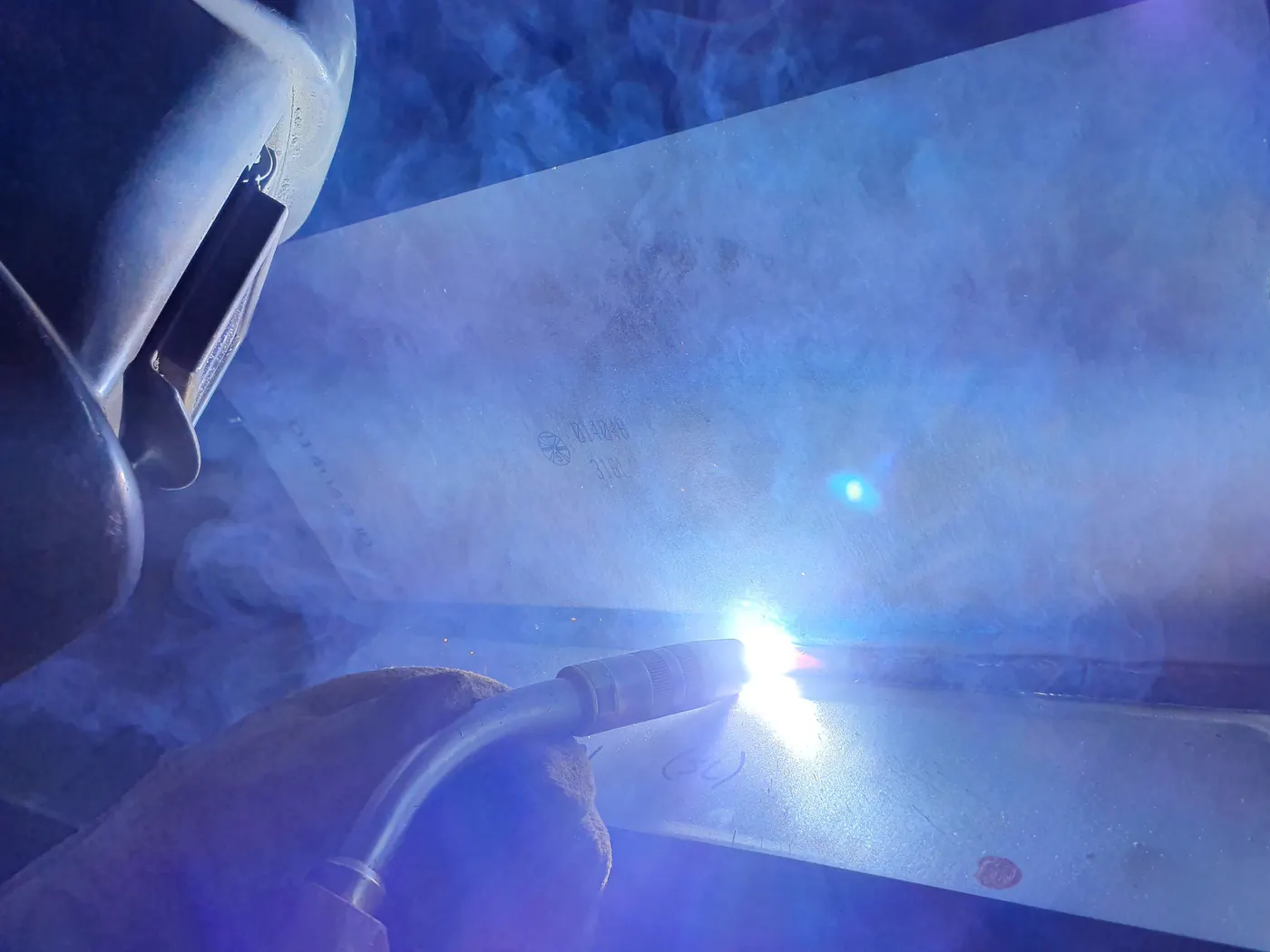
Welding titanium
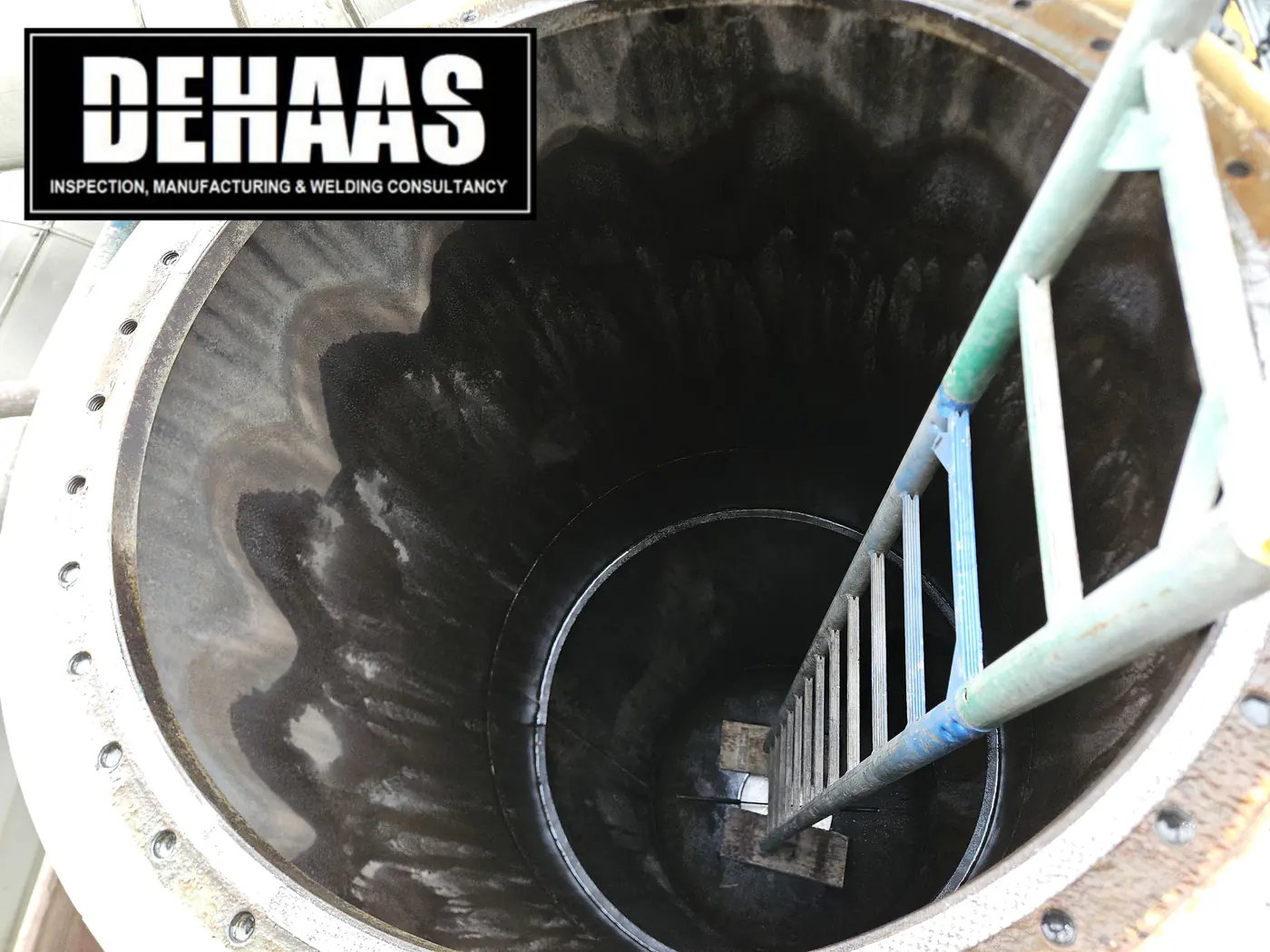
Titanium welds excellently, provided it is completely shielded from the air. Above roughly 400 degrees it absorbs oxygen, nitrogen and hydrogen, and that absorption embrittles the material irreversibly. Unlike steel, no post-treatment repairs it.
That makes welding titanium less a matter of welding skill than of gas control. This article covers the method and how the result is assessed.
Why shielding governs everything
At elevated temperature, oxygen and nitrogen dissolve in the titanium lattice and raise strength while drastically reducing ductility and toughness. Hydrogen causes longer term embrittlement. No heat treatment removes those elements again.
Shielding must therefore continue until the material is below roughly 400 degrees. The torch cup alone is insufficient for that: the weld cools more slowly than the torch travels.
Trailing shield, backing and chamber
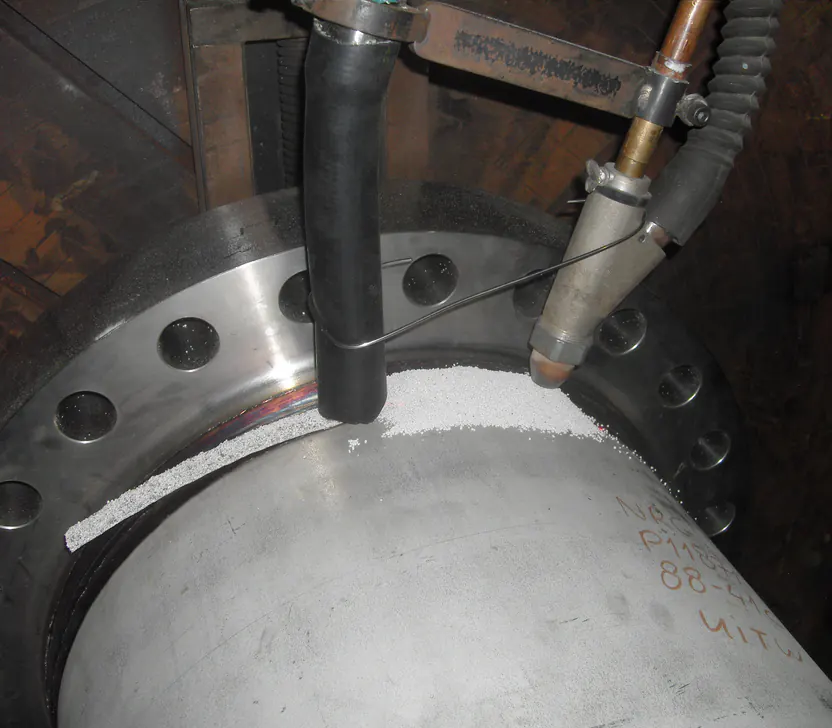
The standard solution is a trailing shield behind the torch, continuing to protect the still hot weld metal, combined with backing purge on the root side. On pipework the whole pipe is purged.
For critical work, welding takes place in a chamber that is first evacuated and then filled with argon, or in a flexible tent with controlled oxygen content. Residual oxygen is measured, typically below 50 ppm and lower under the strictest requirements.
Colour as an acceptance criterion
Weld colour directly indicates how much oxygen was absorbed. Bright silver is good, light straw still acceptable, dark yellow borderline, and blue, purple or grey white powder means rejection. AWS D18.2 and the common specifications attach numbers to this.
That assessment covers the weld face, the root side and the heat affected zone. A bright bead with a blue root is not a sound weld. Agree in advance which number is still accepted.
Cleanliness and tooling
Titanium is extremely sensitive to contamination. Grease, fingerprints, iron particles and residues of other metals cause embrittlement and cracking. Degrease with a suitable solvent, work with gloves and use only tooling dedicated to titanium.
Iron particles from a shared brush or grinding disc are the classic cause of rejected titanium work. Maintain a separate work area, as with stainless but stricter.
Frequently asked questions
Only with a trailing shield and backing purge added. The standard cup protects the pool but not the cooling weld metal behind it, and that is exactly where oxygen is absorbed.
No. The discolouration is a symptom of oxygen absorbed into the material, not just a surface layer. Grinding removes the colour but not the embrittlement. A rejected weld must be removed and redeposited.
Generally a grade matching or just below the parent material, for example ERTi-2 for commercially pure grade 2. The filler must be as clean as the workpiece and must not be handled with bare hands.
Visual examination with colour assessment is the first and most important step. Beyond that, penetrant testing for surface defects and radiography or ultrasonics for the interior. Magnetic particle testing does not work, because titanium is not ferromagnetic.
More from the knowledge centre
Have a welding or QA/QC question?
Ask the DEHAAS Welding & Quality Assistant, have your case reviewed by a specialist, or call us directly.