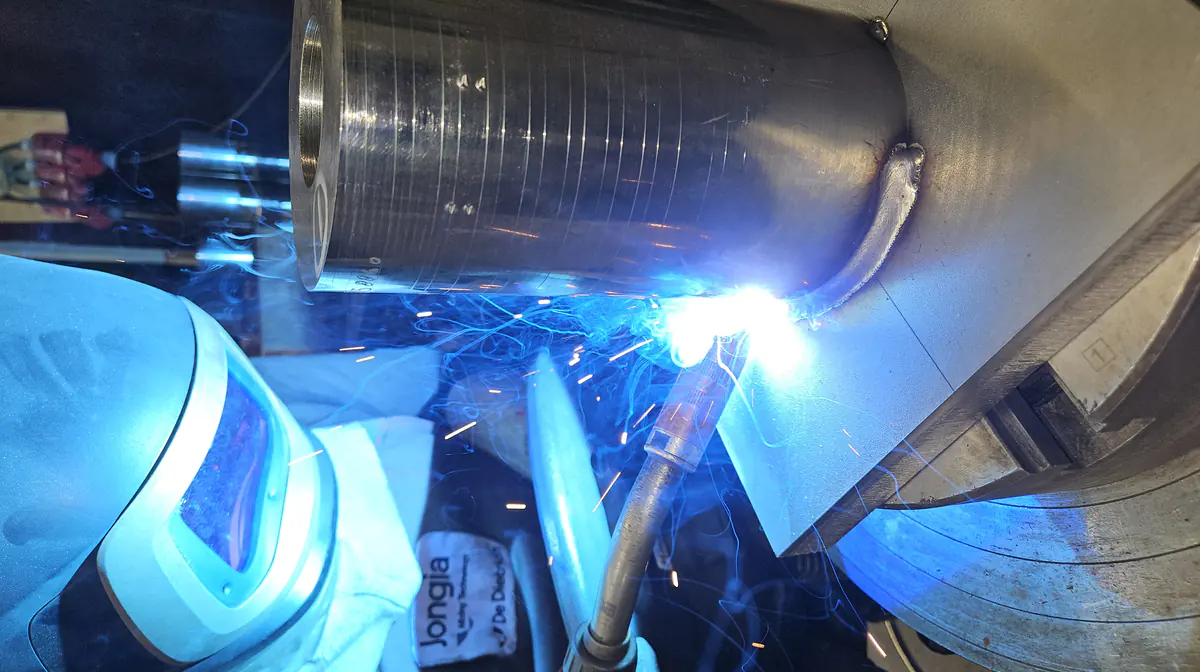
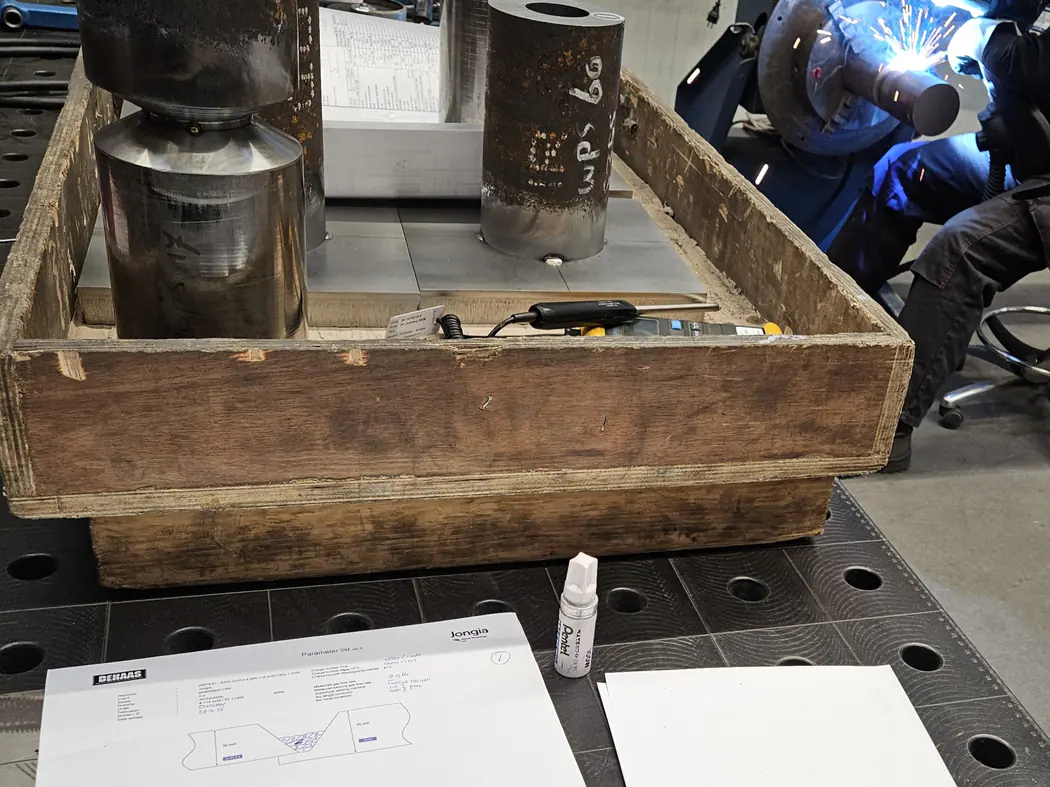
Welding engineering and technical advice
Sound welding advice pays for itself. A smarter joint preparation, a better matched process or a different material grade quickly saves hours in the workshop and prevents repairs later on. DEHAAS provides welding engineering for companies that take their welding seriously: from a single question about one joint to the full welding engineering of a new product.
- Independent, no sales interest
- From design to shop floor
- EN 1090, ISO 3834 and PED expertise
- Clear, substantiated reporting
DEHAAS is an independent welding consultancy based in Menaam, Friesland, working throughout Europe and North America for structural steelwork, machine building, shipbuilding, the process industry and pressure equipment. Our advice follows the standards and workshop reality, not a supplier's sales targets.
Material selection and weldability
Many welding problems start with the material choice. Think of carbon equivalent and preheat for higher-strength steels, sensitisation risks in stainless steel, or dissimilar joints. DEHAAS assesses the weldability of your materials before anything is cut or welded.
We advise on steel grades and delivery conditions, stainless and duplex grades, and the matching consumables and heat input. Where needed we determine preheat and interpass temperatures and record them in the welding procedure specification, so the knowledge sits in your system rather than in one person's head.
Process choice and joint preparation
The best welding process is the one that suits your product, your volumes and your people. We compare the realistic options: solid versus flux-cored wire for MAG, TIG where it is required rather than wherever it is habit, or submerged arc for long straight seams.
Joint preparation matters just as much. An oversized gap or an unnecessarily heavy V-preparation means extra consumables, extra heat input and extra distortion. DEHAAS reviews your joint designs and proposes lighter preparations that remain within qualification. Small changes on paper often deliver the biggest gains on the shop floor.
Manufacturability review of your design
A design that is correct on the drawing can still be needlessly expensive, or even unbuildable, in the workshop. In a manufacturability review, DEHAAS walks through the design from a welding perspective before production starts. We look at, among other things:
- access to the welds for both welder and inspector
- welding sequence, shrinkage and expected distortion
- oversized welds relative to the strength requirement
- feasibility of the specified quality levels, for example to ISO 5817
- fit with your existing qualifications and processes
The result is a concrete list of improvements you can discuss directly with your engineering team or your client.
Reducing welding costs
Welding cost is rarely just the hourly rate. It hides in oversized welds, unnecessary dressing, rework and waiting time. DEHAAS analyses where the money actually leaks away and backs it up with numbers: deposited weld metal, arc time and repair rates.
We then propose concrete measures, such as a different joint design, higher deposition, better fixturing against distortion or qualifying a more efficient process, and we support the implementation on the shop floor. Advice that ends up in a drawer never pays for itself.
Second opinion in disputes and weld problems
When welds crack, fail inspection or become the subject of a dispute with a client or supplier, an independent view is worth a great deal. DEHAAS gives a second opinion based on the facts: the standard, the drawing, the welding procedure and the workpiece itself. Because we have no stake in the outcome, both parties can take our findings seriously.
You receive a clear report stating the cause, the assessment against the applicable requirements and a practical repair or prevention proposal. Where needed, we bring in non-destructive testing by personnel qualified to ISO 9712.
From advice to controlled execution
Advice is only finished once it is secured. We therefore record recommendations in documents your workshop can work with: welding procedure specifications, work instructions and, where required, new qualifications to EN ISO 15614-1. How a WPS relates to a WPQR is explained in our article on the difference between WPS and WPQR.
If your question is structural rather than incidental, DEHAAS can also take on the welding responsibility on a continuing basis. See our pages on welding engineering and coordination and WPS, WPQR and qualification.
Frequently asked questions
Anything where welding and quality meet: material and process selection, joint preparation, distortion, cracking, rejected welds, interpretation of standards and disputes with clients or suppliers. A small question about a single joint is equally welcome, and can be raised through the DEHAAS Welding & Quality Assistant on this site.
Yes. Companies without their own welding engineer often benefit most from an adviser on call. You pay only for the hours needed, and the knowledge stays in your business because everything is recorded in usable documents and instructions.
Yes. Our recommendations align with EN 1090-2, ISO 3834 and, where applicable, the PED 2014/68/EU. Documents we produce, such as welding procedure specifications and work instructions, slot directly into your quality system and stand up in audits.
More from the knowledge centre
Have a welding or QA/QC question?
Ask the DEHAAS Welding & Quality Assistant, have your case reviewed by a specialist, or call us directly.