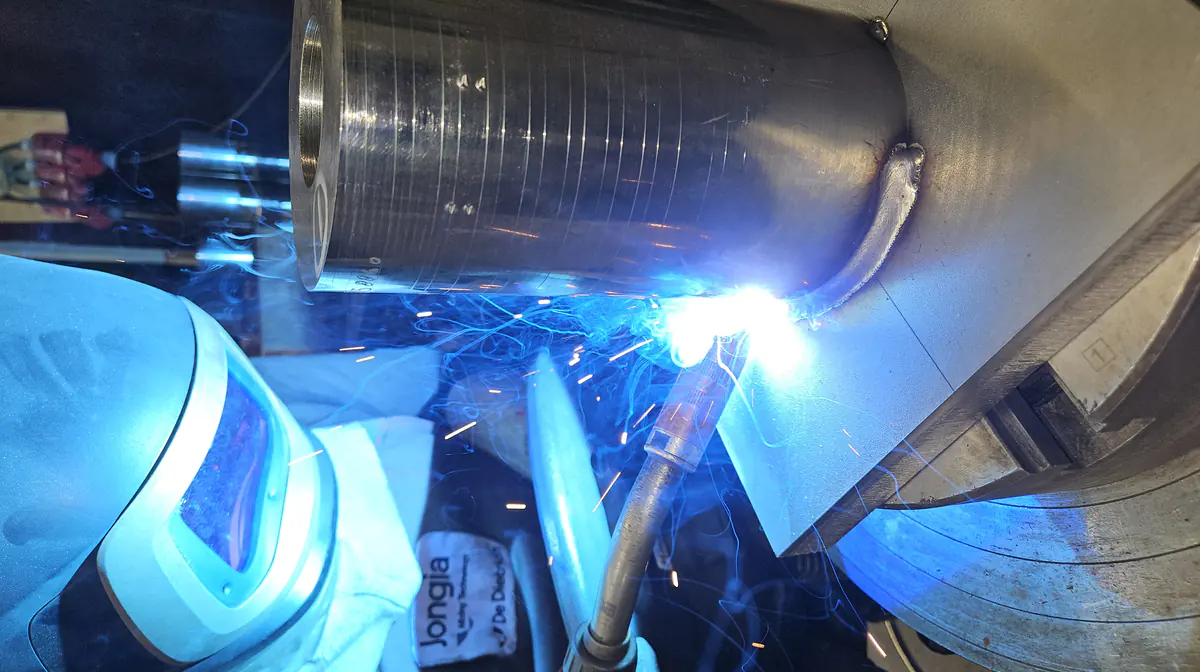
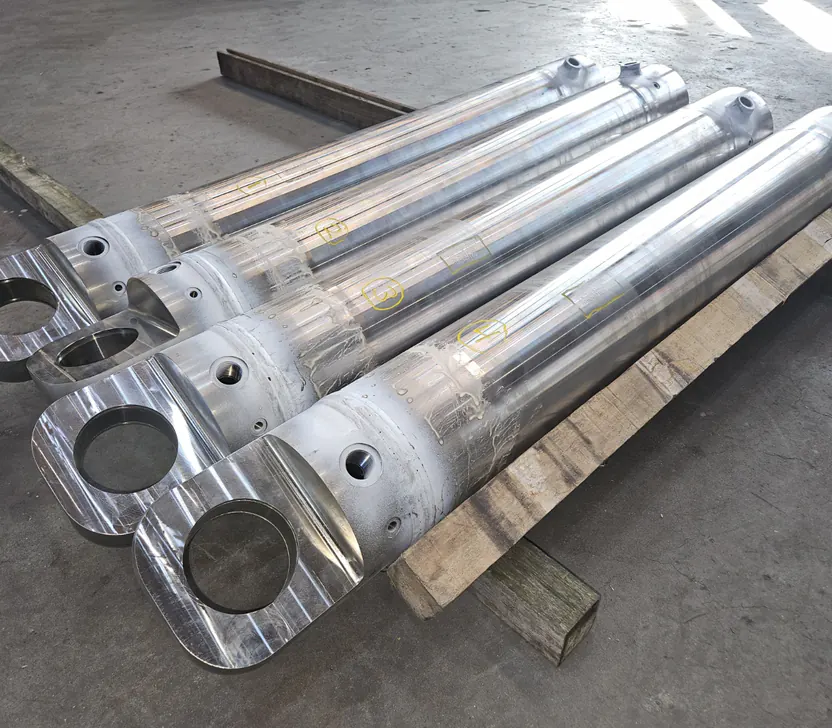
Welding engineering and external welding coordination
Anyone fabricating steel structures, machinery, ships or pressure equipment eventually faces welding decisions that separate a smooth project from a costly repair campaign. DEHAAS provides welding engineering advice at IWE/IWT level and acts as external welding coordinator for companies that do not keep this expertise in house or need temporary additional capacity.
- Welding coordination at IWE/IWT level
- Aligned with ISO 14731, EN 1090 and ISO 3834
- Independent, available nationwide
- Practical advice you can act on immediately
We work independently, with a hands-on background in fabrication and inspection. That means advice grounded in workshop reality: achievable welding methods, realistic tolerances and documentation that matches what your client or certification body actually requires. Based in Menaam, Friesland, we serve clients throughout Europe and North America.
Welding engineering advice at IWE/IWT level
Welding engineering covers every decision that determines whether a welded joint performs as the designer intended: welding process, joint preparation, welding sequence, preheat and heat input, and the control of distortion and residual stress. DEHAAS reviews these points during engineering, work preparation or when a problem surfaces in production.
Engage us for a single question, a full welding review of a design, or as a standing sparring partner alongside your own work preparation. The outcome is always a substantiated written recommendation your team can act on straight away.
Hiring an external welding coordinator to ISO 14731
ISO 14731 defines the tasks and responsibilities of welding coordination. Certification to ISO 3834 and CE marking of steel structures under EN 1090 both require these tasks to be demonstrably assigned to someone with the appropriate level of knowledge. Rather than recruiting or training in house, you can contract DEHAAS to fulfil the role.
Typical duties include:
- Reviewing contract and design requirements for welding implications
- Selecting welding methods and managing WPS documentation
- Monitoring welder qualifications and requalifications
- Overseeing execution, inspection and the handling of non-conformities
We record the division of tasks in writing, so certification bodies and clients can see exactly who is responsible for what.
Welding coordination under EN 1090 and ISO 3834
For structural steelwork, EN 1090 sets the framework: the execution class (EXC1 to EXC4) determines how demanding the requirements for coordination, qualification and inspection are. DEHAAS helps you apply the correct class and aligns the welding side of your FPC system accordingly. See our EN 1090 support.
For machine building, process industry and pressure equipment, ISO 3834 is the benchmark for quality management in fusion welding. We establish which part (ISO 3834-2, -3 or -4) fits your work and make sure workshop practice and paperwork match. More on our ISO 3834 support page.
Material and process selection
The combination of parent material, filler and process drives the quality, speed and cost of welding. DEHAAS advises on carbon and fine-grain structural steels, stainless steel, duplex and aluminium, and on processes such as MAG (135/136), TIG (141) and manual metal arc (111).
We look beyond the code. Is preheat genuinely required, or merely habit? Will a more expensive joint preparation pay for itself in fewer passes? What does a material change mean for existing qualifications? We answer with a concrete assessment, not a reference to a table.
Support with WPS and WPQR
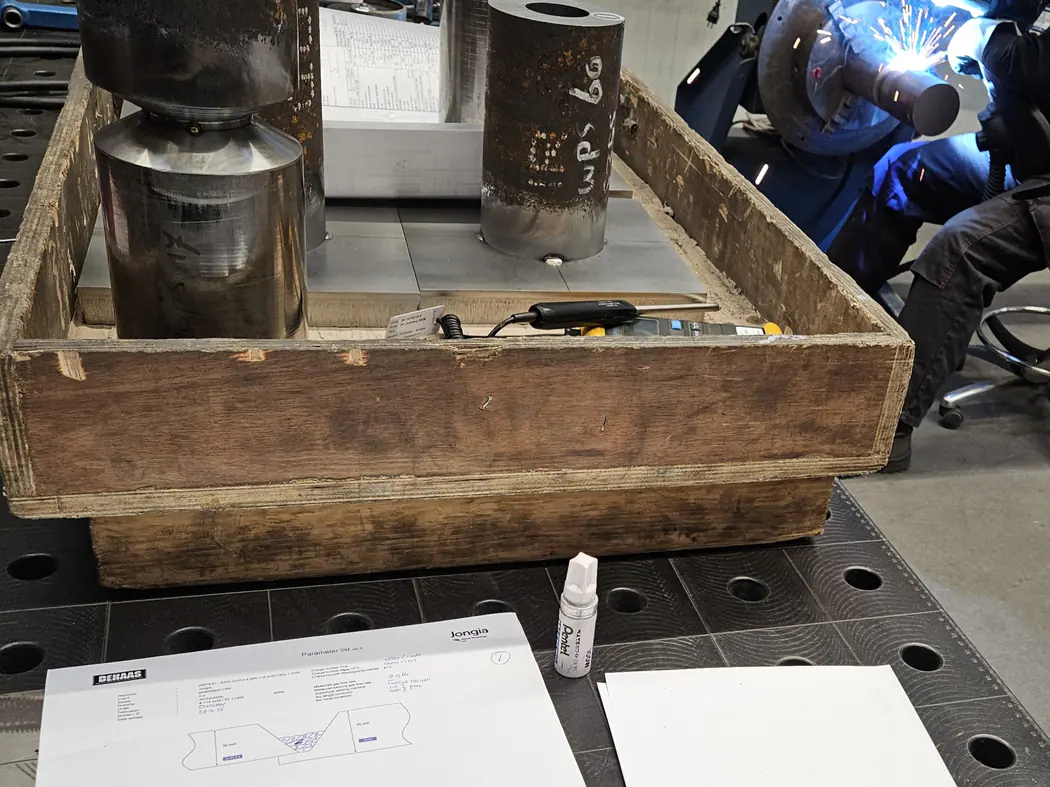
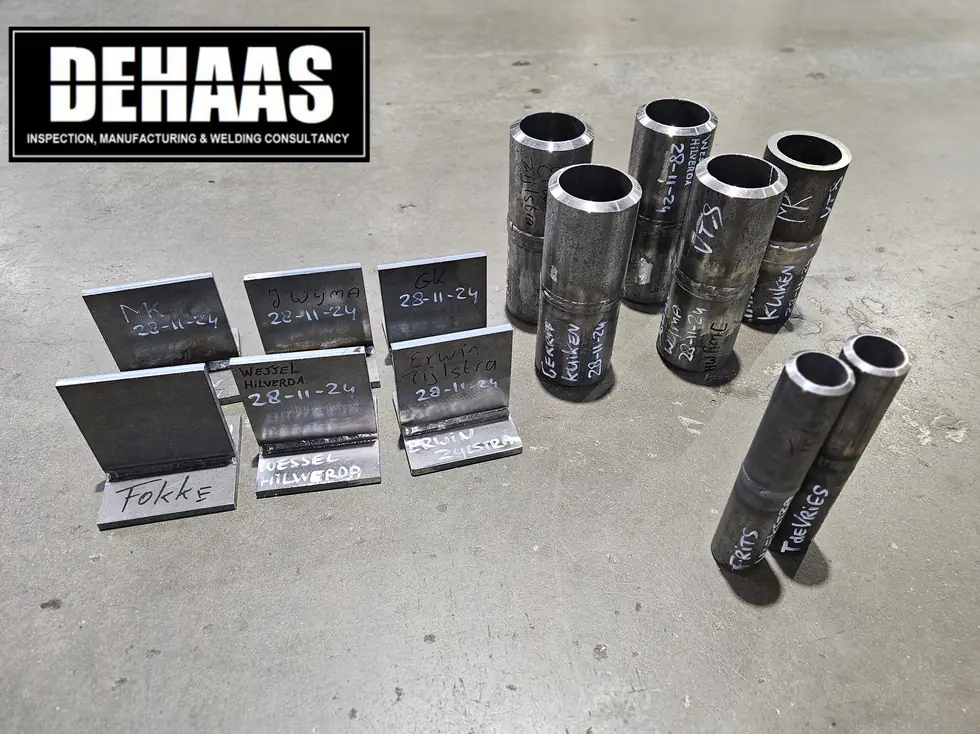
Serious welding production runs on qualified procedures. DEHAAS drafts welding procedure specifications, assesses whether existing WPQRs cover your work and manages new qualifications to EN ISO 15614-1 or ASME IX. How these documents relate is explained in our article on the difference between a WPS and a WPQR.
As part of welding coordination we also monitor ranges of qualification: which thicknesses, material groups and positions are covered, and where a gap needs closing before production starts. That prevents a certification body or client rejecting a qualification mid-project.
Manufacturability and cost control at the engineering stage
The biggest welding savings are made before a single arc is struck, which is why DEHAAS prefers to join early, alongside engineering and procurement. A weld detail that looks sensible on a drawing may be inaccessible in the workshop, demand excessive weld volume or force a costly qualification that a minor design change would have avoided.
We review drawings and specifications for manufacturability, flag contradictory or excessive requirements in contracts, and advise on tolerances achievable without straightening afterwards. For procurement teams we assess quotations and supplier documentation, so you compare like for like.
Frequently asked questions
Once you supply CE-marked steel structures under EN 1090 or hold ISO 3834-2 or -3 certification, welding coordination to ISO 14731 must demonstrably be assigned to someone with an appropriate level of knowledge. Even without that obligation, coordination is sensible wherever welding is quality-critical.
Both are international training levels for welding coordination. The IWE (International Welding Engineer) is the highest level, covering the most demanding applications; the IWT (International Welding Technologist) sits one level below. The required level depends on execution class and complexity.
Yes. Many clients do not need a full-time coordinator. We fill the role for a fixed number of sessions per week or month, or per project, with the division of tasks recorded in writing so it stands up to audits and client assessments.
More from the knowledge centre
Have a welding or QA/QC question?
Ask the DEHAAS Welding & Quality Assistant, have your case reviewed by a specialist, or call us directly.