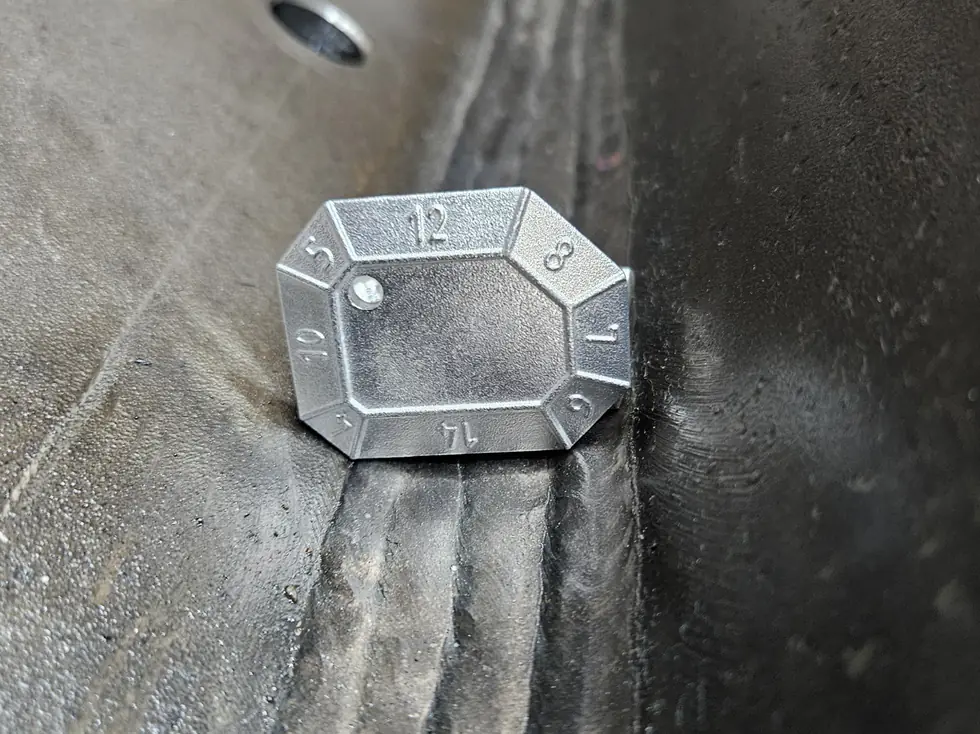
CWI vs IWI: welding inspector certification compared
A specification that calls for a qualified welding inspector usually names a credential: AWS CWI, IWI, CSWIP 3.1 or an ISO 9712 certificate in visual testing. These are not interchangeable. They differ in scope, in level and in where they are accepted without discussion. Anyone working across American codes, offshore operators and European standards needs to know what each welding inspector certification does and does not say.
This article compares the four: who issues them, what level they represent, how long they remain valid and where they are recognised. It closes with what a client can reasonably expect from a CWI inspector or any other welding inspector, and what to ask beforehand.
Welding inspection versus visual testing
The key distinction is not between countries but between two types of certification. CWI, IWI and CSWIP 3.1 cover welding inspection in the broad sense: before, during and after welding, including documents, materials, processes, preheat and assessment of the result. ISO 9712 VT certifies one NDT method, visual testing, and focuses on performing and evaluating that examination.
A specification asking for a welding inspector usually means the former; one asking for VT Level 2 means the latter. Neither qualifies anyone for ultrasonic or radiographic testing, which requires separate NDT certification per method.
AWS CWI: the North American benchmark
The AWS Certified Welding Inspector is the best-known inspection credential in North America, governed by AWS QC1. There are three levels: Certified Associate Welding Inspector (CAWI), Certified Welding Inspector (CWI) and Senior Certified Welding Inspector (SCWI). Eligibility depends on documented experience, linked to education, and a vision test.
The exam has three parts: fundamentals, a hands-on practical, and an open-book code exam on a code such as AWS D1.1, API 1104 or an ASME code. Certification is renewed every three years with a new vision test, and recertified every nine years by practical exam or documented continuing education. AWS also runs the exam outside the US.
IIW IWI: Comprehensive, Standard and Basic
The International Institute of Welding (IIW) defines the International Welding Inspector at three levels, with the European Welding Federation (EWF) following the same structure:
- IWI-C (Comprehensive): all inspection tasks, including non-standard applications and drawing up inspection plans.
- IWI-S (Standard): the inspection tasks required by standards and codes for routine work.
- IWI-B (Basic): visual inspection of welds and the associated checks.
Training and exams run through national Authorised Nominated Bodies (ANBs). Certification based on the diploma is renewed every three years. IWI should not be confused with IWE, IWT and IWS, which are welding coordination qualifications under ISO 14731.
CSWIP 3.1: strong in oil, gas and offshore
CSWIP is the certification scheme of TWI Certification in the UK. Welding inspection has three levels: 3.0 Visual Welding Inspector, 3.1 Welding Inspector and 3.2 Senior Welding Inspector. CSWIP 3.1 is the working level: monitoring welding, checking documents and materials, visual inspection and assessment against the specification.
The certificate is valid for five years, renewed on evidence of continuous activity, with recertification by exam at ten years. CSWIP 3.1 is widely accepted in the UK, offshore, the Middle East and Asia, and many operator specifications list it alongside AWS CWI.
ISO 9712 VT: certification for visual testing
ISO 9712 certifies NDT personnel by method, level and sector. For visual testing of welds, Level 2 is the working level: performing the examination to ISO 17637, evaluating findings against acceptance criteria such as ISO 5817, and reporting. An independent certification body issues the certificate, valid for five years, with an annual vision check.
VT to ISO 9712 says a lot about the examination itself, less about the wider inspection process, such as reviewing WPSs, welder qualifications and material certificates. See our article on ISO 9712 and NDT personnel.
Recognition by region
- United States: AWS CWI is the standard, often named explicitly in specifications and by authorities having jurisdiction.
- Canada: alongside the CWI, inspector levels to CSA W178.2, certified through the Canadian Welding Bureau.
- UK, offshore and Middle East: CSWIP 3.1 is common, with AWS CWI a frequent alternative.
- Continental Europe: IWI and ISO 9712 are the usual basis. EN 1090-2 and ISO 3834 prescribe no inspector title, only demonstrable competence; under the PED, NDT personnel for category III and IV equipment must be approved by a recognised third party.
Where a specification adds or equivalent, get the equivalence accepted in writing before work starts.
What to expect from a welding inspector
- Review of WPSs, PQRs or WPQRs and welder qualifications against the specification.
- Checks on material certificates, consumables and fit-up before welding.
- Monitoring of preheat, parameters and WPS compliance during welding.
- Visual inspection after welding against the agreed acceptance criteria.
- Review of NDT results alongside own findings, with a clear report and punch list.
Ask for the certificate, its validity, the vision test and experience with the code on your project. A CWI with D1.1 experience is not automatically at home in ASME B31.3, and vice versa. When hiring a welding inspector, settle this at the start, as with broader welding inspection and QA/QC.
Frequently asked questions
Both are broad welding inspection credentials, but they are not formally interchangeable. The CWI is built around American codes, the IWI around the international and European framework. The project specification decides which is accepted.
Not on the strength of the CWI alone. UT, RT, MT and PT each require method-specific certification, for example to ISO 9712 or under the ASNT system. A welding inspector can take NDT reports into account in the overall assessment.
Ask for a copy and check name, level, expiry date and vision test. AWS and TWI Certification offer online verification. For IWI and ISO 9712, contact the issuing body.
EN 1090-2 names no specific title, only competent personnel. For supplementary NDT it requires ISO 9712 personnel, normally Level 2. For broader welding inspection, an IWI or comparable credential is common.
More from the knowledge centre
Have a welding or QA/QC question?
Ask the DEHAAS Welding & Quality Assistant, have your case reviewed by a specialist, or call us directly.