NDT personnel to ISO 9712: levels, responsibilities and validity
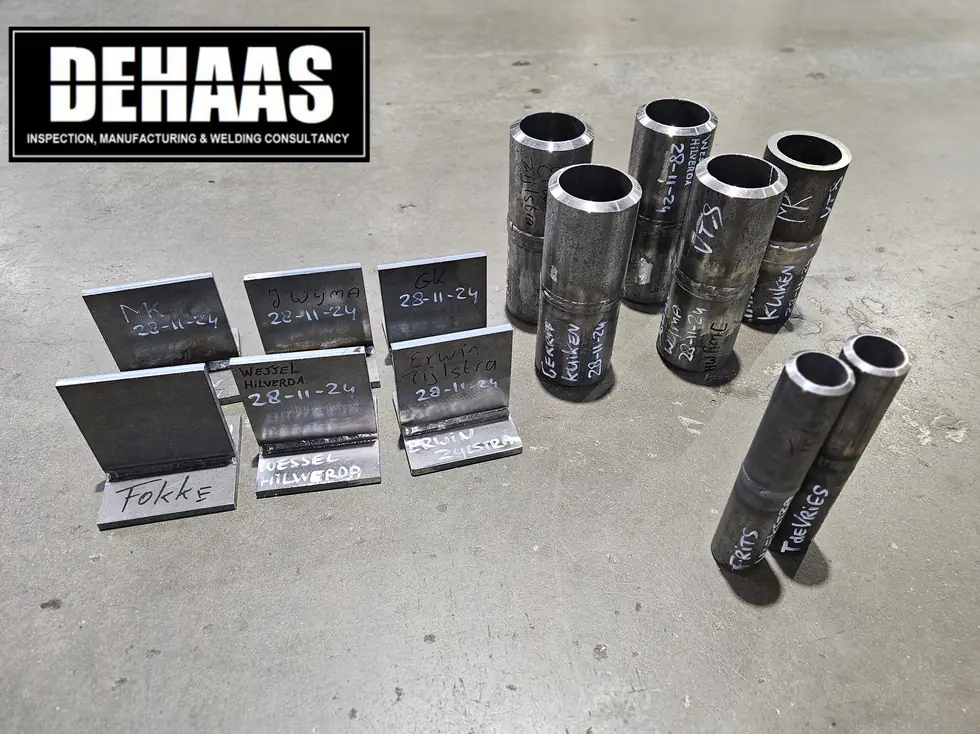
Non-destructive testing is only as reliable as the person carrying it out. ISO 9712 is the international standard for the qualification and certification of NDT personnel. It sets the training, experience and examinations required, defines three levels and determines how long a certificate remains valid. European standards such as EN 1090-2 and many pressure equipment specifications refer to ISO 9712 for NDT personnel.
Work planners, QC staff and buyers need to be able to read a certificate. Does it show the right method, level and sector, and is it still valid? This article sets out the essentials.
What ISO 9712 covers
ISO 9712 describes certification by an independent certification body operating to ISO/IEC 17024, usually accredited for that purpose. The candidate completes recognised training, builds up documented industrial experience, meets the vision requirements and passes an examination with general, specific and practical parts.
A certificate always applies to a combination of method, level and sector. A sector may be a product sector, such as welds, castings, forgings, tubes and pipes or wrought products, or an industrial sector covering several product sectors. Someone certified for ultrasonic testing of castings is therefore not automatically qualified for ultrasonic testing of welds.
Methods under ISO 9712
ISO 9712 covers the common NDT methods. For welds, these are the most relevant:
- VT, visual testing.
- PT, penetrant testing, for surface-breaking defects, including in stainless steel and aluminium.
- MT, magnetic testing, for surface and near-surface defects in ferromagnetic steel.
- UT, ultrasonic testing, for internal defects. Advanced techniques such as phased array and TOFD usually require additional certification.
- RT, radiographic testing, with film or digital detectors.
Eddy current (ET), leak testing (LT), acoustic emission (AT) and thermography (TT) are among the other methods covered. Our article on choosing an NDT method explains which method suits which weld.
Levels 1, 2 and 3: who may do what
The three levels define responsibility, not just skill:
- Level 1 carries out testing to written instructions under the supervision of level 2 or 3 personnel. They set up equipment, perform the test and record results against defined criteria, but do not select the method or technique or assess results independently.
- Level 2 selects the technique within the method, translates standards and specifications into NDT instructions, sets up and verifies equipment, interprets and evaluates results against acceptance criteria and reports. For weld testing, level 2 is the working level in practice.
- Level 3 takes full responsibility for an NDT department or test facility, establishes and validates procedures, interprets standards and codes and selects methods, backed by broad knowledge of materials, fabrication and other NDT methods.
A certificate is not a licence to work. The employer must authorise the individual in writing and remains responsible for that authorisation.
Vision, training and experience
Every NDT operator must demonstrate adequate eyesight. ISO 9712 requires near vision of at least Jaeger 1 or Times Roman N4.5 at a distance of not less than 30 cm, in one or both eyes, with or without correction. Colour vision must be sufficient to distinguish the colours used in the method. The employer has near vision checked annually.
Training hours and industrial experience vary by method and level and are tabulated in the standard, with UT and RT demanding considerably more than VT or PT. Candidates going straight to level 2 add the hours and experience of both levels together.
Validity, renewal and recertification
An ISO 9712 certificate is valid for a maximum of five years, followed by renewal for a second five-year period. The holder must show continued work in the method without significant interruption and continued compliance with the vision requirements. A significant interruption means more than one continuous year without work in the method, or several periods totalling more than two years.
After ten years, recertification follows. For levels 1 and 2 this means a new practical examination; level 3 can choose between an examination and a structured credit system. Keep a register in your quality system of the certificates held by your own and subcontracted operators, with expiry dates and vision checks.
ISO 9712 within EN 1090, ISO 3834 and the PED
EN 1090-2 requires supplementary non-destructive testing to be performed by personnel qualified to ISO 9712, generally at level 2 for execution and evaluation. Certification is not always mandatory for visual testing, but demonstrable competence is. Under ISO 3834 the manufacturer must be able to show that inspection and testing personnel are qualified.
Under PED 2014/68/EU, NDT personnel for pressure equipment in categories III and IV must be approved by a third-party organisation recognised by a Member State. An ISO 9712 certificate from a recognised certification body usually meets this in practice, but check per project what the notified body accepts. That is why checking certificates and procedures is part of the preparation in NDT coordination, as it is in welding inspection and QA/QC.
Frequently asked questions
No. ASNT SNT-TC-1A is a recommended practice under which the employer certifies its own staff, whereas ISO 9712 uses independent third-party certification. American specifications sometimes call for SNT-TC-1A, and an ISO 9712 certificate is then not always accepted automatically.
A level 1 operator may record results, classify them against written criteria and report them, but does not decide independently whether a weld is accepted. Interpretation and evaluation rest with level 2 or 3.
From the expiry date the operator may no longer perform or evaluate testing under that certificate, and testing done afterwards is formally invalid. On long-running projects, check expiry dates in advance.
Not in every case. ISO 17637 recommends qualification to ISO 9712 and many clients require VT level 2 in their specifications. Without such a requirement, the inspector must still be demonstrably competent and meet the vision requirements.
More from the knowledge centre
Have a welding or QA/QC question?
Ask the DEHAAS Welding & Quality Assistant, have your case reviewed by a specialist, or call us directly.