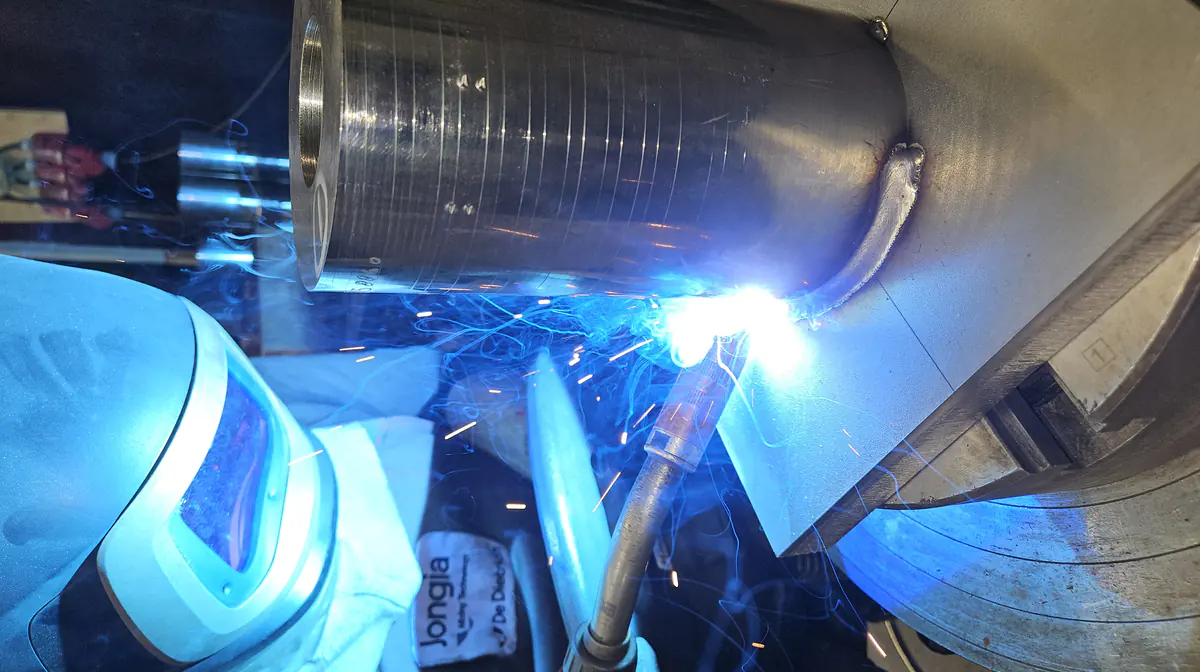
Validity and revalidation of welder qualifications
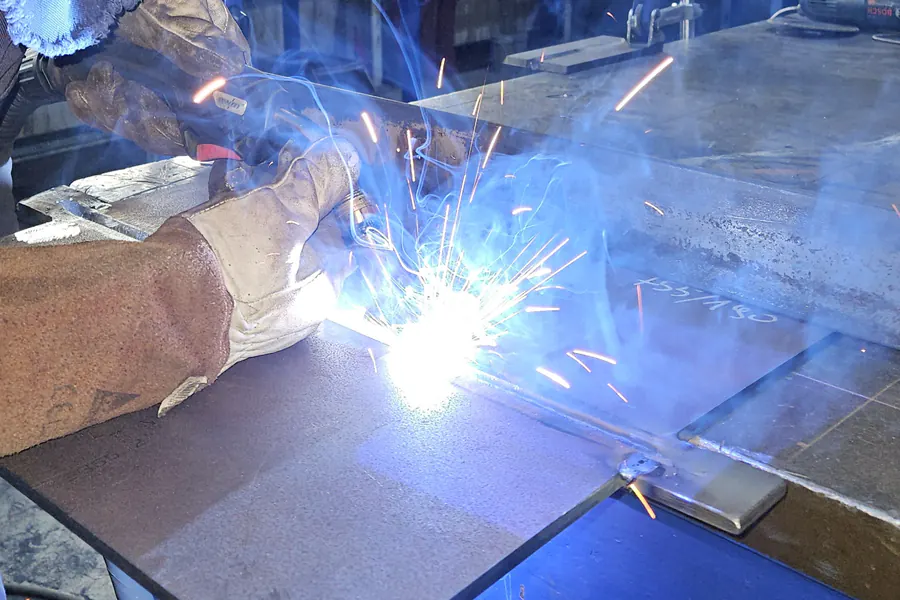
A welder's certificate to ISO 9606-1 is not a qualification for life. Its validity must be confirmed every six months and, without action, it lapses after two years. Yet fabricators rarely lose qualifications through failed tests; they lose them through administrative neglect. A missing signature or a missed expiry date means a new examination, with all the cost and planning disruption that brings.
This article sets out the validity system of ISO 9606-1: the six-month confirmation and the three revalidation routes of clause 9.3, with their conditions and practical pros and cons. How the qualification itself is obtained is covered in our article on welder qualification to ISO 9606-1.
The basis: two years from the welding of the test piece
Validity starts on the date the test piece was welded, not the date the certificate was issued. From that moment the certificate is valid for two years, subject to two conditions: the welder must keep working within the range with reasonable continuity, with interruptions of no more than six months, and there must be no specific reason to question the welder's skill.
If either condition is breached, the certificate lapses, even within the two years. A welder who spent eight months on other duties, or was absent through long-term illness, must be requalified however recent the certificate. So record not just dates, but each welder's actual deployment per process.
The six-month confirmation: a small signature with large consequences
Every six months the certificate must be endorsed to confirm that the welder has worked within the original range. The confirmation is given by the employer or the responsible welding coordinator, with date and signature on the certificate or in the associated system.
It sounds like a formality, but it is the most commonly missed step in the entire system. Without an unbroken series of confirmations, the certificate is formally no longer valid and examining bodies will not accept it as a basis for prolongation. A practical approach:
- Schedule the confirmations as a fixed task in the welding coordinator's diary, for instance the same week every six months.
- Keep one current register of all certificates with test dates, confirmations and expiry dates.
- Retain evidence that the welder actually worked within the range, such as work orders or welding records.
Route a: requalify every three years
The first route in clause 9.3 is the simplest to explain: the welder takes a new qualification test every three years. A new test piece is welded and examined, and a new certificate is issued with a new start date.
This route suits companies with few welders or highly variable work, where tracking production weld tests takes more effort than a periodic examination. The drawback is obvious: every test costs material, welding time, examination and an examiner's attendance, and a failed test immediately creates a gap in deployability. If you choose this route, plan requalifications well before the expiry date so there is time for a retest without certificates lapsing.
Route b: prolong every two years on production welds
The second route extends the certificate by two years at a time on the basis of demonstrated production quality. The condition: within the last six months of the validity period, two welds made by the welder in production must have been examined by radiographic, ultrasonic or destructive testing with acceptable results. The examined welds must reproduce the original test conditions, and the reports are kept with the certificate.
For many fabricators this is the sweet spot: no separate test pieces, yet a clear verification moment. It does demand planning. The examinations must fall within the right window, be performed on the right welds and be traceable to the welder concerned. Align your NDT planning accordingly and prolongation costs virtually nothing extra.
Route c: continuous validity under a quality system
The third route keeps the certificate continuously valid as long as strict conditions are met. The welder must work for the same manufacturer under a verified quality system, in practice certification to ISO 3834-2 or ISO 3834-3, and the manufacturer must continuously demonstrate that the welder produces welds of the required quality. That evidence comes from routine production monitoring, such as examination results of production welds, and is recorded periodically.
Route c is the most demanding administratively but the calmest operationally: no repeat tests and no two-yearly deadline. Note two limitations. The route stands or falls with the quality system; lose your ISO 3834 certification and the basis disappears. And the certificate is tied to that one employer; if the welder leaves, continuous validity ends.
Choosing a route and making it stick
The choice depends on your organisation:
- Route a for few welders, variable work or no steady NDT stream in production.
- Route b where examined production welds occur regularly; by far the most common choice.
- Route c for ISO 3834-2 or -3 certified manufacturers with a stable welding workforce.
Whichever route you choose, assurance comes down to the same three things: a current qualification matrix, timely confirmations and traceable evidence. DEHAAS sets up this administration for fabricators and, where needed, runs it as external welding coordinator, independently and across Europe and North America. That keeps every certificate valid and keeps you ahead of audits and client assessments.
Frequently asked questions
Formally the certificate is then no longer valid. There is no retroactive repair; as a rule this means a new qualification test. Prevent it with a fixed confirmation round in the welding coordinator's diary.
Yes, the confirmation is given by the employer or the responsible coordinator, provided they can judge that the welder worked within the range. Independence is not required here; for prolongation under routes b and c, the examination results provide that assurance.
Operators are covered by ISO 14732, which closely follows the ISO 9606-1 system for validity and prolongation, including the six-month confirmation and comparable revalidation routes.
No, the two examined welds must show acceptable results. A rejection also raises the question of whether there is reason to doubt the welder's skill, which can affect validity itself. Investigate the cause and document the follow-up.
More from the knowledge centre
Have a welding or QA/QC question?
Ask the DEHAAS Welding & Quality Assistant, have your case reviewed by a specialist, or call us directly.