WPS versus WPQR: what is the difference?
The terms WPS and WPQR are often used interchangeably on the shop floor, yet they are two distinct documents with different purposes. A WPS, or Welding Procedure Specification, is the working instruction handed to the welder. A WPQR, or Welding Procedure Qualification Record, is the evidence that the method behind that instruction has been properly tested. Anyone preparing a tender or an audit should keep the two firmly apart.
This article explains what each document contains, where the preliminary specification (pWPS) fits in and in which order the documents are produced. That way you know exactly which document a client or a standard is asking for, and why one cannot exist without the other.
What is a WPS?
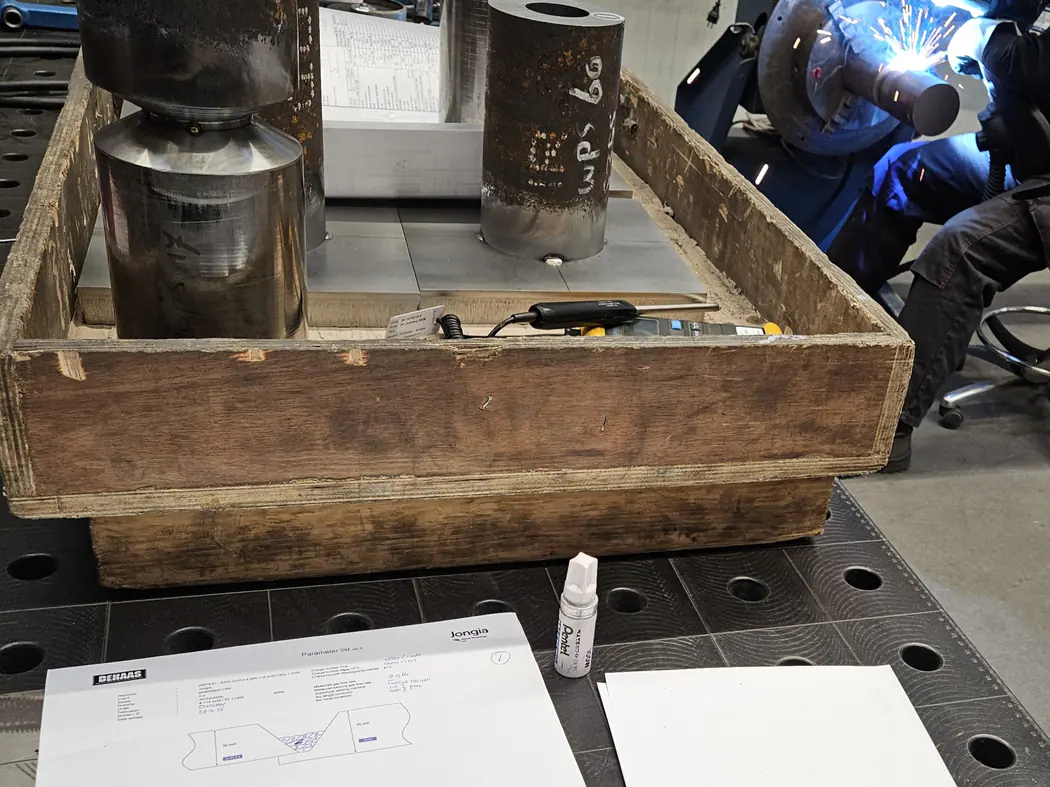
A WPS is a detailed welding instruction for a specific joint. It defines every variable the welder must follow: the welding process, parent material and thickness, filler metal, joint preparation, welding parameters such as current, voltage and travel speed, heat input, preheat and interpass temperature. The content and layout of a WPS for arc welding are set out in EN ISO 15609-1.
The purpose of the WPS is repeatability. Any qualified welder following the WPS should produce a weld with the same properties. In many workshops the WPS is displayed at the workstation so that both the welder and the welding coordinator can refer to it directly.
What is a WPQR?
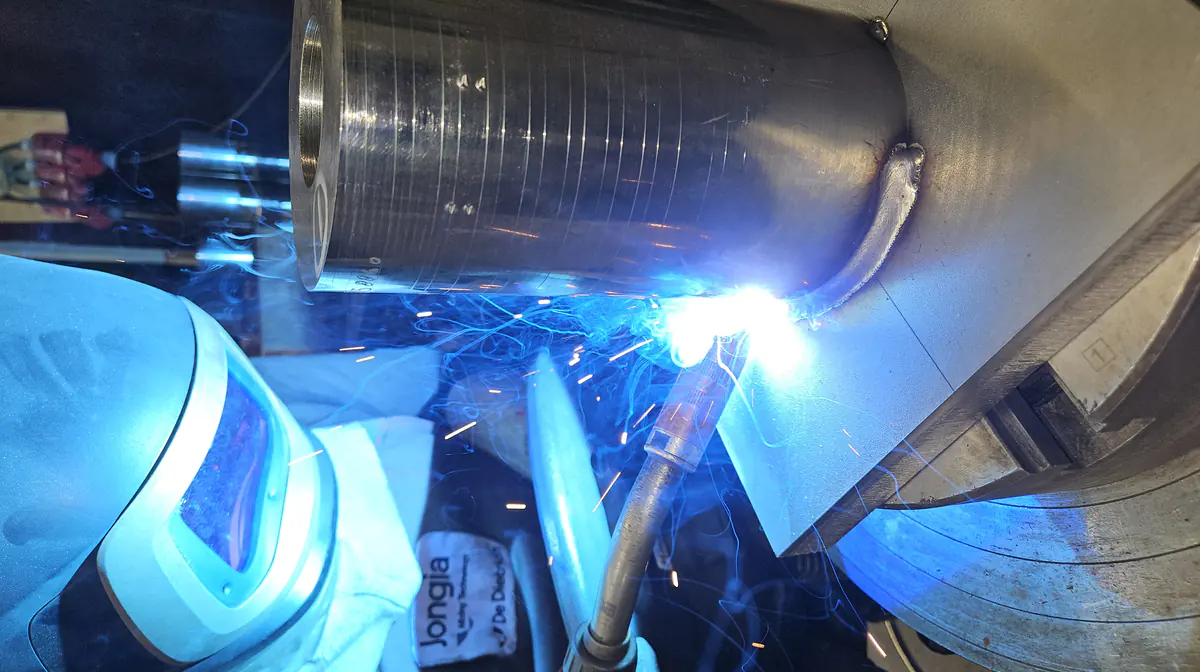
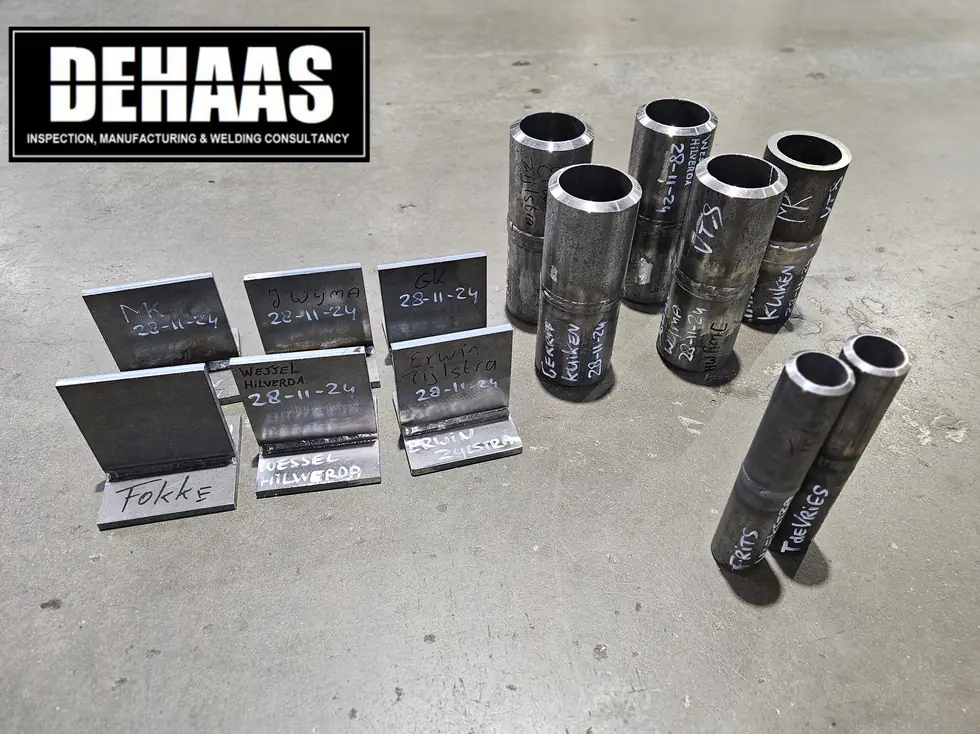
A WPQR is the qualification record demonstrating that a welding procedure delivers the required mechanical and metallurgical properties. It is produced through a welding procedure test, in Europe typically to EN ISO 15614-1. A test piece is welded under the supervision of an examining body and then subjected to non-destructive and destructive testing, including tensile, bend, impact and hardness testing plus macro examination.
If all results meet the standard, everything is recorded in the qualification record: the parameters used, the test results and the range of qualification. A WPQR is therefore not a working instruction but a piece of evidence. Once issued it does not change and, in principle, it does not expire.
The pWPS: where every qualification starts
Before a WPQR exists there is a pWPS, the preliminary Welding Procedure Specification. It looks identical to a WPS but has a different status: its values have not yet been confirmed by testing. The pWPS is the welding engineer's best estimate, based on experience, consumable manufacturer data and previous qualifications.
The test piece is welded to the pWPS, the parameters actually used are recorded and these end up in the WPQR. A carefully prepared pWPS prevents costly retests. Our article on writing a pWPS covers this in detail.
How pWPS, WPQR and WPS fit together
The three documents form a fixed chain in a fixed order:
- The pWPS describes the intended procedure for the qualification test.
- The test piece is welded and tested; the results and the range of qualification are recorded in the WPQR.
- One or more production WPSs are then written, each staying within the range of the WPQR.
A single WPQR can therefore support several WPSs. A qualification on 10 mm plate covers a thickness range within which you may write separate WPSs for 6, 8 and 12 mm. Conversely, a WPS can never extend beyond the range of the WPQR it is based on.
Who writes and who approves the documents?
The pWPS and WPS are drawn up by or on behalf of the manufacturer, in practice by a welding engineer or welding coordinator with tasks as defined in ISO 14731. The procedure test itself takes place under the supervision of an examiner or examining body, which marks the test piece, witnesses the welding and reviews the test results. For pressure equipment under PED 2014/68/EU, approval by a notified body or a recognised third-party organisation is mandatory from category II upwards.
The manufacturer remains responsible for correct application. A valid WPQR on file does not automatically mean every WPS referring to it is correct. Translating a WPQR into sound WPSs requires knowledge of the qualification rules, which is exactly what our WPS development service provides.
Common mistakes in practice
Audits and client assessments reveal the same misunderstandings time and again:
- A WPQR is handed to the welder as a working instruction, where a WPS is required.
- A WPS references a WPQR but falls outside its range, for instance a different material group or a greater thickness.
- Production welding is carried out on a pWPS alone, although the contract or standard demands a qualified procedure.
- Old qualifications to withdrawn standards are reused without review.
If you want certainty about your documentation, an independent review of your WPSs and WPQRs is the logical first step. DEHAAS carries out such reviews for clients across Europe and North America, hands-on and independent of any certification body.
Frequently asked questions
Colloquially, yes. Strictly speaking the qualification is the whole process of pWPS, test piece and testing, while the WPQR is the record in which the results and the range of qualification are documented.
A WPQR to EN ISO 15614-1 has no expiry date. It remains valid as long as the recorded data are complete. Do check for additional client or standard requirements, which sometimes call for a review against the current edition.
That depends on the application. As soon as a standard or client requires qualified procedures, for example EN 1090-2 from execution class EXC2 or work under the PED, every WPS must demonstrably rest on a valid qualification.
As many as you need, provided each WPS stays entirely within the WPQR's range for material group, thickness, process and filler metal, among other variables.
More from the knowledge centre
Have a welding or QA/QC question?
Ask the DEHAAS Welding & Quality Assistant, have your case reviewed by a specialist, or call us directly.