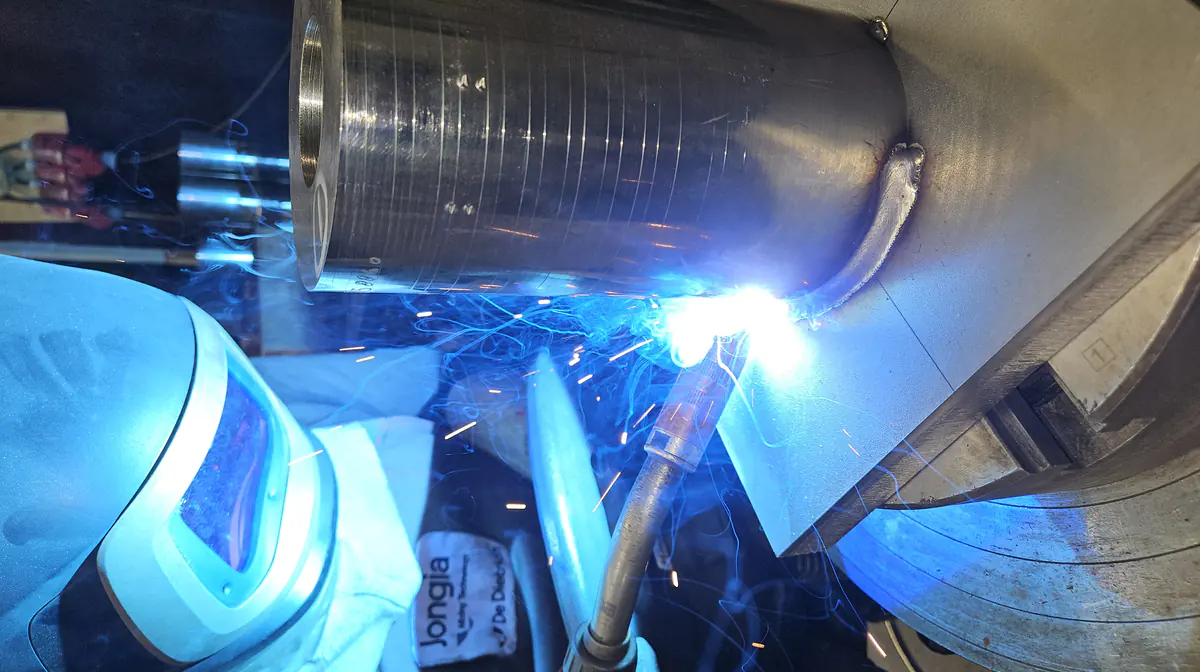
Operator qualification to ISO 14732 for mechanised and orbital welding
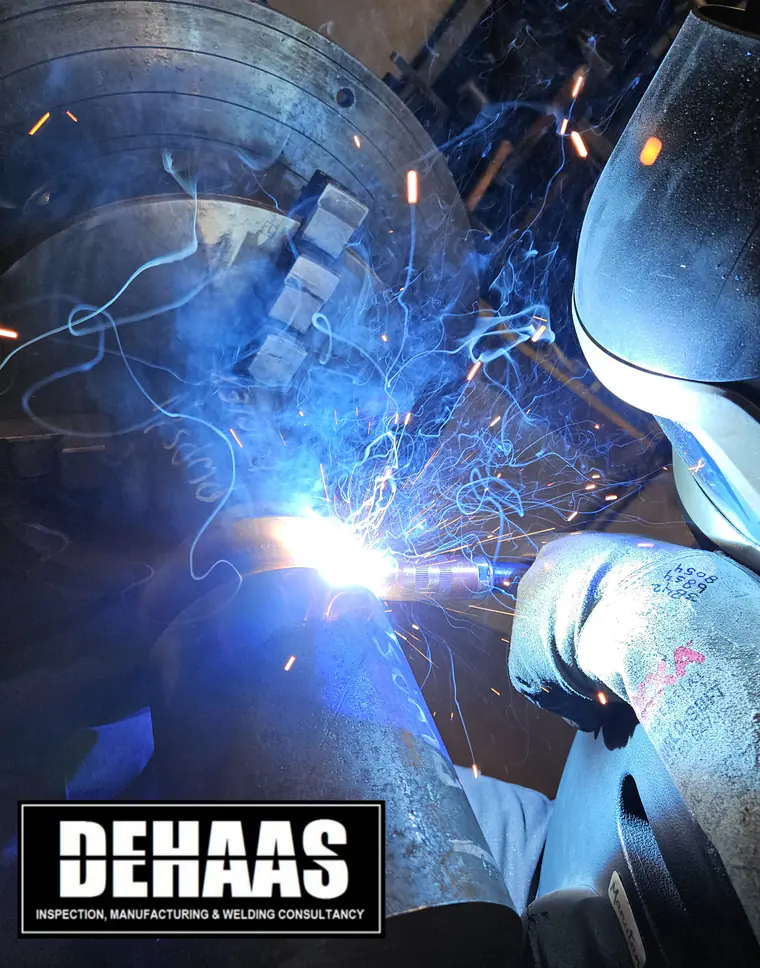
As soon as the torch is no longer guided by hand, the qualification of the person at the controls changes. Anyone running a welding robot, a tractor or carriage system, a submerged arc installation or an orbital welding head is not a welder in the sense of ISO 9606-1 but an operator. Operator qualification to ISO 14732 covers this group: welding operators and weld setters for mechanised and automatic welding of metallic materials.
This article explains when ISO 14732 applies, how an operator can be qualified, what the range of qualification covers and how long it remains valid. EN 1090-2 explicitly requires ISO 14732 for operators, and ISO 3834 requires demonstrably qualified welding personnel, so for steel fabricators and pressure equipment manufacturers this is anything but theoretical.
Welder or operator: where is the line?
The distinction lies in who controls the torch movement and the parameters. In manual welding, including semi-automatic MAG with wire feed, the welder guides the torch by hand and ISO 9606-1 applies. In mechanised welding the equipment carries out the movement and parameters, but the operator can adjust during welding. In automatic welding there is no manual intervention during the weld.
- robotic welding of structural and machine components
- submerged arc welding on a gantry or column and boom
- orbital TIG welding of pipework, for example in food and pharmaceutical plants
- welding with a carriage or tractor along a guide rail
Anyone who tacks or repairs by hand in the same production normally needs a welder qualification. See our article on welder qualification to ISO 9606-1.
Operator and weld setter
ISO 14732 distinguishes two roles. The operator runs the equipment during welding. The weld setter prepares it: programming the robot, setting parameters and checking the set-up before production starts. One person often does both, but that is not required, and both roles can be qualified. The split makes clear to auditors who is responsible for what.
Four ways to qualify an operator
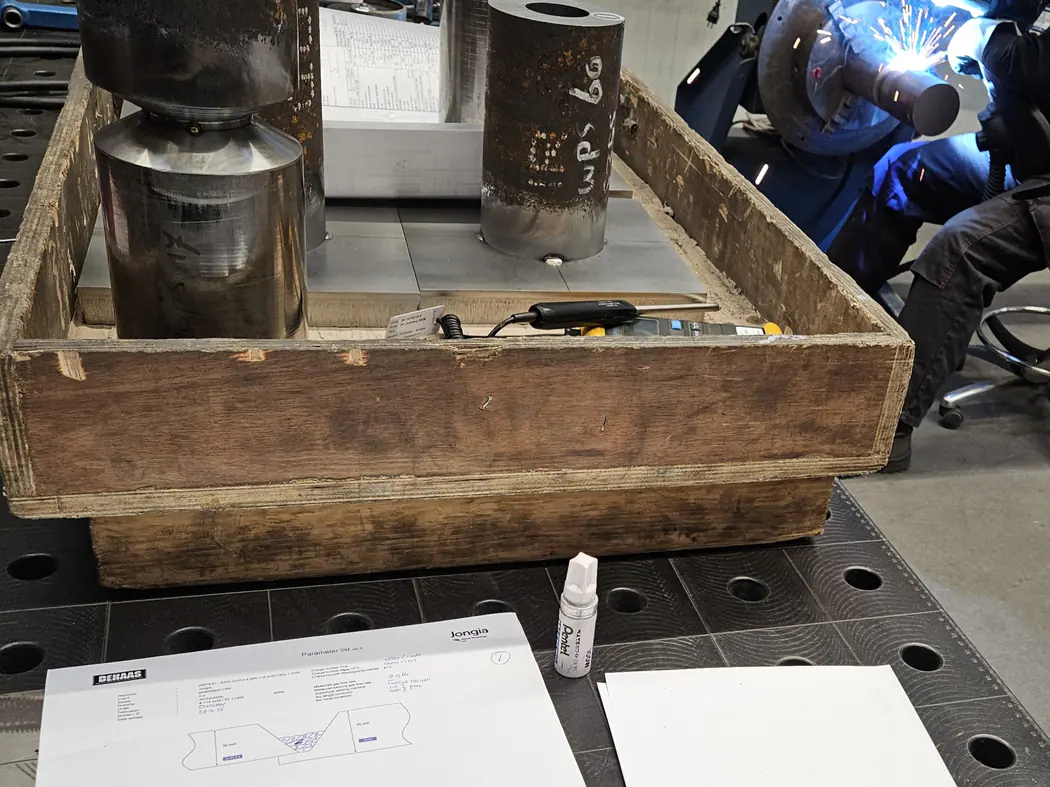
- Welding procedure test. The operator who welds the test piece for a WPQR to EN ISO 15614-1 can be qualified by it.
- Pre-production test. A test piece simulating production, to ISO 15613.
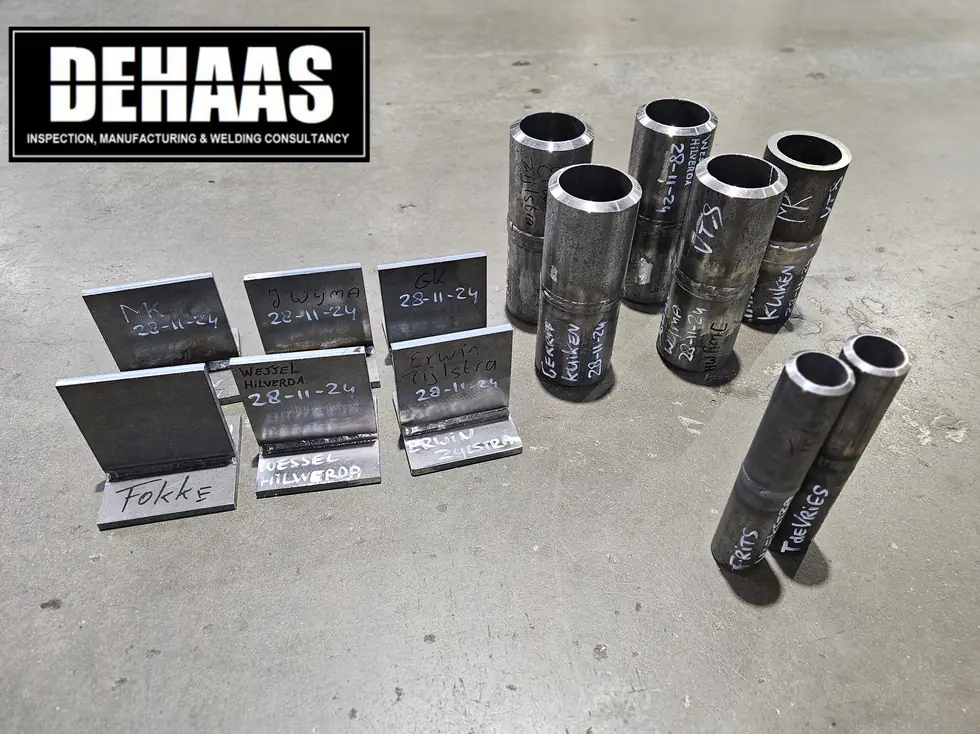
- Standard test piece. A test modelled on welder qualification testing.
- Production test. Testing of welds from actual production or a production sample.
Functional knowledge of the equipment is also part of the qualification: setting and checking parameters, joint tracking and arc length control, and recognising deviations. For series production the production test is often the most efficient route, with no extra material and fully representative conditions.
What does the ISO 14732 range of qualification cover?
An operator's range is structured differently from a manual welder's. Material, thickness and diameter carry less weight because the equipment largely fixes the execution; the emphasis is on process and control functions. Requalification is needed for changes such as:
- the welding process, for example from MAG to submerged arc
- from direct to remote visual control via camera or screen
- removal of automatic arc length control or automatic joint tracking
- switching between single-run and multi-run welding
Check client and application standard requirements too. Operator qualification does not replace WPQR qualification of the procedure itself.
Validity, confirmation and prolongation
The qualification starts on the date the test piece was welded. As with ISO 9606-1, the welding coordinator or a responsible person at the employer must confirm every six months that the operator has worked within the range. If the operator has not used the process for more than six months, or there is a specific reason to question his skill, the qualification lapses.
For prolongation, ISO 14732 offers routes similar to ISO 9606-1: a retest, periodic verification using tested production welds, or continued validity where the company works under a quality system and records test results regularly.
Practical points
- Record which equipment and functions each operator uses; a robot with joint tracking does not automatically cover equipment without it.
- Keep the production tests and NDT reports you intend to use for prolongation, linked to operator and date.
- Make sure the WPS reflects the mechanised execution, including travel speed, wire feed and weaving parameters.
- Include operators in the welder register of your ISO 3834 or EN 1090 file.
DEHAAS helps choose the qualification route, set up the test and track validity.
Frequently asked questions
An operator, qualified to ISO 14732. If the same person tacks or repairs by hand, a welder qualification to ISO 9606-1 is needed for that work.
Yes. The orbital head performs the movement to preset parameters, so it is mechanised or automatic welding and the person running it is qualified as an operator.
Yes, a successful procedure test is one of the recognised routes in ISO 14732. Record it in a separate qualification certificate in the operator's name.
That depends on the prolongation route. With consistent six-monthly confirmation and regularly tested production welds, a new test can often be avoided. Without that evidence, periodic retesting is required.
More from the knowledge centre
Have a welding or QA/QC question?
Ask the DEHAAS Welding & Quality Assistant, have your case reviewed by a specialist, or call us directly.