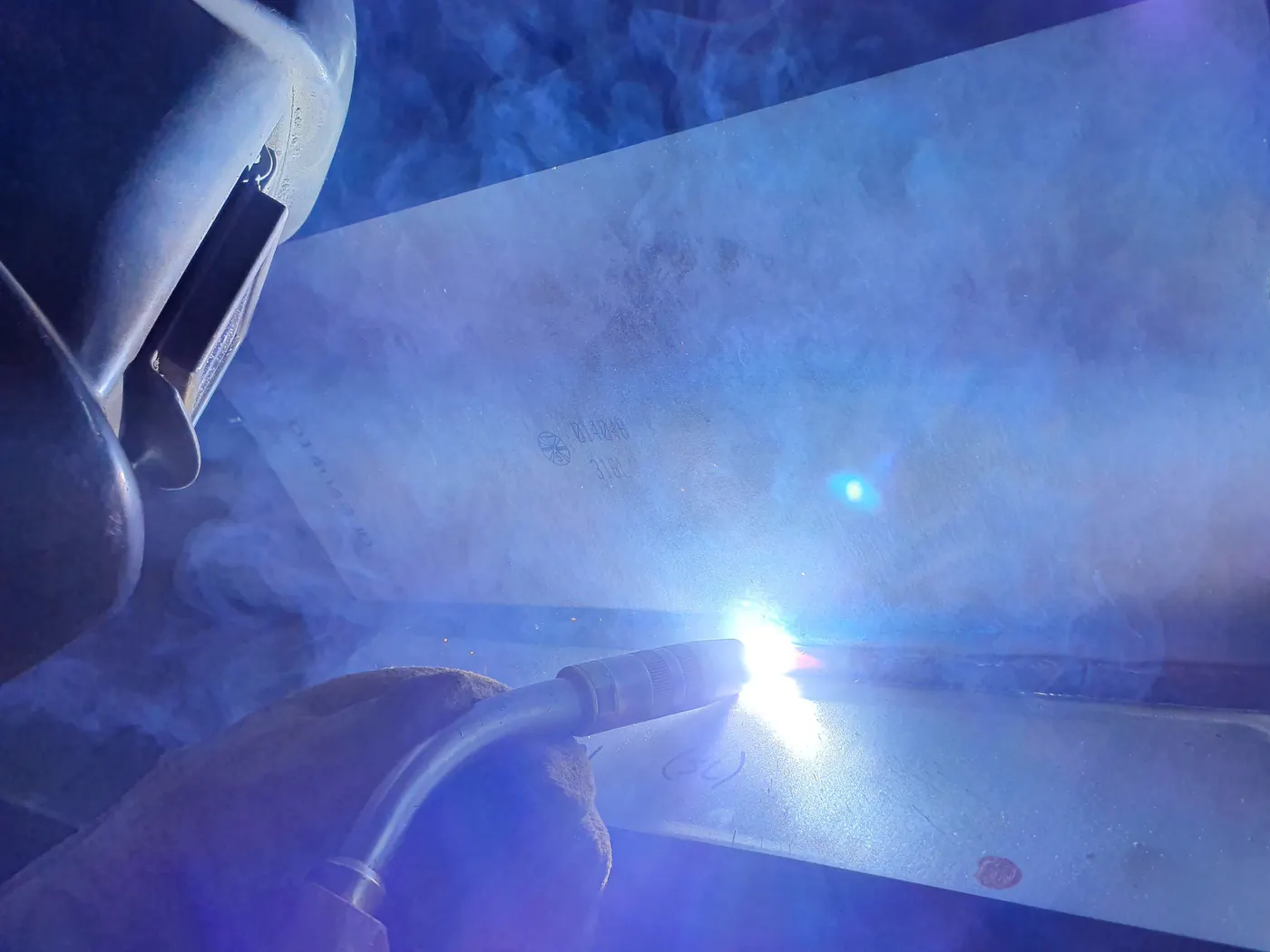
Welding cast iron
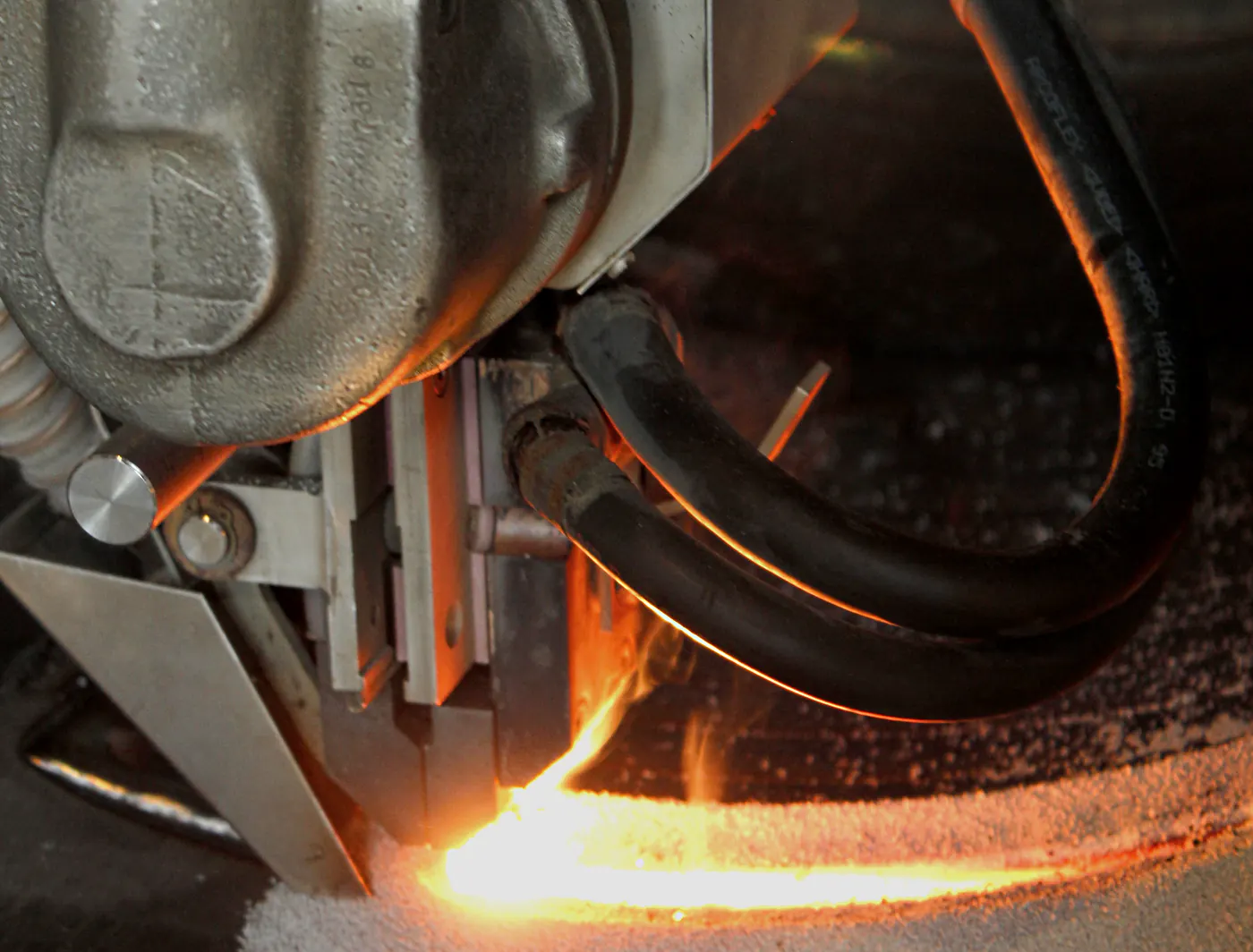
Welding cast iron is repair work, not fabrication. The material contains 2 to 4 percent carbon as graphite, is brittle and has almost no ductility. Every welding operation introduces stress into a material that cannot absorb it through deformation, so it cracks.
A successful repair is nonetheless possible, provided you know which cast iron you are dealing with and which of the two routes you choose.
Grey, ductile or white
In grey cast iron the graphite is present as flakes that act as internal notches. The material is therefore brittle and highly crack sensitive when welded. In ductile iron the graphite is spheroidal, making it considerably tougher and more weldable.
White cast iron holds its carbon as carbide, is extremely hard and practically unweldable. Establish first which type you have, for example from a fracture surface, a spark test or a hardness measurement. Welding without that determination is guesswork.
Cold welding with nickel electrodes
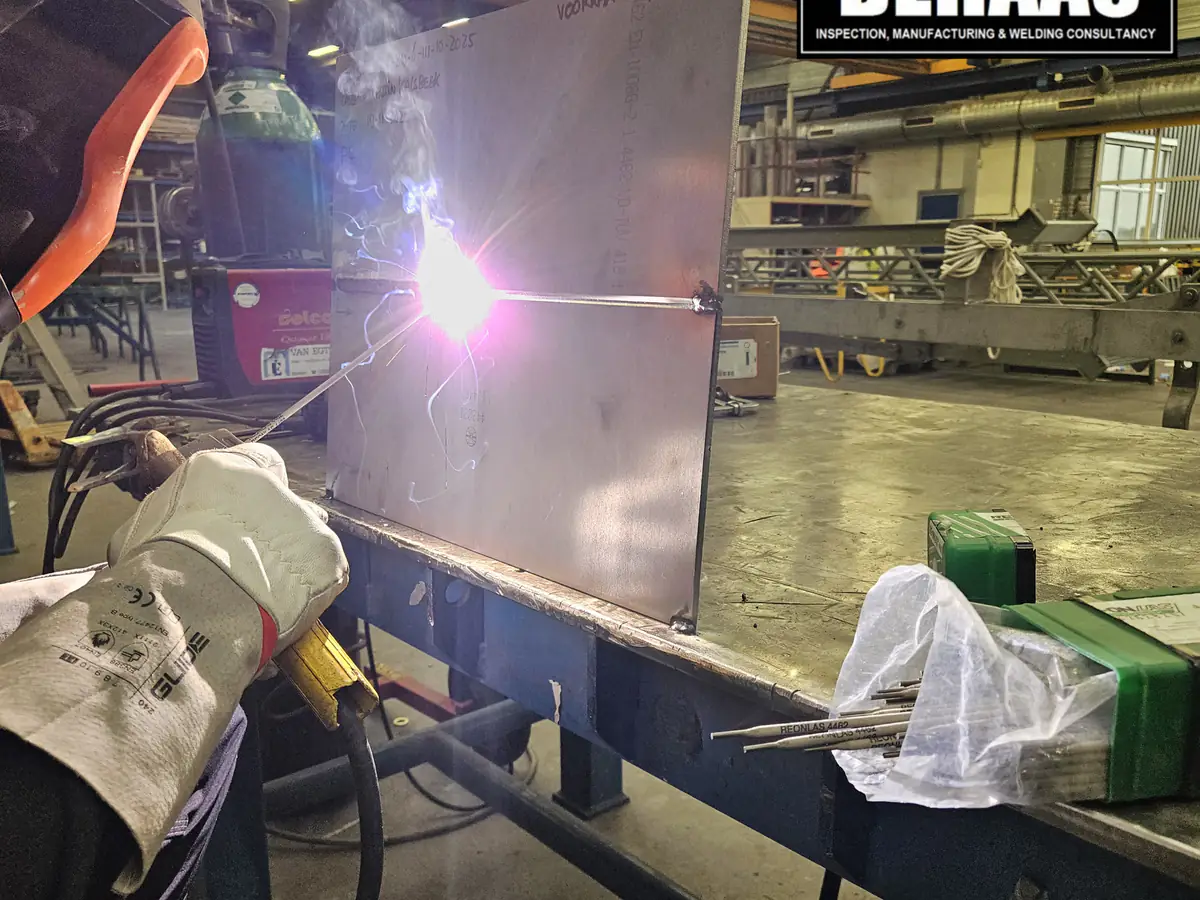
The common repair method is cold welding: welding at low temperature with a nickel bearing electrode, in short runs of a few centimetres, with pauses so the temperature stays below roughly 60 degrees.
The nickel bearing weld metal is soft and ductile, absorbs shrinkage and forms no hard carbide with the carbon from the iron. Each short run is lightly peened immediately after deposition to relieve shrinkage stress. That peening is not folklore but decisive for success.
Hot welding
The other route is hot welding: preheating the whole part to 500 to 600 degrees, welding with a cast iron filler rod, then cooling very slowly in a furnace or in insulating wool. The result matches the parent material in colour and machinability.
This method gives the best properties but requires a furnace, considerable time and the ability to heat the entire component. For large or installed parts that is rarely feasible, leaving cold welding as the option.
When you are better off not welding
On old engine blocks and pumps that have carried oil or water for years, that fluid has soaked into the porous material. Welding releases it and causes porosity that cannot be welded out. Burning off beforehand sometimes helps, but not always.
On a load bearing part whose failure creates danger, welding is rarely the right choice either: the repair is never as reliable as the original casting. Replacement, or a cold connection with bolts or pins, is then wiser.
Frequently asked questions
A nickel bearing electrode, usually pure nickel or a nickel iron alloy. Pure nickel gives the softest, most machinable weld metal; nickel iron is stronger and is the usual choice on ductile iron.
Gentle preheat to 50 or 100 degrees can help drive off moisture and slow cooling slightly, but the essence of cold welding is keeping the temperature low. High preheat belongs to the hot welding method.
Peening immediately after deposition, while the weld metal is still hot, stretches it plastically and so lowers shrinkage stress. In cast iron, which cannot absorb that stress by deformation, that is often the difference between a crack and a successful repair.
Sometimes, but expect porosity from absorbed oil and cracks reappearing beside the repair. Often drilling out and fitting a thread insert, or a cold repair method, is more reliable. Judge case by case whether the repair is worth the effort and risk.
More from the knowledge centre
Have a welding or QA/QC question?
Ask the DEHAAS Welding & Quality Assistant, have your case reviewed by a specialist, or call us directly.