Hydrogen and the energy transition
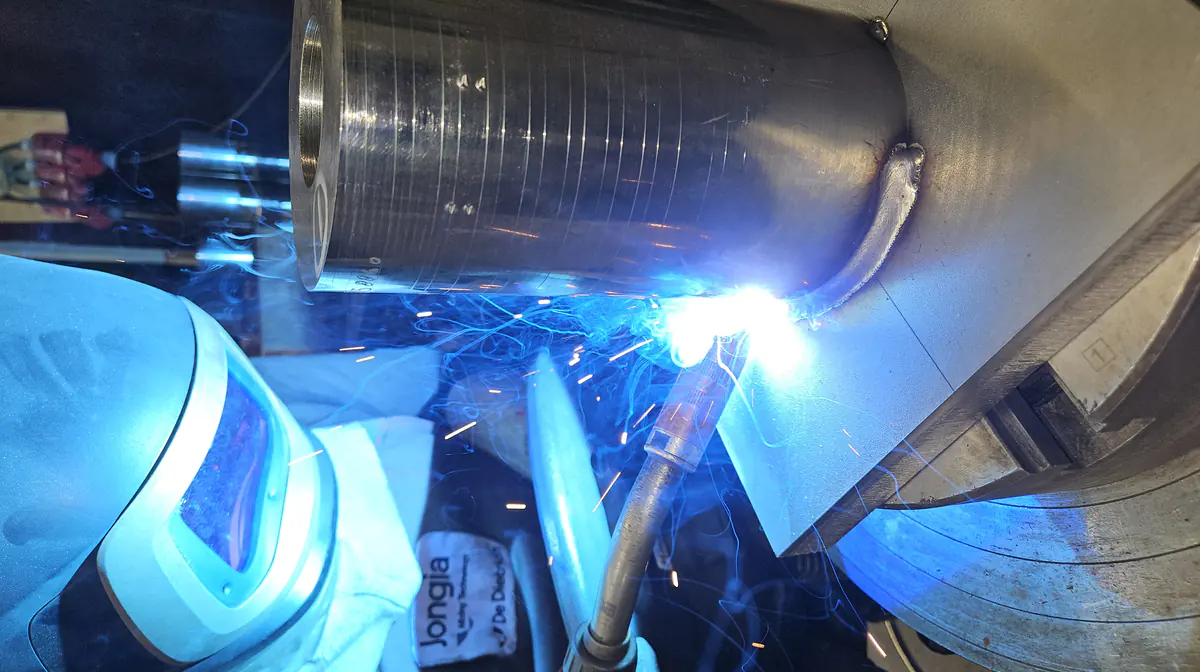
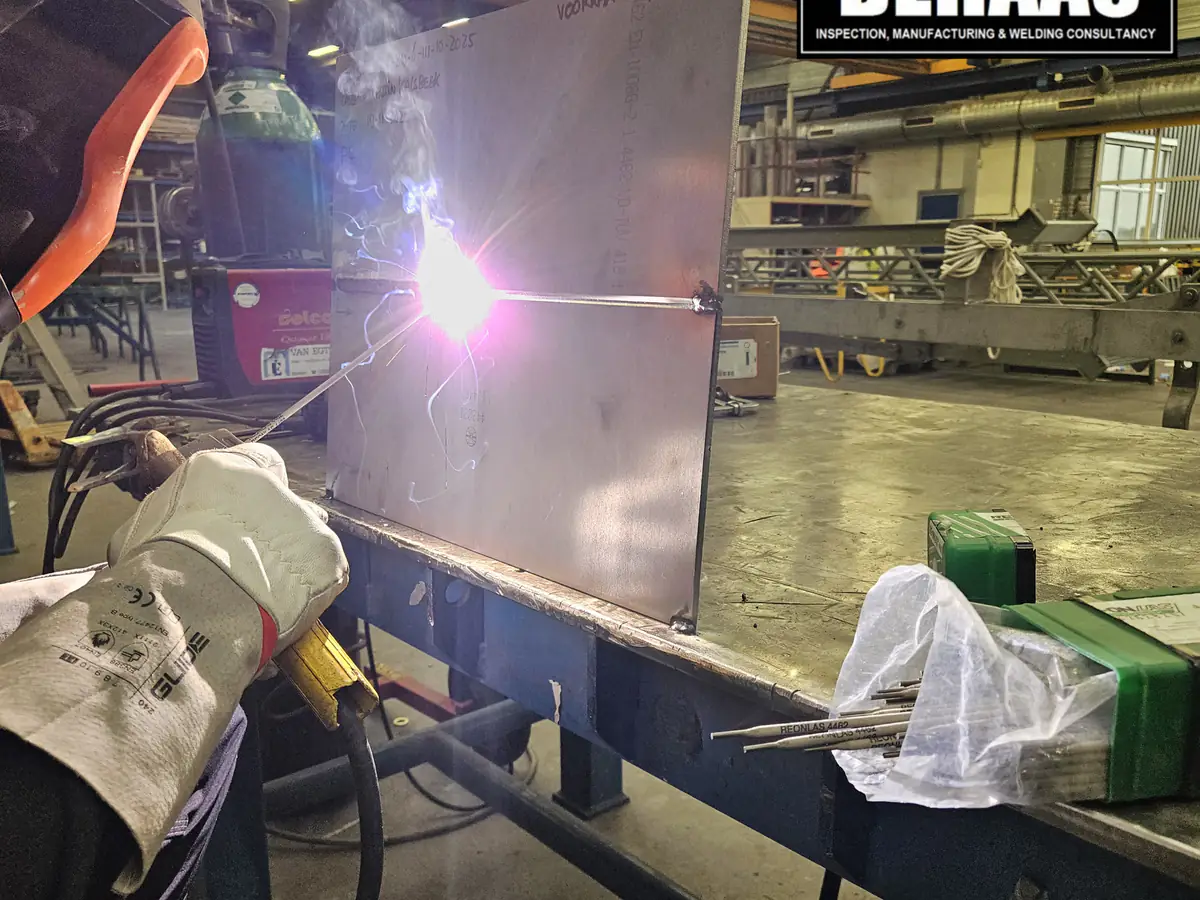
Hydrogen imposes welding requirements many companies are not yet used to. The molecule is small enough to leak through a joint that was tight enough for natural gas, and it enters the steel where it lowers toughness. At the same time the regulatory framework is still moving, which means the project specification often weighs heavier than the standard.
- Material selection and hardness limits for hydrogen service
- ASME B31.12 and the European frameworks
- Leak tightness and increased NDT extent
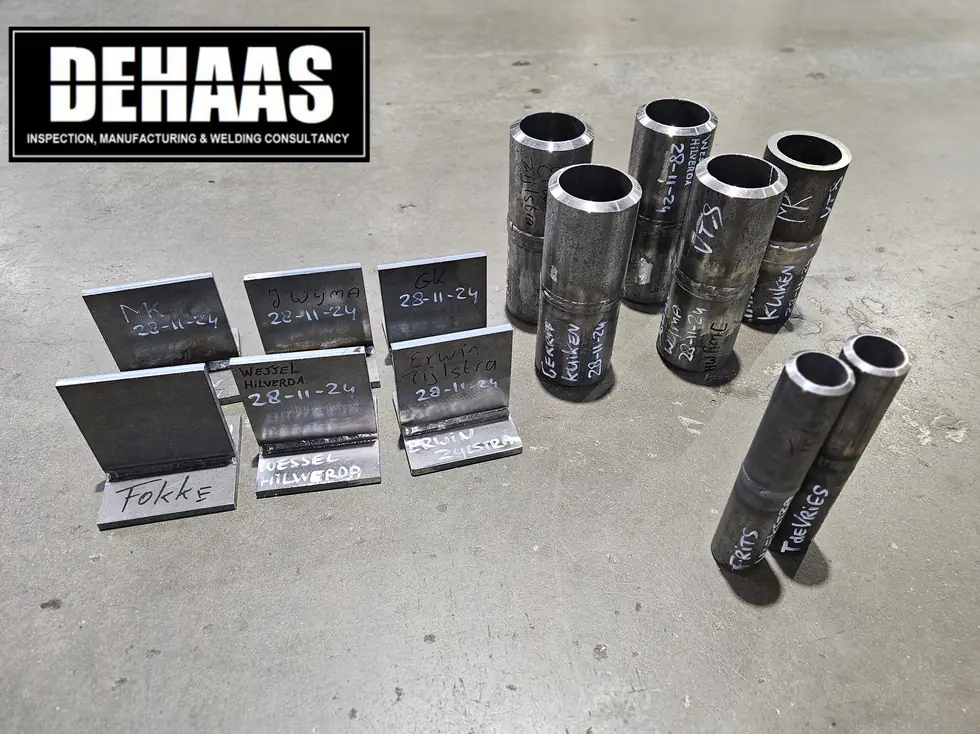
- Qualifying procedures for new applications
DEHAAS supports companies building piping, storage, electrolysers or components for hydrogen applications, and assesses existing procedures for suitability in hydrogen service.
Hydrogen embrittlement in brief
Atomic hydrogen enters the steel lattice and collects at stress concentrations, inclusions and hard structures. There it lowers toughness and promotes crack growth. The effect is strongest at high strength, high hardness and high stress, exactly the combination that can arise in the heat affected zone of a weld.
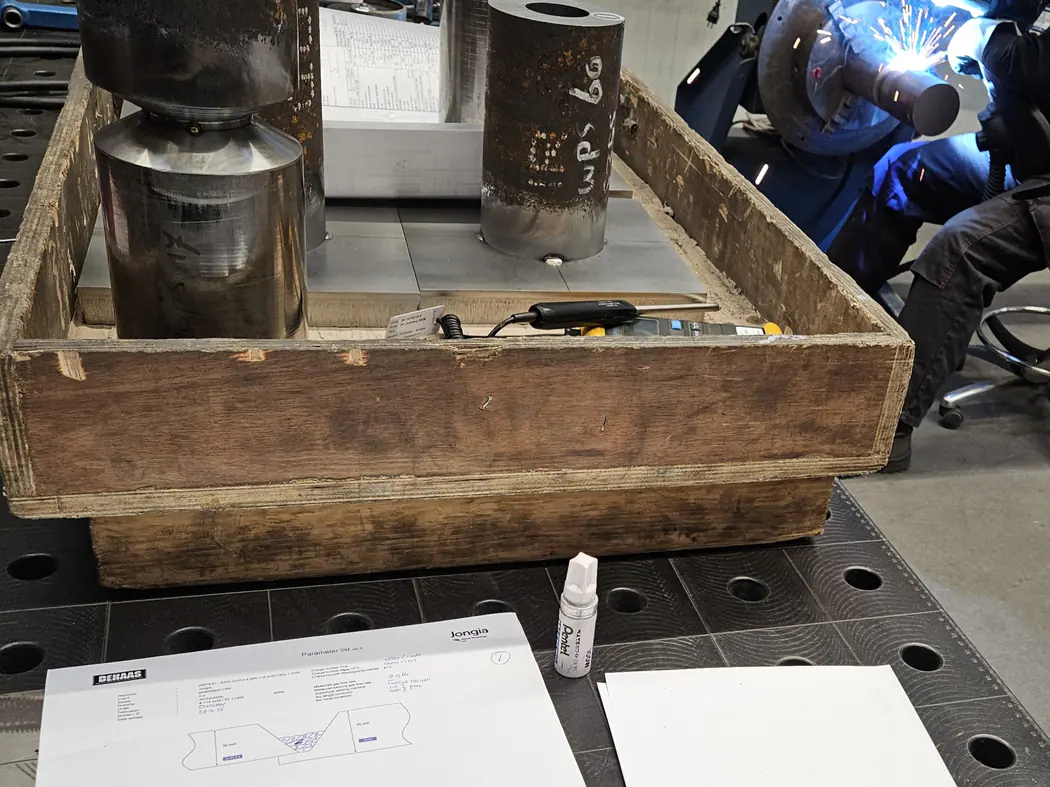
The practical translation is a hardness limit. Where ordinary structures work to 380 HV10, hydrogen service moves towards 250 HV10 or lower, which drives preheat, heat input and sometimes a heat treatment. See hardness testing.
Material selection
For gaseous hydrogen at moderate pressure, low alloy, low carbon steels with controlled hardness often perform well. At high pressure and for liquid hydrogen the choice moves to austenitic stainless steel, which is far less susceptible to embrittlement thanks to its face centred cubic lattice.
Note that not every austenitic grade performs equally: grades with low nickel can form deformation martensite under stress, and that is susceptible. Cryogenic applications add requirements for notch toughness at very low temperature.
Standards in motion
ASME B31.12 is currently the most complete code for hydrogen piping and pipelines, with its own material, design and testing requirements. In Europe the work is done under EN 13480 and the PED, supplemented with project specific requirements; EN 17124 concerns the quality of the hydrogen itself, not the construction.
Because the standards landscape has not settled, the client's or grid operator's project specification governs in practice. Establish that hierarchy before qualifying, because a WPQR on the wrong basis is wasted work.
Leak tightness and examination
Hydrogen leaks through openings that hold natural gas. That means higher requirements for full penetration and for the absence of interconnected porosity, and often an additional leak test with helium instead of or alongside the usual pressure test.
NDT extent is correspondingly higher, often 100 percent volumetric examination on critical joints. Mechanised UT with phased array is attractive here, because it measures flaw height and so enables a fracture mechanics assessment. See phased array and TOFD.
Frequently asked questions
Sometimes, after assessment. The governing factors are steel grade, hardness of the existing welds, the presence of defects and the operating pressure. That assessment combines material investigation, on-site hardness measurement and a fracture mechanics analysis. Never assume reuse is straightforward.
The project specification sets it. In practice 250 HV10 is often applied, following experience from sour service, and sometimes stricter. Check it before qualification, because the limit determines preheat and heat input parameters.
Almost always yes, because the additional requirements such as hardness and notch toughness are usually not tested in an existing WPQR. Sometimes an existing qualification can be extended with supplementary testing on retained coupon material, if any remains.
Far less susceptible, not immune. Stable austenitic grades with sufficient nickel perform well. Grades that form martensite under deformation, and hardened or heavily cold worked parts, remain a point of attention.
More from the knowledge centre
Have a welding or QA/QC question?
Ask the DEHAAS Welding & Quality Assistant, have your case reviewed by a specialist, or call us directly.