Tank fabrication
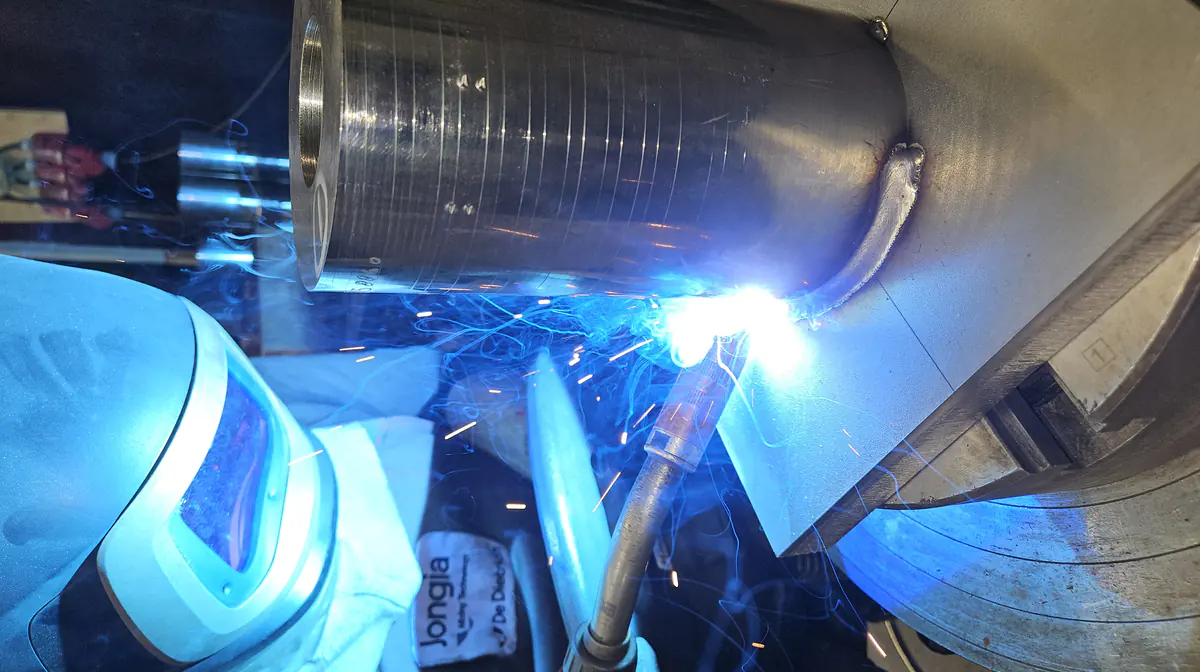
A storage tank is a structure whose skin consists almost entirely of welded seams, erected on site, outdoors, often under time pressure. Wall thickness is usually modest, but the total length of weld is enormous and the consequence of a leak can be soil contamination.
- EN 14015, API 650 and BRL K903
- Procedures for bottom, shell and roof
- Leak testing and vacuum box examination
- Inspection during erection and at handover
DEHAAS supports tank builders and clients with qualification, welding plans, inspection during erection and review of the handover dossier, both for new build and for refurbishment of existing tanks.
The standards framework
In Europe, EN 14015 covers above ground, vertical, cylindrical, flat bottomed steel storage tanks. Projects with an international or American background apply API 650. In the Netherlands, storage of soil threatening liquids adds BRL K903 and its certification scheme.
These frameworks differ in thickness calculation, required NDT extent and the way the bottom is tested. Establish at project start which framework governs and which is supplementary, and record that in the quality plan.
Bottom, shell and roof each ask something different
Bottom plates are largely laid with lap joints and fillet welds, where leak tightness matters more than strength. The shell consists of courses with vertical and horizontal butt welds, where strength governs and thickness decreases from bottom to top.
The annular ring and the shell to bottom connection are the most critical: the highest stresses coincide there with the greatest likelihood of corrosion. That joint carries stricter NDT requirements and often a higher quality level than the rest of the bottom.
Testing for tightness
Bottom seams are usually tested with a vacuum box and soap solution: the box is placed over the seam, a partial vacuum is drawn and leakage reveals itself as bubbles. For the shell to bottom fillet welds, penetrant testing or a diesel penetration test is often used.
The tank as a whole is hydrostatically tested by filling it with water, which also loads and settles the foundation. That is simultaneously a strength test and a settlement test, and the settlement measurement belongs in the dossier.
Inspection during erection
Because a tank is built from the bottom up, a defect in a lower course can later only be repaired at great cost. Inspection must therefore run alongside erection, not behind it. That means hold points per course, NDT reported within days and immediate disposition of non-conformities.
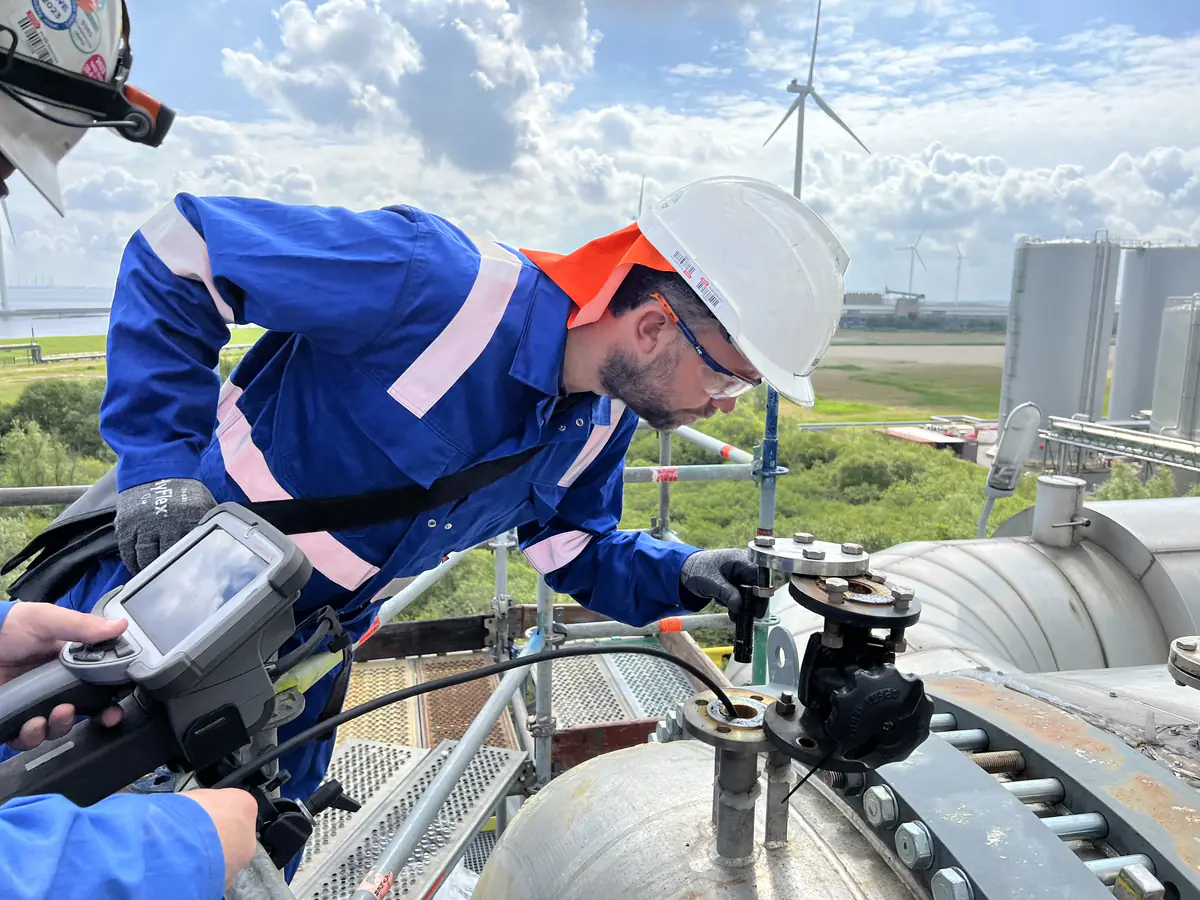
DEHAAS provides that supervision on behalf of the client, including on-site verification of welder qualifications and checks on dimensions and roundness. See fabrication inspection.
Frequently asked questions
Both cover above ground cylindrical storage tanks, but with different design rules, material requirements and testing extent. API 650 is the most used worldwide in oil and gas, EN 14015 is the European standard. A tank cannot be built half under one and half under the other.
When installing and maintaining tank installations for soil threatening liquids in the Netherlands. It is a certification scheme for the company, with requirements for personnel, working method and inspection. It sits on top of the design standard rather than replacing it.
Usually with a vacuum box and soap solution over all bottom seams, supplemented by visual examination and, where needed, penetrant testing. On existing tanks the bottom plate is examined for corrosion from the inside with magnetic flux leakage or ultrasonics.
Yes. For refurbishment and re-inspection we assess the welding side: condition of the seams, repair history, suitability of repair procedures and the qualification of the contractor. Thickness measurement and structural assessment are done together with the inspection body.
More from the knowledge centre
Have a welding or QA/QC question?
Ask the DEHAAS Welding & Quality Assistant, have your case reviewed by a specialist, or call us directly.