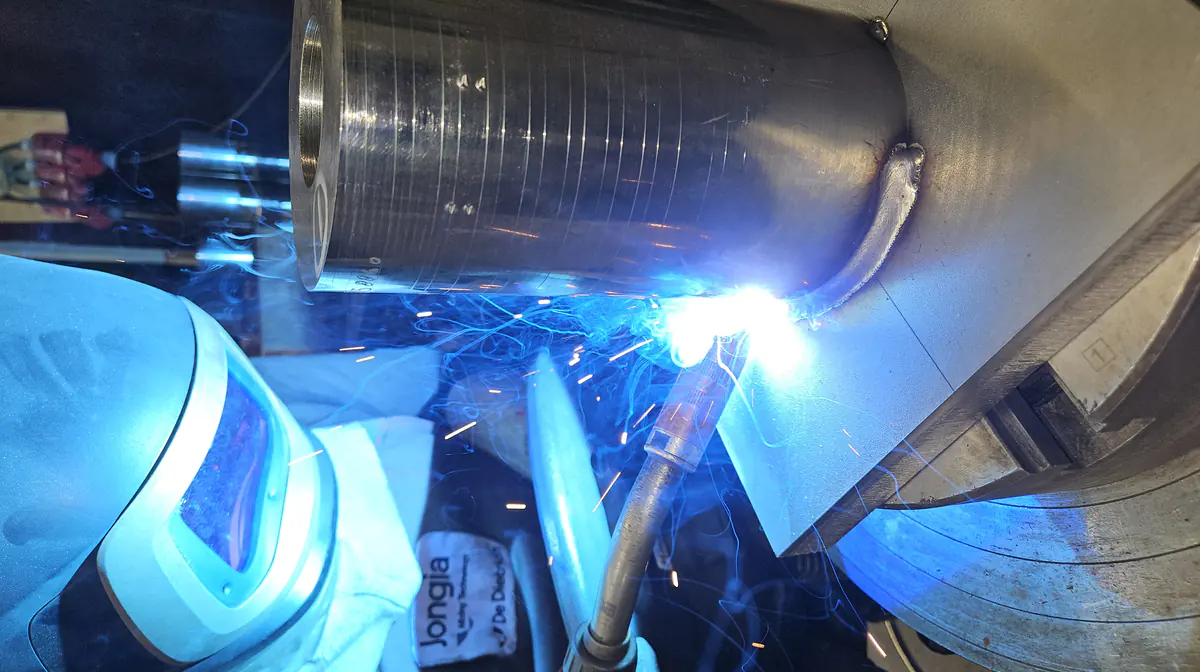
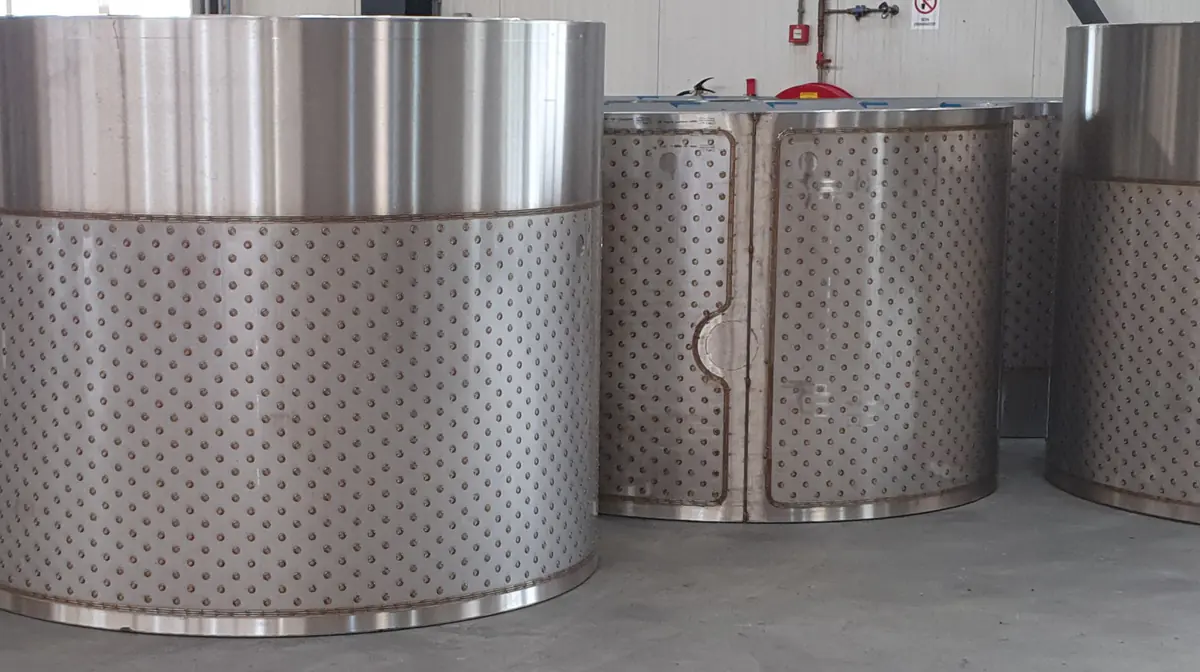
Petrochemical and process industry
In the process industry welding is rarely visible and always critical. A failed line means not just lost production but a safety incident. That is why almost everything is governed by system classes, welding plans and defined inspection extent, and why every weld is recorded traceably.
- ASME B31.3 and EN 13480 for process piping
- PMI to prevent material mix-up
- Welding plans and NDT extent per system class
- Inspection during turnaround and overhaul
DEHAAS works for installers, equipment manufacturers and end users in this field: from writing welding and inspection plans to supervision during a shutdown.
ASME B31.3 or EN 13480
Process piping in Europe is usually built to EN 13480, and to ASME B31.3 in projects with an American basis. The two differ fundamentally: ASME works with P numbers and its own qualification system under Section IX, EN with material groups to ISO/TR 15608 and qualification to EN ISO 15614-1.
A WPQR from one system is not automatically valid in the other. If you work in both worlds it pays to set up qualifications so they satisfy both. See ASME IX versus ISO 15614.
Material mix-up and PMI
The classic failure in the process industry is the wrong material in a system: a carbon steel fitting in a stainless line, or 304 where 316 belongs. It is invisible and goes well for years, until the fluid does its work.
Positive material identification is therefore required, using a handheld XRF analyser on a percentage or on all components, including consumables and weld metal. Include PMI in the inspection and test plan with a clear extent, and make sure weld metal is measured too, not just parent material.
Welding plan and NDT per system class
Each piping class carries its own requirements: material, wall thickness, consumable, NDT percentage, hardness limit and any heat treatment. That is captured in a welding plan and tracked per weld in a weld log, so it can later be traced who made which weld and what examination was performed.
Without a weld log a system cannot be released, however good the welds are. See weld map and weld log and the quality control plan.
Turnaround: quality under time pressure
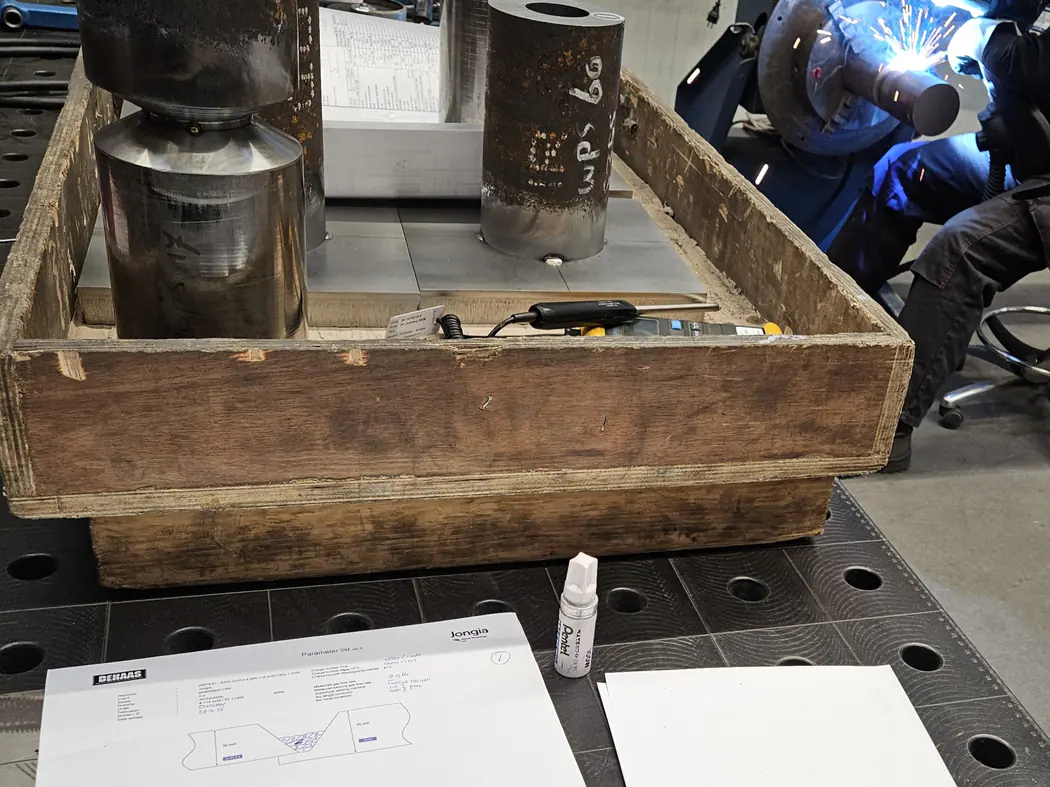
During a shutdown, work that normally takes months is done in days, with many hired welders at once. That is exactly the situation in which qualifications turn out to have expired, procedures do not match the work, and NDT falls behind erection.
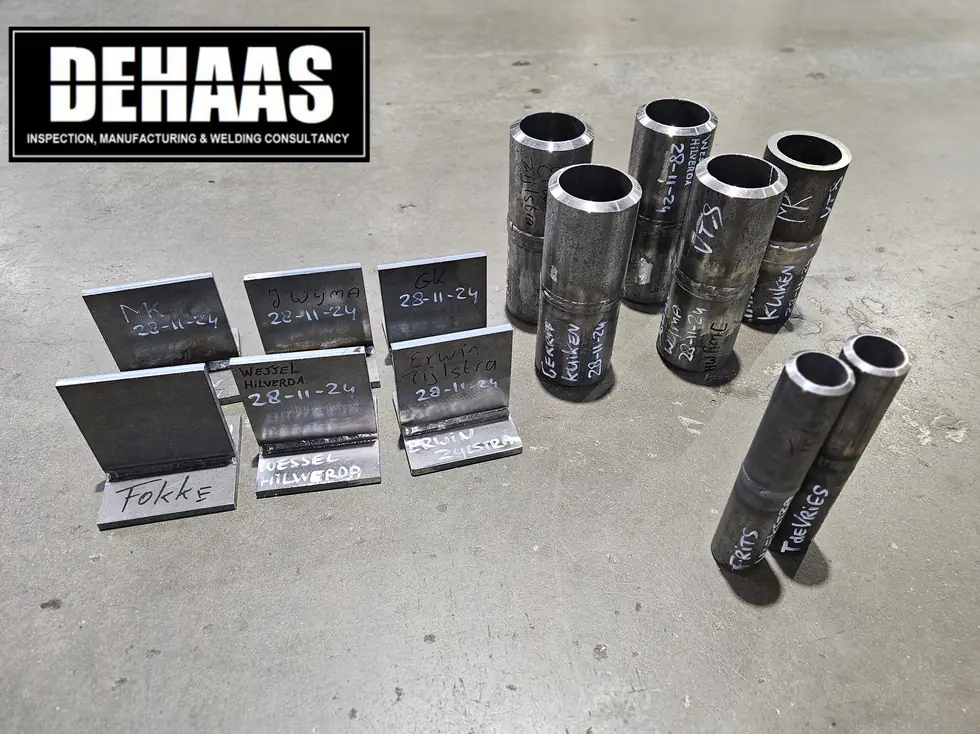
The answer lies up front: verify qualifications, have welders weld a test piece beforehand, have procedures ready for the right diameters and positions, and plan NDT capacity alongside. DEHAAS carries out that preparation and is present during the shutdown for assessment and release.
Frequently asked questions
Positive material identification is a measurement of a component's chemical composition, usually with handheld XRF. It is required when the project specification or end user demands it, which is standard in petrochemical work for alloyed materials and for anything in critical service.
Not automatically. Material grouping, essential variables and testing requirements differ. In some cases an existing qualification can be supplemented with additional testing to satisfy both; that must be assessed case by case.
That follows from the piping class and the code. ASME B31.3 works with percentages per service category, EN 13480-5 with testing groups. Normal fluid service under B31.3 requires 5 percent radiography, while severe cyclic conditions go to 100 percent.
Yes, we provide supervision and release during turnarounds, including on-site verification of welder qualifications and assessment of NDT reports. Plan that involvement into the preparation phase, where the gain is largest.
More from the knowledge centre
Have a welding or QA/QC question?
Ask the DEHAAS Welding & Quality Assistant, have your case reviewed by a specialist, or call us directly.