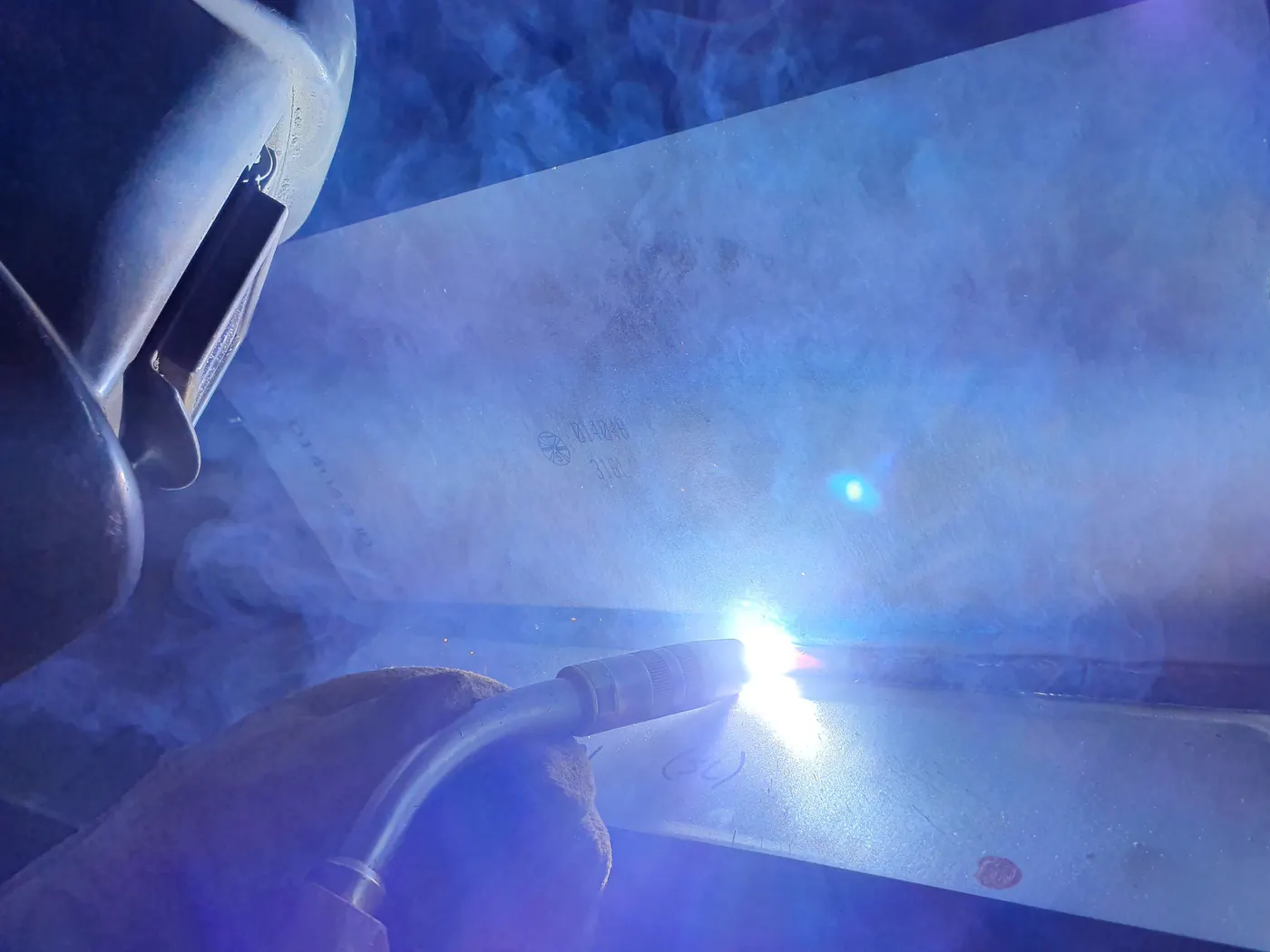
Selecting filler metal
The filler metal determines the strength, toughness, corrosion resistance and hydrogen content of the weld metal. Yet on many shop floors the choice is made on the basis of what is on the shelf. It is one of the few decisions where the wrong reach changes the structural properties in thirty seconds.
This article explains how to read a classification, when to deviate from matching and why storage matters as much as the choice itself.
Reading the classification
A classification such as EN ISO 14341-A G 46 4 M21 3Si1 contains everything you need. G denotes solid wire, 46 a minimum yield strength of 460 N/mm2, 4 an impact value of 47 joules at minus 40 degrees, M21 the gas group in which those values apply, and 3Si1 the chemical composition.
Note that last point: the stated properties apply only with the stated shielding gas. The same wire under a different gas achieves different values. That is a detail regularly missing from procedures.
Matching, overmatching and undermatching
Matching means weld metal of the same strength class as the parent material. That is the default and usually correct. Overmatching, with stronger weld metal, looks safer but raises residual stress and cracking risk without always making the joint stronger.
Undermatching is a deliberate choice on high strength steel, especially for fillet welds where the joint is often not the governing section. It lowers residual stress and hydrogen cracking risk. The choice belongs in the structural calculation and must be covered by qualification. See welding fine grain steel.
Hydrogen class and storage
On steel susceptible to cold cracking, the hydrogen content of the consumable is a hard requirement. The designation H5 means a maximum of 5 ml hydrogen per 100 grams of weld metal, H10 a maximum of 10. On S460 and above H5 is usually required, and on heavy walls even less.
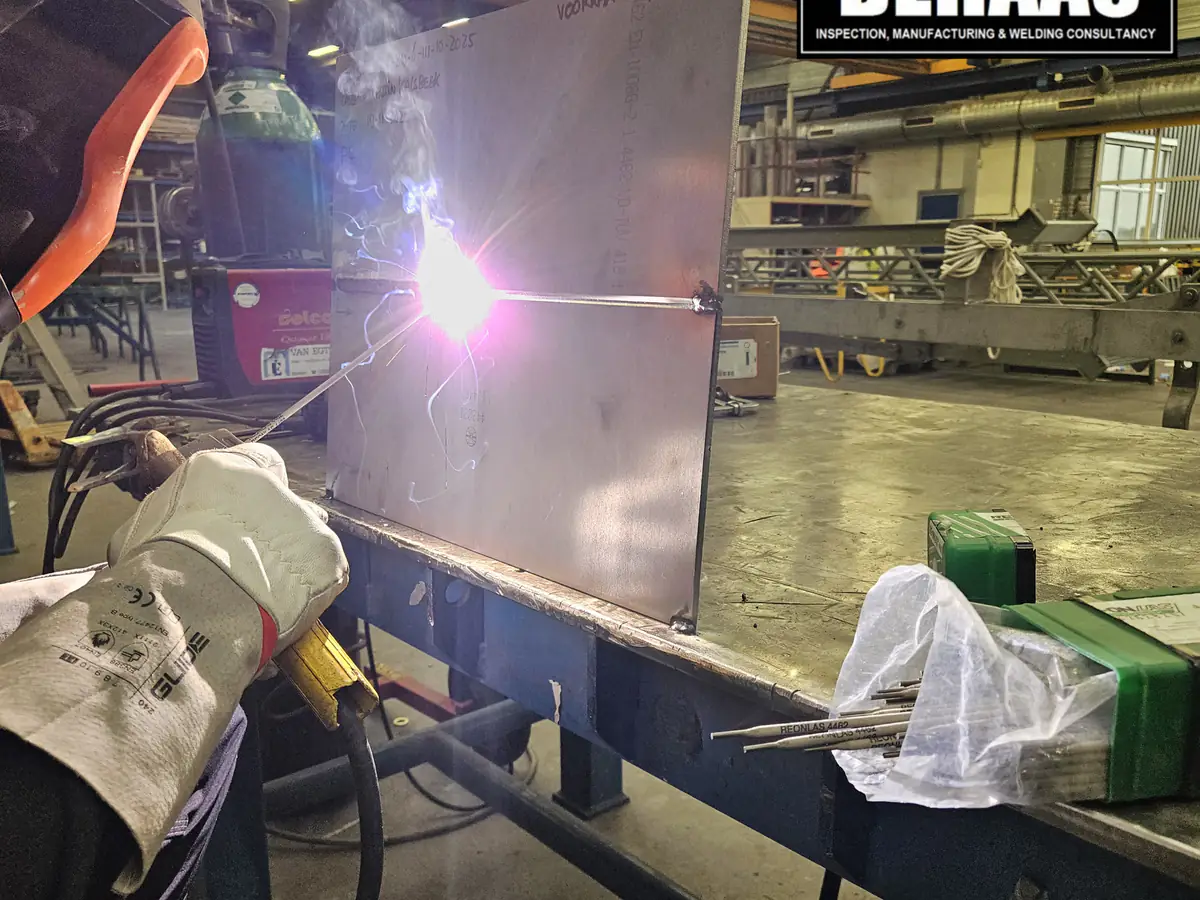
That value only holds if the material stays dry. Basic electrodes absorb moisture from the air and belong in a drying oven and then in a heated quiver. An electrode left open on the bench for a day is no longer an H5 electrode. See preventing hydrogen cracking.
Recording and keeping it traceable
The consumable appears in the WPS with classification and trade name, and where impact requirements apply it is a supplementary essential variable: changing manufacturer then requires a check that the qualification still holds.
For pressure equipment and in higher execution classes the batch number must also be traceable, linked to the weld in the weld log. A box without a label is therefore unusable material, however good the wire itself.
Frequently asked questions
Technically yes, but it is rarely wise. Stronger weld metal carries higher shrinkage stress and higher hardness, raising cracking risk. And the joint is not stronger if the parent material is the governing section.
The manufacturer's data sheet states it, typically a few hours in a heated quiver. Without a quiver it is a matter of minutes to an hour. Once exceeded, the electrode must be redried per the instructions, and that cannot be repeated indefinitely.
For ordinary structural work a works certificate usually suffices. For pressure equipment and higher execution classes an inspection document to EN 10204 is required, sometimes type 3.1. Verify that before purchasing.
No, only under the gas and conditions belonging to the classification. A different gas composition, a different position or markedly different heat input can lower the value. That is why toughness is tested in qualification rather than taken from the brochure.
More from the knowledge centre
Have a welding or QA/QC question?
Ask the DEHAAS Welding & Quality Assistant, have your case reviewed by a specialist, or call us directly.