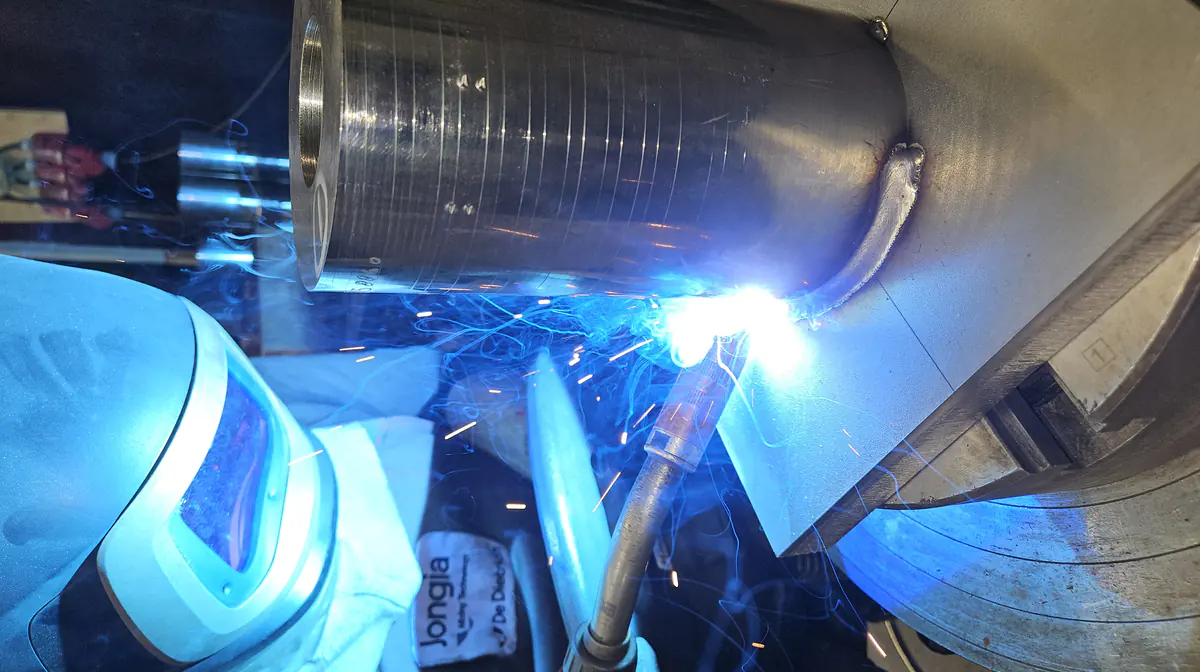
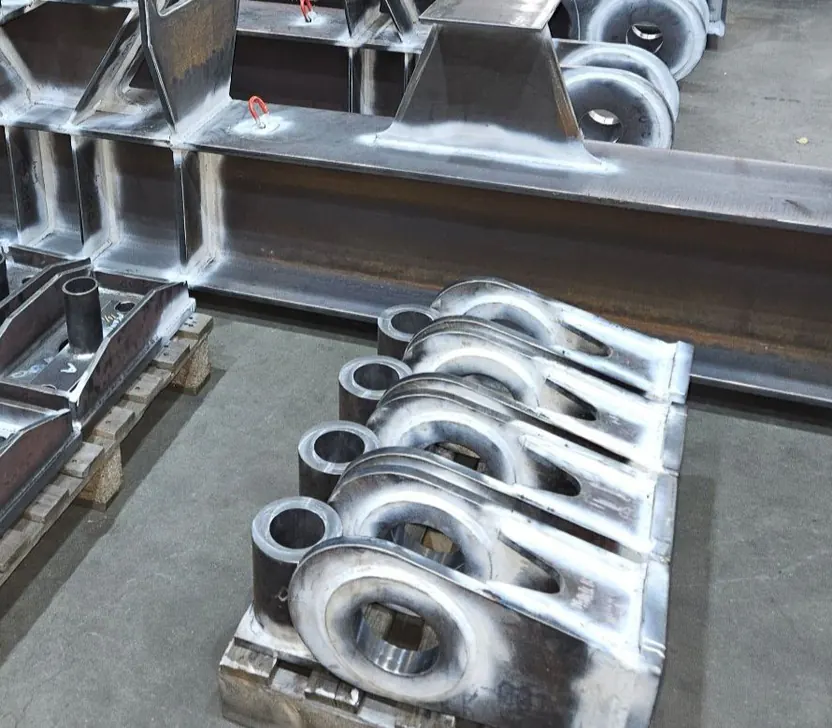
WPS, WPQR and welder qualification
Anyone supplying welded production under EN 1090, ISO 3834, PED 2014/68/EU or a client specification must demonstrate that both the procedure and the welder are qualified. That evidence rests on three documents that are frequently confused: the WPS, the WPQR and the welder certificate. DEHAAS manages the entire route, from the first preliminary procedure to the approved qualification dossier.
- WPQR to EN ISO 15614-1 and ASME IX
- Welder qualification to ISO 9606-1
- Efficient coverage, no redundant testing
- Liaison with laboratory and examining body
We approach it pragmatically. Qualification costs money, so we first establish what is already covered, what can be combined and which single test yields the widest range of approval. You pay for qualifications that genuinely cover your work, not for paperwork that sits in a binder.
What a WPS is and when it is required
A WPS (Welding Procedure Specification) is the working document that tells the welder which process, filler, current range, preheat and joint build-up to use. It is based on an approved qualification record, the WPQR. How the two relate is explained in our article on the difference between a WPS and a WPQR.
A qualified WPS is required for CE marking of steel structures under EN 1090-2 (from execution class EXC2), for ISO 3834-2 and -3 certification, for pressure equipment under PED 2014/68/EU and in virtually every serious client specification in shipbuilding and machine building.
WPS development: from pWPS to working document
DEHAAS drafts your welding procedure specifications, starting with a pWPS for the qualification test and following up with the production WPS. We make sure the parameters are realistic for your workshop and your welders, because a WPS that is not followed in practice becomes an audit finding at the first opportunity.
If you already hold WPSs, we verify that they still stand: does the underlying WPQR cover current work, are the essential variables transferred correctly and do the documents match the standard editions your contracts cite. See our WPS development service.
WPQR qualification to EN ISO 15614-1 and ASME IX
The WPQR (Welding Procedure Qualification Record) proves that a procedure produces sound joints. A test piece is welded under supervision and then examined destructively and non-destructively: tensile tests, bend tests, impact tests where required, macro examination and hardness surveys.
DEHAAS manages the full route to EN ISO 15614-1 for the European market or ASME IX for work under the American code. We define the test piece configuration that delivers the required range of approval, write the pWPS, attend the test welding and compile the final documents after approval. Full details on our WPQR qualification page.
Welder qualification to ISO 9606-1
Beyond the procedure, the welder must be qualified too. For steel this follows ISO 9606-1: the welder produces a test piece that is examined and tested, and the certificate records the covered process, product form, thickness, diameter and positions.
DEHAAS organises these qualifications for your whole crew: we determine which tests cover production most broadly, schedule sessions with the examining body, prepare the welders and then monitor validity. That last part is often underestimated: a certificate must be confirmed every six months by the employer or welding coordinator, or it silently lapses.
Assessing ranges of approval and monitoring coverage
Every qualification carries a range of approval: the span of material groups, thicknesses, diameters, processes and positions the test covers. This is where things most often go wrong in practice. A WPQR welded at 10 millimetres does not automatically cover your 30 millimetre work, and a change of material group or from solid to flux-cored wire may demand a new qualification.
DEHAAS maps your existing qualifications against your order book. The result is a coverage matrix showing, per product, which WPS and which welders may be deployed, where the gaps are and which single test closes several gaps at once.
Liaison with laboratory and examining body
A qualification project involves several parties: your workshop, the testing laboratory and the examining or notified body that witnesses and signs off. DEHAAS coordinates the whole. We obtain quotations, agree test piece dimensions and the testing programme in advance, attend the test welding and keep the schedule on track.
That upfront alignment prevents the classic delays: a test piece too small for all specimens, a forgotten impact test or a body imposing additional requirements after the fact. You have one point of contact and receive a complete, immediately usable qualification dossier.
Frequently asked questions
The WPQR is the qualification evidence: the record of a tested weld with all examination results. The WPS is the welder's working document, drawn up within the range of approval of that WPQR. One WPQR can support several WPSs, but a WPS without an underlying WPQR carries no weight.
The certificate must be confirmed every six months by the employer or welding coordinator, based on demonstrable welding within its range. Revalidation then follows after two or three years, depending on the route chosen under the standard. Without those confirmations the certificate lapses.
Not automatically. The two systems use different variables, tests and ranges of approval. A client may accept an existing qualification after technical review, but work under the ASME code generally requires qualification to ASME IX. We assess in advance what your existing dossier is worth.
More from the knowledge centre
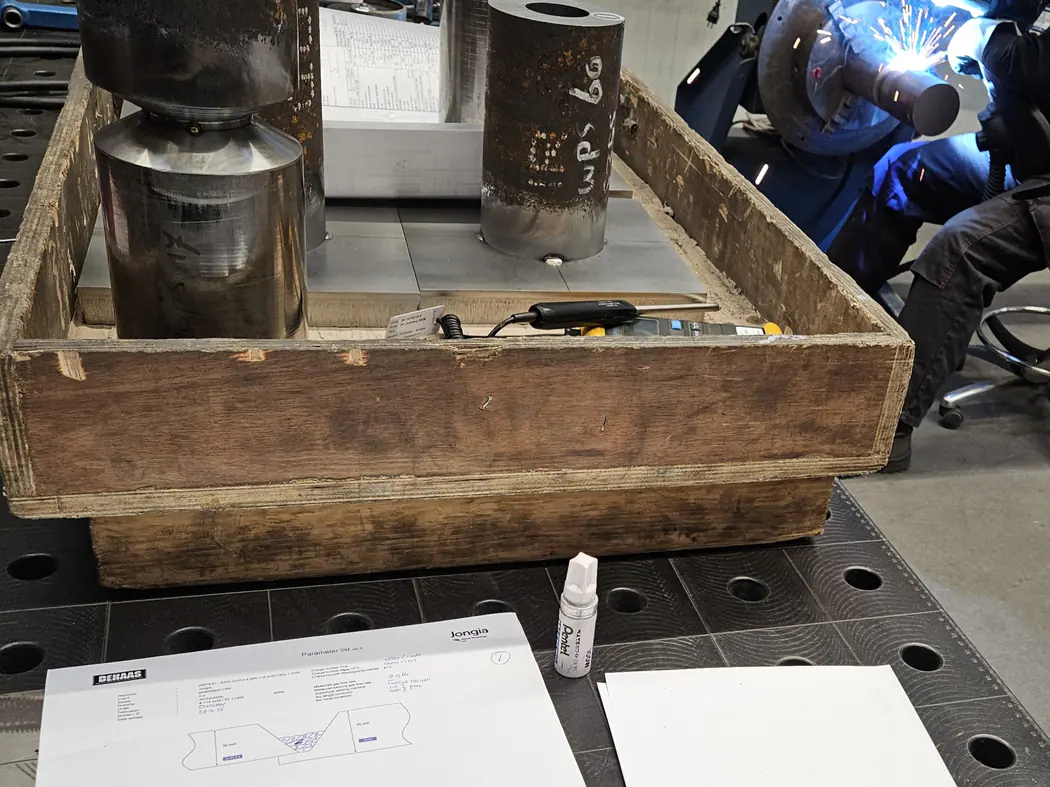
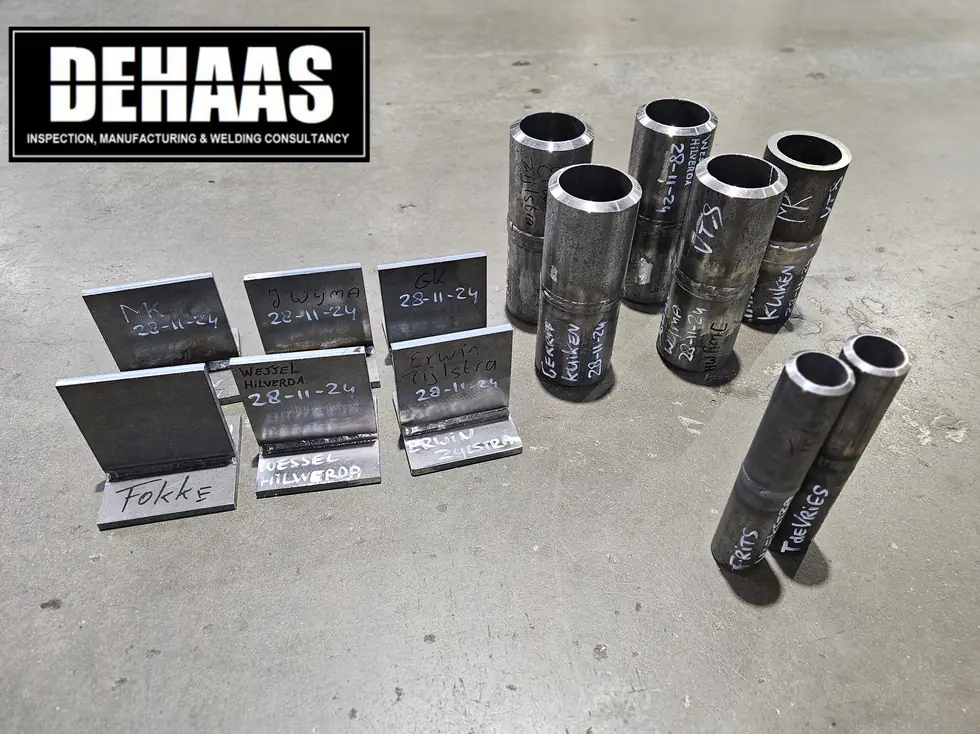
Have a welding or QA/QC question?
Ask the DEHAAS Welding & Quality Assistant, have your case reviewed by a specialist, or call us directly.