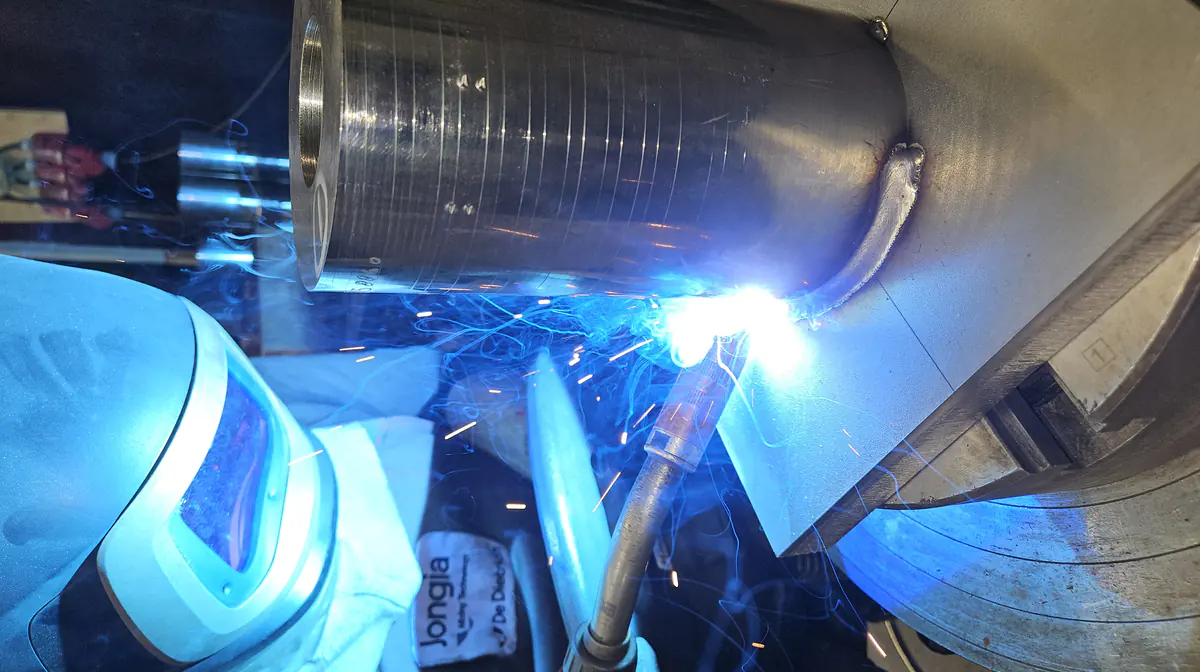
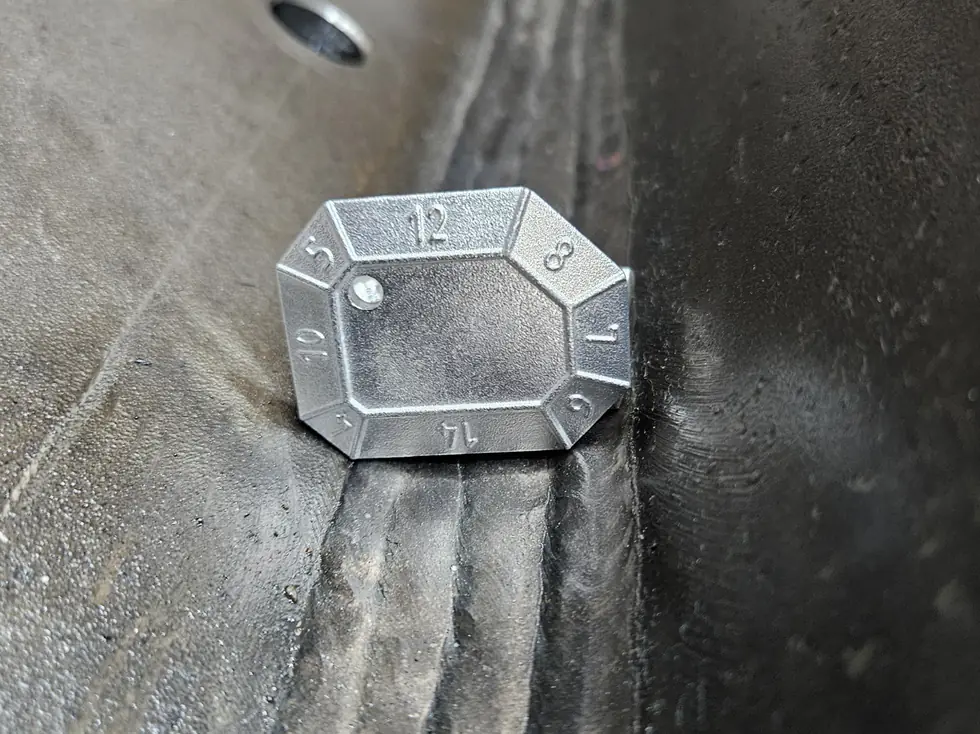
Hire a welding coordinator
For many fabricators, bringing in an external welding coordinator is the quickest route to compliance with EN 1090 and ISO 3834 without carrying a full-time specialist on the payroll. DEHAAS provides a Responsible Welding Coordinator (RWC) in accordance with ISO 14731, taking on the welding responsibility within your organisation. On site every week, per project, or on call.
- RWC to ISO 14731
- Retained, per project or on call
- Experienced in EN 1090 and ISO 3834
- Independent and hands-on
DEHAAS is an independent welding consultancy based in Menaam, Friesland, working throughout Europe and North America. We take a hands-on approach for structural steelwork, machine building, shipbuilding, the process industry and manufacturers of pressure equipment. You get a coordinator who manages the paperwork and stands next to your welders and work planners.
When is a welding coordinator mandatory?
Load-bearing steel structures require CE marking under EN 1090-1. The execution standard EN 1090-2 defines four execution classes, EXC1 to EXC4. From EXC2 upwards, welding coordination in accordance with ISO 14731 is required. Only in EXC1 can a workshop formally operate without an appointed coordinator, and even then it is rarely a sensible choice.
Certification to ISO 3834-2 or ISO 3834-3 likewise requires demonstrable welding coordination with documented tasks and responsibilities. For pressure equipment under the PED 2014/68/EU, the notified body will also assess how welding is controlled and coordinated. On top of that, many clients now specify an RWC in their contracts. If you have no specialist in house, the role can be assigned externally in full.
What does an external welding coordinator do?
The tasks of a welding coordinator are set out in ISO 14731. In practice it means taking welding responsibility across the whole process, from tender to hand-over. Our coordinator covers, among other things:
- review of contract and standard requirements and the weldability of the design
- selection of welding processes, consumables and joint preparation
- drafting and managing welding procedure specifications (WPS) and qualification records (WPQR to EN ISO 15614-1)
- monitoring welder qualifications to ISO 9606-1, including prolongations
- work instructions, supervision during production and handling of non-conformities
- liaison with inspectors, clients and certification bodies
For a full picture of the role, see our article on the welding coordinator under ISO 14731.
Retained on site or on call
How much coordination you need depends on your production, your execution class and the knowledge already in house. DEHAAS therefore works flexibly. A fixed day or set number of half-days per week provides continuity: the coordinator knows your people, your equipment and your clients. For companies with a variable order book, deployment per project or on call is often the better fit, for instance only for new products, new materials or an audit.
In every arrangement we record the tasks and responsibilities in writing, so the RWC role is demonstrably covered towards your certification body.
Remote welding coordination
A large share of coordination work is document work, and that does not have to happen on site. Reviewing drawings and standard requirements, drafting and revising WPSs, monitoring qualifications and answering technical questions from the shop floor can all be done remotely. DEHAAS therefore combines remote coordination with periodic workshop visits.
That keeps costs down without compromising quality. In between visits you can simply call, and the DEHAAS Welding & Quality Assistant on this site lets your staff raise a welding question online for review by a specialist.
Sectors we work for
DEHAAS provides welding coordination to fabricators across Europe and North America:
- structural steelwork under EN 1090-2, EXC1 to EXC4
- machine builders and suppliers handling varying materials and batches
- shipyards and repair companies
- process industry, piping and skid fabrication
- manufacturers of pressure equipment under the PED 2014/68/EU and ASME IX
Starting a certification programme for EN 1090 or ISO 3834? We can guide the entire route, from gap analysis to audit. Read more on our welding engineering and coordination page.
Why choose DEHAAS
DEHAAS is independent. We do not sell consumables, equipment or certificates, so we have no interest in recommending anything heavier than your work actually requires. Our advice is based on the standards and on what genuinely happens in your workshop.
Our approach is hands-on. A good coordinator does not sit behind a desk all day, but stands next to the welder, checks the joint preparation and talks to work planning. Problems become visible before they end up in the product. Working from Menaam, we cover the whole of Europe and can respond quickly when it matters.
Frequently asked questions
Yes. ISO 14731 allows welding coordination to be subcontracted to an external coordinator, provided tasks, responsibilities and authority are recorded in writing. Certification bodies accept this arrangement for EN 1090 and ISO 3834 certification, and it is common practice among small and medium-sized fabricators.
ISO 14731 distinguishes three levels of technical knowledge: comprehensive, specific and basic, typically filled by an IWE, IWT or IWS. The right level depends on your execution class under EN 1090-2, your materials and the complexity of the work. We assess this up front so you neither over-buy nor under-buy.
It varies widely. A workshop with stable products and qualified procedures often needs only a limited number of hours per week, topped up for new products or audits. After a first visit we give you a concrete estimate of the required effort.
More from the knowledge centre
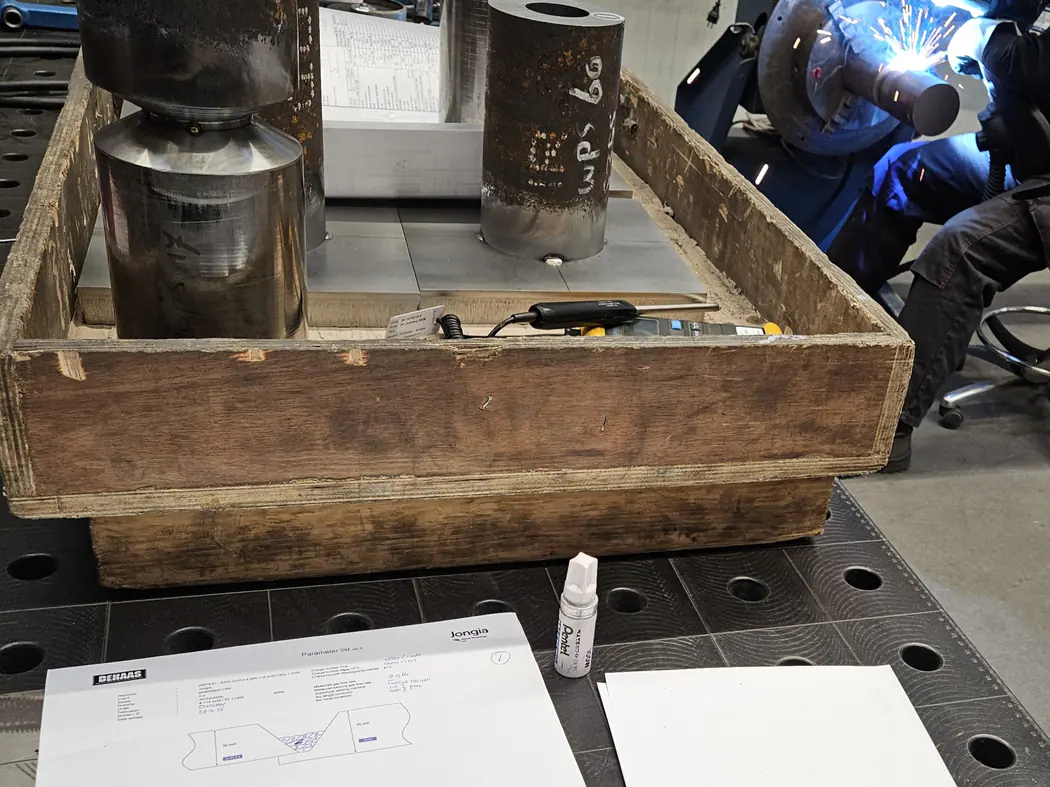
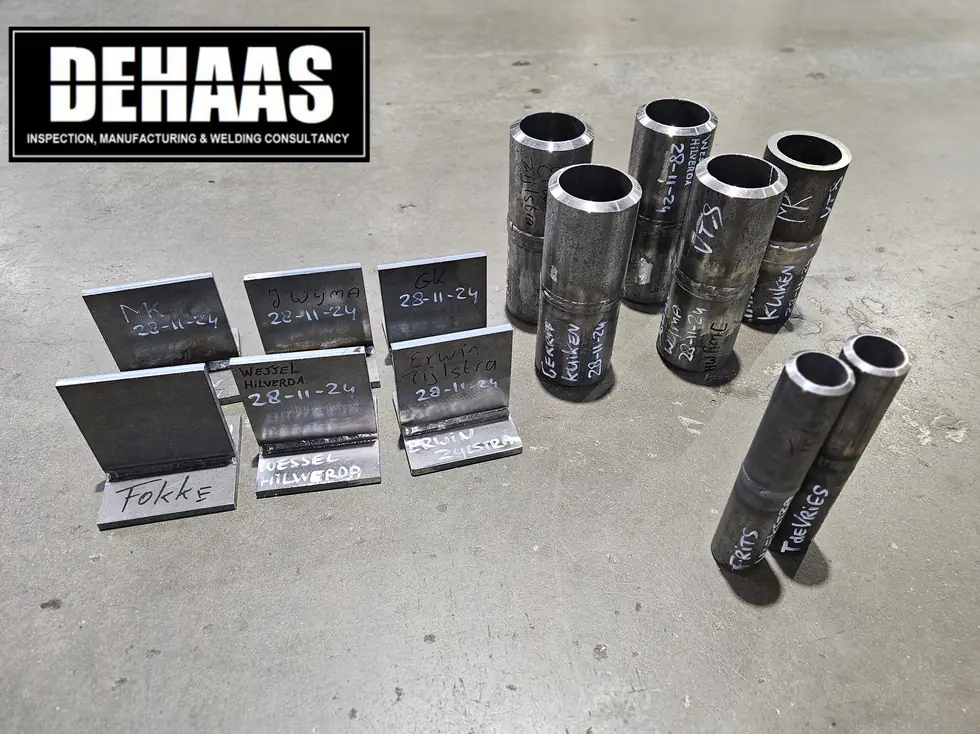
Have a welding or QA/QC question?
Ask the DEHAAS Welding & Quality Assistant, have your case reviewed by a specialist, or call us directly.