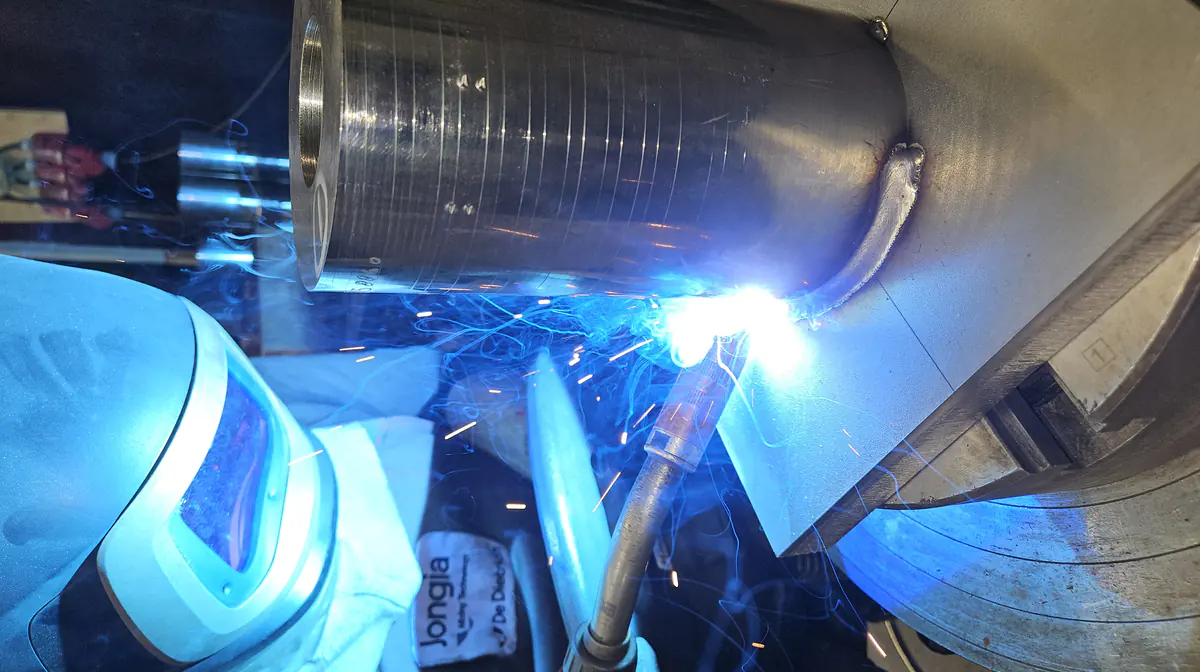
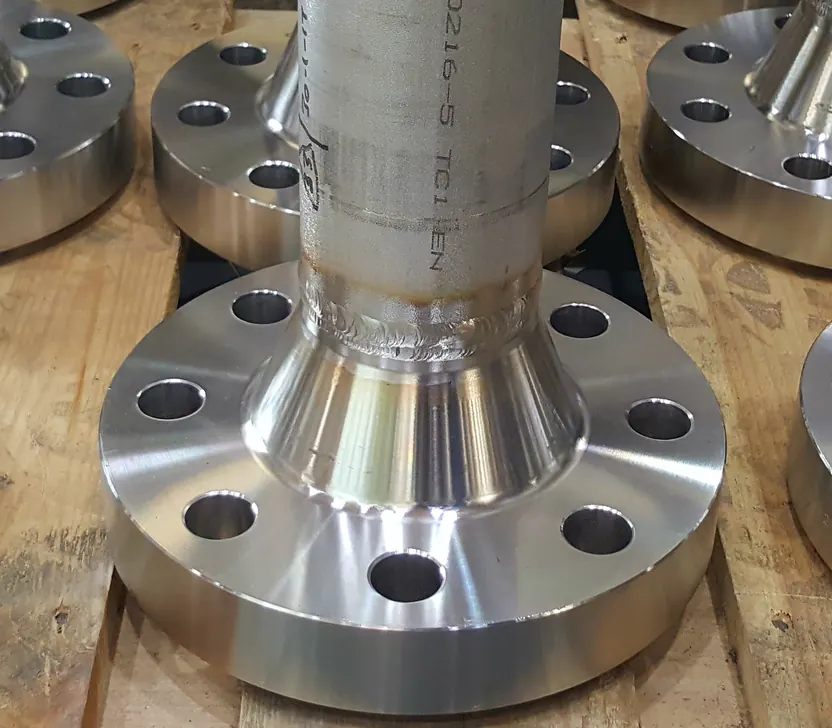
Cranes and lifting equipment
With cranes and lifting equipment two things are true at once: the loading fluctuates, and failure almost always means a serious accident. Fatigue is therefore the governing design criterion, and fatigue starts at the welded joint.
- EN 13001 and the fatigue classes
- Justified weld quality level per joint
- Lifting lugs, padeyes and critical connections
- Assessment of repairs to existing cranes
DEHAAS supports crane builders, lifting gear manufacturers and maintenance companies with welding engineering, qualification and assessment of existing structures and repairs.
Fatigue governs the design
A crane sees hundreds of thousands to millions of load cycles in its life. Under that loading the static strength of a weld is rarely the problem; the shape of the weld toe and the presence of notches very much are. EN 13001-3-1 therefore works with detail categories, where the same steel with the same weld metal can differ by a factor of five in life purely through joint geometry.
For the welder that means: a smooth weld toe, no undercut, no arc strikes outside the joint and no temporary attachments knocked off without dressing. See fatigue of welded joints.
Quality level per joint
Not every weld in a crane needs the same level. The main girder flange and the lifting lug connection are critical; a cover plate or cable tray is not. By determining per detail which ISO 5817 quality level is required and what NDT goes with it, you keep cost and safety in balance.
That choice must be recorded, on the drawing and in the welding plan, so welder and inspector apply the same requirement. See selecting the weld quality level.
Lifting lugs and critical connections
A lifting lug is a detail where load enters the structure through a small area. Full penetration is almost always required, fillet welds are rarely adequate, and the transition into the supporting structure must be smooth. Material grade matters too: a lug of unknown material is an unknown strength.
On these details 100 percent examination is normal, with magnetic particle testing on the surface and ultrasonics for the penetration. That is not excessive: these are precisely the details that recur in accident investigations.
Repairing existing cranes
Welding on an existing crane is harder than new build. The material is often undocumented, fatigue damage may already be present and the structure is under load. A repair without material identification is therefore a gamble.
The method is: identify the material by analysis and hardness measurement, remove the existing crack completely and prove it with penetrant or magnetic testing, weld under a procedure qualified for the purpose, and re-examine afterwards. DEHAAS writes such repair procedures and assesses completed repairs.
Frequently asked questions
EN 13001 for the design of cranes, with part 3-1 for the steel structure and fatigue calculation. For execution, EN 1090-2 applies, usually in execution class EXC3. The Machinery Directive and product standards per crane type apply alongside.
Only after assessing the cause. A fatigue crack gouged out and filled without removing the cause returns, usually faster than the first time. The repair must be accompanied by a design change or a restriction on use.
In practice 100 percent visual plus magnetic particle testing on the weld toe, and ultrasonic testing where full penetration is required. The exact extent follows from the execution class and the welding plan.
With a combination of chemical analysis, for example by portable spectrometry, and hardness measurement. That allows the material group to be estimated and a suitable procedure selected. Without that step the preheat temperature is guesswork and cracking is a real risk.
More from the knowledge centre
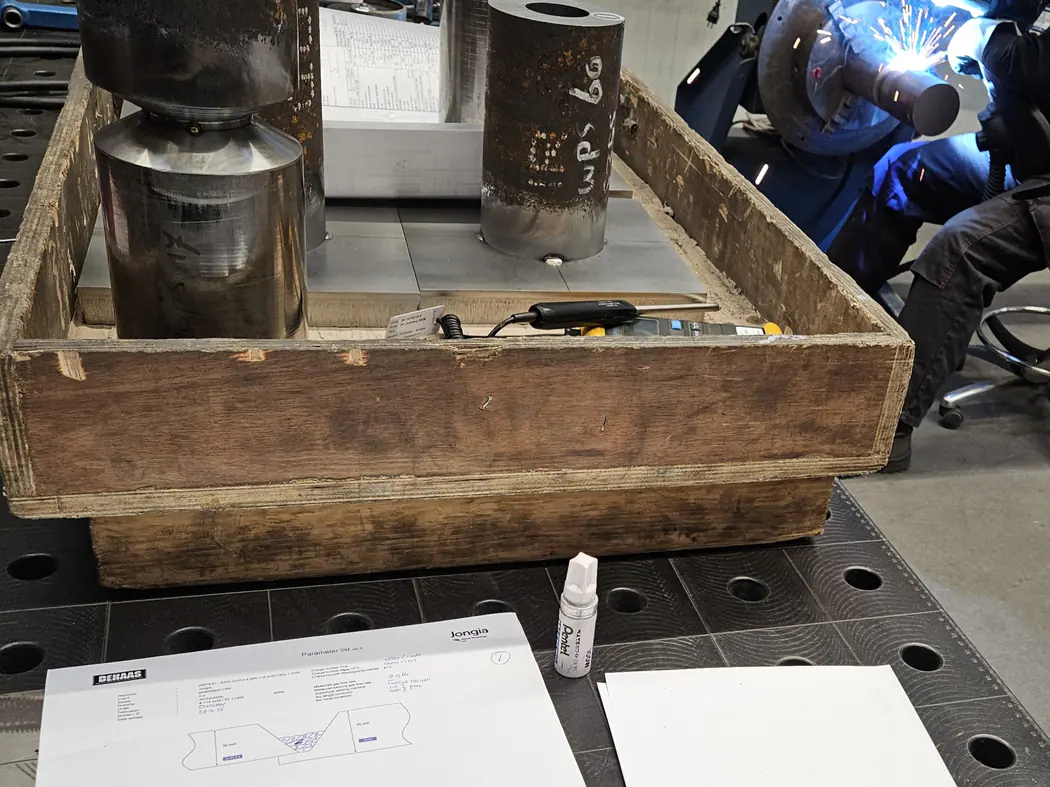
Have a welding or QA/QC question?
Ask the DEHAAS Welding & Quality Assistant, have your case reviewed by a specialist, or call us directly.