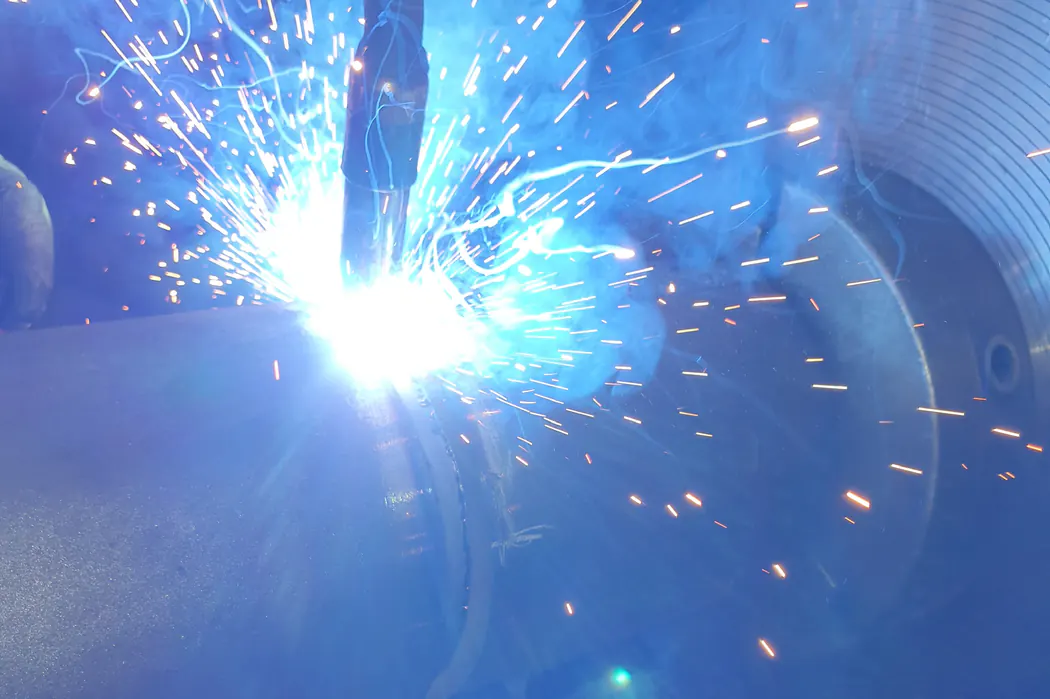
Welding fume: limits and duties
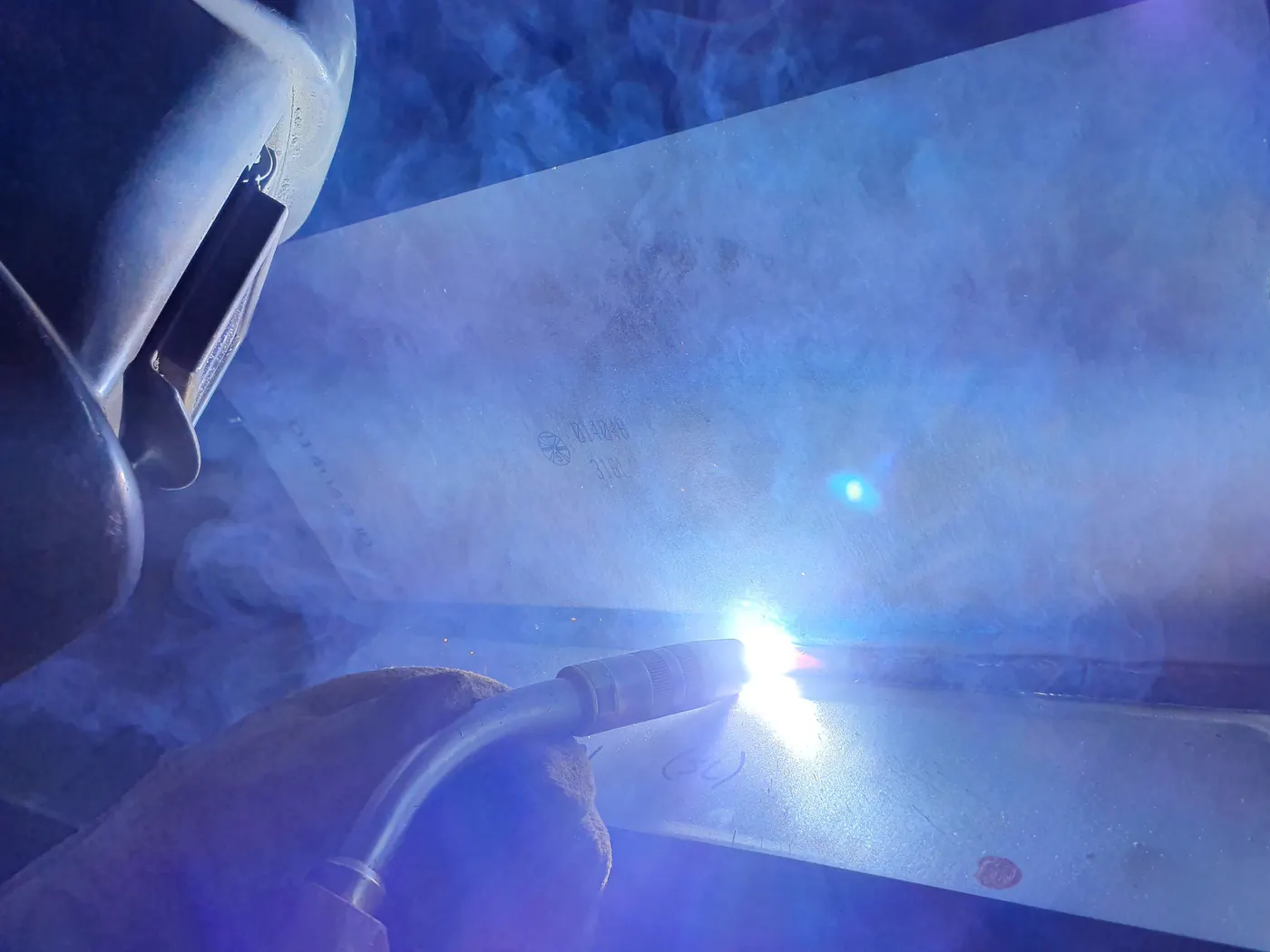
Welding fume has been classified as carcinogenic since 2017, and chromium VI from stainless welding carries a statutory limit that unventilated welding exceeds within minutes. The days of treating it as optional are over.
This article sets out the duties and describes what works in practice.
What welding fume contains
Welding fume consists of very fine metal oxide particles, generally below one micrometre, that penetrate deep into the lungs. Composition depends on the parent material, the consumable, any coating and the process.
The components of concern are chromium VI on stainless steel, manganese on virtually all steels, nickel on alloyed work and zinc on galvanised material. Chromium VI and nickel are carcinogenic; manganese is neurotoxic under prolonged exposure.
Exposure limits
In the Netherlands the statutory limit for chromium VI is 1 microgram per cubic metre as an eight hour average. For manganese the values are 0.2 milligrams per cubic metre for the inhalable fraction and 0.05 for the respirable fraction. Nickel compounds also carry low limits.
Those figures are low: welding stainless steel without extraction exceeds the chromium VI limit within minutes. Compliance is assessed with an exposure assessment, not by judgement.
The hierarchy of control
The law prescribes an order. First elimination at source: a different process or consumable producing less fume, for example solid wire instead of flux cored, or pulsed transfer instead of short arc. Then engineering measures: extraction at the torch or with an extraction arm, supplemented by general ventilation.
Only where those are insufficient does personal protection come in: a powered air purifying welding helmet of class TH3. A dust mask is inadequate for chromium VI. Reversing that order, reaching straight for a mask, breaches the law.
What the employer must record
The risk assessment must cover exposure to welding fume, with an action plan. For carcinogens a register of exposed workers is added, together with periodic health surveillance.
Maintenance and verification of the extraction must also be recorded: an extraction arm nobody repositions or a clogged filter creates false safety. At an inspection that is one of the first points examined.
Frequently asked questions
Only as a supplement, not as the primary measure, and then a powered helmet of the correct class. The law requires elimination at source and engineering measures first. For chromium VI a simple dust mask is inadequate in any case.
The limits are eight hour averages, so short work counts pro rata. But the chromium VI limit is so low that even brief unextracted work contributes to exceedance, particularly when it recurs daily.
TIG produces by far the least, followed by solid wire under gas. Flux cored and covered electrodes produce considerably more. Switching to a lower fume process is often the cheapest measure, though it does affect qualification.
You must assess exposure. That can be done by measurement or with a validated model, provided it is substantiated. For carcinogens the bar is high, so measurement by an occupational hygienist is generally the safest route.
More from the knowledge centre
Have a welding or QA/QC question?
Ask the DEHAAS Welding & Quality Assistant, have your case reviewed by a specialist, or call us directly.