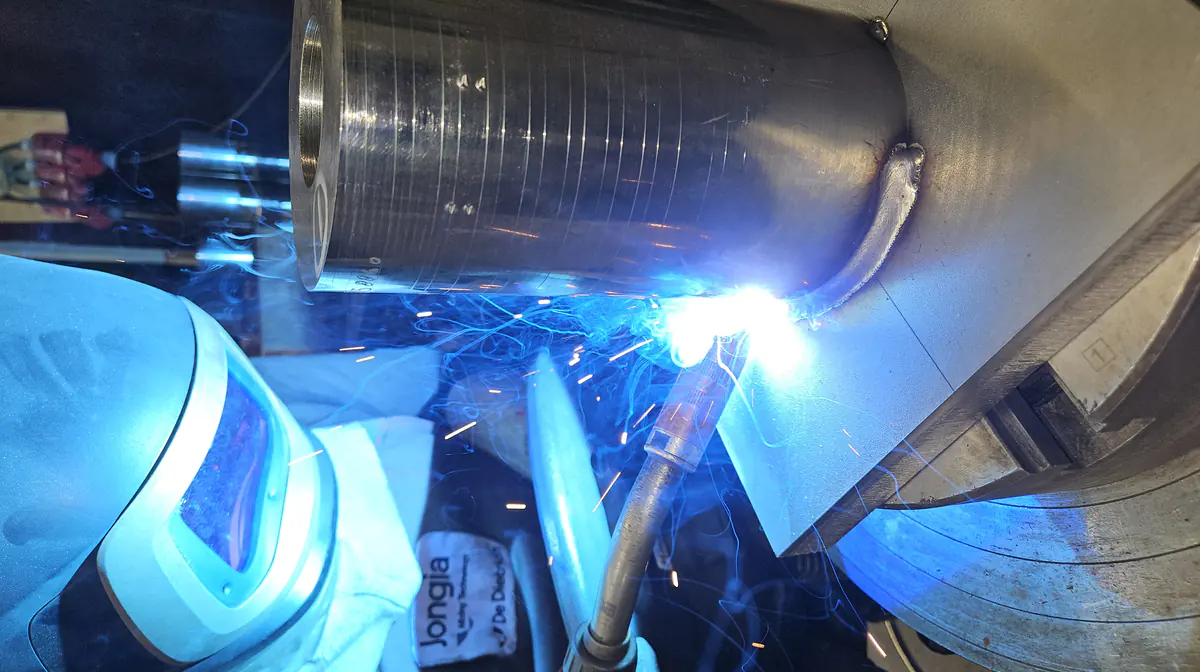
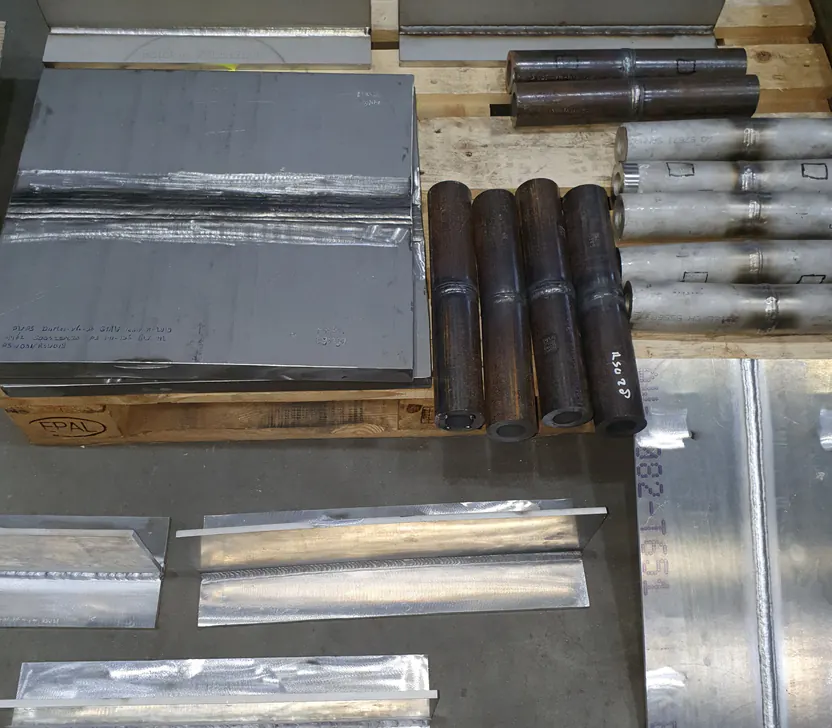
Fabrication inspection at your supplier
When fabrication is outsourced, the client often sees the work only at delivery, when it is too late to steer. With fabrication inspection by DEHAAS you keep a grip on what happens at your supplier: we monitor progress and quality during fabrication, attend hold and witness points and report directly to you.
- Your eyes at the supplier
- Hold and witness points attended
- Progress and quality in one report
- Independent of the fabricator
DEHAAS is an independent welding consultancy based in Menaam, Friesland, inspecting at suppliers across Europe. We act for clients in structural steelwork, machine building, shipbuilding, the process industry and pressure equipment, from a single acceptance visit to full surveillance of a long fabrication programme.
Why fabrication inspection?
A deviation found during fabrication is a line on a punch list. The same deviation at final acceptance is a dispute, a delay and sometimes a claim. Fabrication inspection moves the moment of discovery forward, to where repair is still simple and cheap.
It also gives you an honest view of progress. A schedule on paper means little if the true state of the work is never verified independently. Our inspector sees what is actually on the shop floor, which materials have arrived and where the bottlenecks are, so slippage surfaces before the delivery date is already at risk.
Surveillance based on the inspection and test plan
Effective surveillance starts with a clear inspection and test plan (ITP). It defines, per fabrication step, which check takes place, who performs it and which points are designated hold or witness points. At a hold point the fabricator may not proceed without release; at a witness point you are invited to attend.
DEHAAS reviews your supplier's ITP or writes one on your behalf, and then monitors compliance: timely notification of points, complete records and demonstrable releases. How such a plan is built is covered in our article on how to write an ITP.
What we check during fabrication
The exact scope is tailored to your contract and your risks. Typical elements include:
- identification and certificates of the material used
- validity of welding procedure specifications and welder qualifications to ISO 9606-1
- joint preparation, fit-up and dimensions before welding
- visual weld inspection to ISO 17637, assessed against the ISO 5817 quality levels
- execution and results of the agreed non-destructive testing
- coating, packing and readiness for despatch
That way you know the underlying process complies, not just the end result.
In-process and final inspections
We plan in-process inspections at the moments where deviations are most likely and repair is still straightforward: after the first production items, before closing sections with restricted access, and before blasting and coating. The frequency is matched to the size of the work and the supplier's performance.
The final inspection is carried out against the full contract requirements: dimensions, weld quality, coating, documentation and a closed-out punch list. Only when everything is demonstrably in order do we recommend release for transport. That stops problems travelling to site, or worse, appearing in service.
Reporting to the client
After every visit you receive a concise report with the state of the work, the checks performed, the findings with photographs and an updated punch list. Open items get an owner and a date, so the next inspection starts by verifying they have been resolved.
Our reporting is factual and traceable: each finding cites the requirement it is based on, from the contract, the drawing or the standard. That makes the report usable in discussions with your supplier and, should it ever come to it, in a formal dispute. The report is yours; you decide what to share.
Independent and flexible
DEHAAS works solely on your instruction and has no relationship with the fabricator. Our judgement is therefore independent, even when the message is uncomfortable. At the same time we work constructively: the goal is a good product on time, not the longest possible punch list.
Deployment is flexible, from a single acceptance to periodic surveillance across the whole programme, anywhere in Europe, and further afield on request. We can combine fabrication inspection with document control and dossier compilation, see welding inspection and QA/QC. A first question is easily raised through the DEHAAS Welding & Quality Assistant on this site.
Frequently asked questions
At a hold point the fabricator must stop until the check has been performed and release has been given. At a witness point the client or their inspector is invited to attend, but work may continue if they do not appear. Which points carry which status is recorded in the inspection and test plan.
It depends on the size and risk of the work and on the supplier's track record. For a new supplier or critical work we plan more frequent visits; for a proven partner the regime can be lighter. We advise a frequency up front and adjust it based on the findings.
The contract or purchase specification, the drawings and the inspection and test plan if one exists. From these we establish which requirements apply, which points need surveillance and what the reporting should look like. The first visit can then usually take place at short notice.
More from the knowledge centre
Have a welding or QA/QC question?
Ask the DEHAAS Welding & Quality Assistant, have your case reviewed by a specialist, or call us directly.