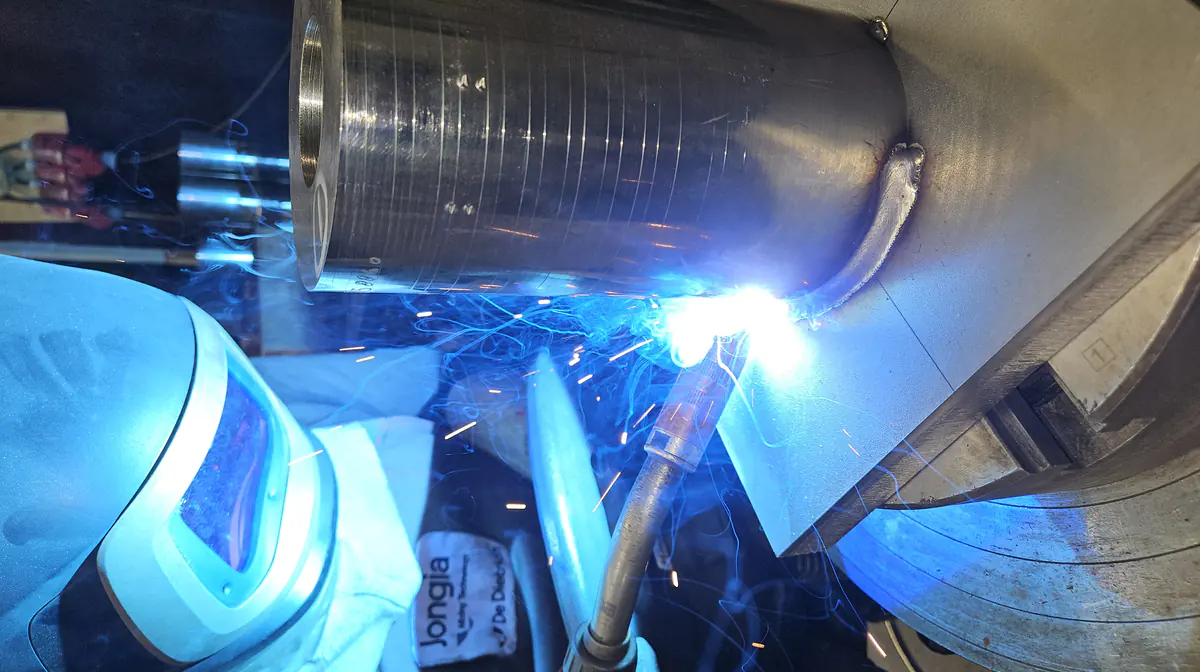
How to determine whether an existing WPQR covers your application
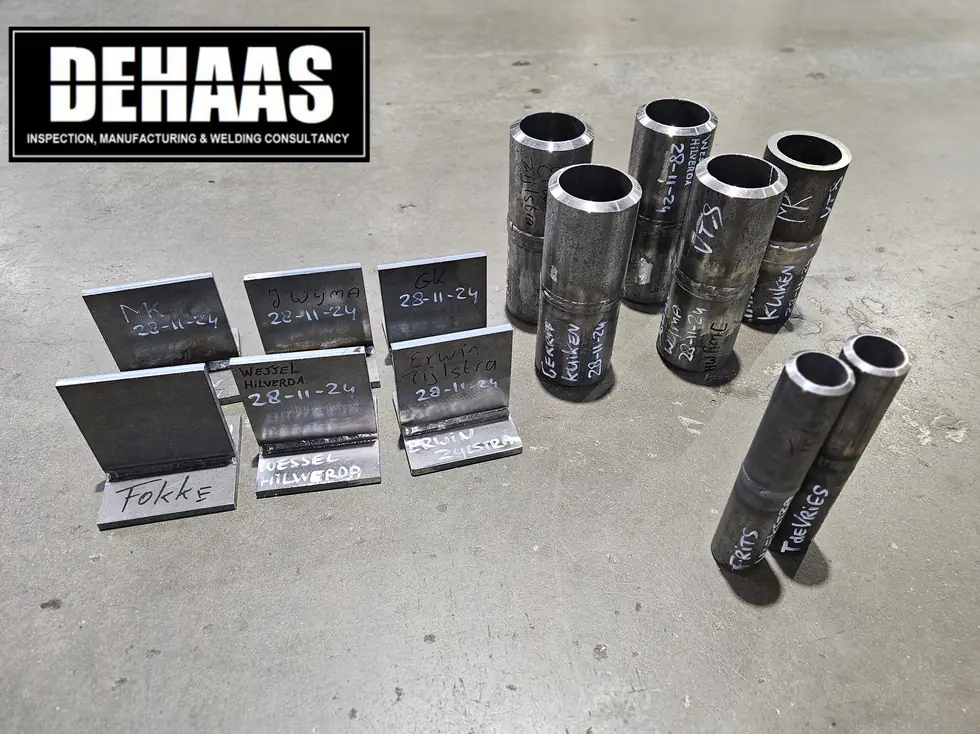
A cabinet full of WPQRs is no guarantee that a new order is covered. Every WPQR has a range of qualification: a defined envelope of materials, thicknesses, processes and joint types within which you may write production WPSs. If the new job falls outside that envelope, the qualification is worthless for that work, however neat the record looks.
This article walks through the key checkpoints under EN ISO 15614-1: material group, thickness, welding process, position and joint type. With this method you can judge within half an hour whether an existing WPQR is usable or whether a new WPQR qualification is required. We assume the common case: arc welding of steel to EN ISO 15614-1.
Step 1: check the material group
Parent materials are classified into groups and subgroups in ISO/TR 15608. Non-alloy structural steels fall into group 1, higher-strength fine-grain steels into groups 2 or 3, and austenitic stainless steels into group 8. The WPQR states which group was tested and which groups are covered.
The standard allows a degree of downward coverage: a test on a higher subgroup often covers the lower subgroups within the same group. Watch out for two pitfalls. First, classification is based on the specified minimum properties of the material, not on its trade name. Second, for dissimilar joints between two groups, the combination itself must be covered; two separate qualifications on each material are not automatically sufficient.
Step 2: check thickness and deposited thickness
The thickness of the test piece determines the qualified thickness range. For multi-run butt welds, EN ISO 15614-1 applies a separate rule per thickness band: a test piece over 3 and up to 12 mm qualifies 3 mm to 2t, a test piece between 12 and 100 mm qualifies 0.5t to 2t. A test on 10 mm therefore covers 3 to 20 mm, a test on 20 mm covers 10 to 40 mm. Single-run welds are covered by a much narrower band around the tested thickness.
Do not forget the deposited thickness per process: in a multi-process test piece, each process is qualified for the thickness it deposited. For fillet welds, check the throat as well as the plate thickness. So verify three things: plate thickness, deposited thickness per process and, where applicable, throat thickness. More detail is given in our article on the qualification range for thickness and diameter.
Step 3: compare process and filler metal
The welding process is an essential variable. A WPQR welded with process 135 (MAG, solid wire) does not cover process 136 (MAG, flux-cored wire), and 141 (TIG) does not cover 111 (MMA). The sequence in multi-process joints is fixed too: a qualification with 141 for the root and 135 for the fill may not simply be reversed.
Look at the filler metal as well. Coverage is linked to the designation and properties of the consumable, and where impact requirements apply this becomes critical. The shielding gas is another checkpoint: the gas type per ISO 14175 must fall within the qualification. If any of these items differ, do not assume the WPQR is usable without further assessment or testing.
Step 4: assess the welding position
In EN ISO 15614-1 the welding position is in principle not an essential variable: a test in one position generally covers all positions. Important exceptions apply, however, as soon as hardness or impact requirements are specified. The positions with the highest and lowest heat input affect those properties, and the standard ties coverage to them.
In practice: if the test piece was welded in PA (flat), check whether the impact and hardness coverage also applies to the positions you need in production, such as PF (vertical up) or PE (overhead). Note that welder qualification works differently; there, position is a core variable, as described in our article on welder qualification to ISO 9606-1.
Step 5: check joint type and product form
Finally, verify that the joint type is covered. EN ISO 15614-1 sets fixed rules, including:
- A butt weld in plate covers, under conditions, butt welds in pipe; conversely a pipe qualification generally covers plate.
- A butt weld also covers fillet welds within the rules of the standard, though a supplementary fillet weld test is recommended where production is predominantly fillet welding.
- Full penetration, partial penetration and branch connections each have their own coverage rules.
- For pipes, the diameter plays a role in the coverage.
Single-sided welding without backing, double-sided welding and back-gouging of the root are likewise recorded conditions your production must follow.
Step 6: heat treatment and supplementary requirements
Two points are frequently overlooked. First, post-weld heat treatment: a WPQR with stress relief does not cover production without it, and vice versa. Preheat and interpass temperatures must also stay within the tested limits. Second, heat input: where impact or hardness requirements apply, the recorded heat input sets an upper or lower limit for production.
Record the outcome of your assessment. A short validity matrix per WPQR, listing group, thickness, process, position and joint type, speeds up every future check and gives auditors immediate insight. DEHAAS prepares such overviews as part of a documentation review and advises independently on whether a new qualification is genuinely needed.
Frequently asked questions
No, a WPQR to EN ISO 15614-1 has no expiry date. The question is not whether the record is still valid but whether its range covers your current application. Client specifications may impose additional requirements.
Usually yes: both are group 1 materials under ISO/TR 15608 and downward coverage within the group is generally permitted. Do check the filler metal requirements and any impact requirements before writing the WPS.
Often yes; EN ISO 15614-1 allows plate-to-pipe coverage under conditions, depending among other things on diameter and position. Check the specific rules and any client requirements before relying on this.
First check whether another existing WPQR, or a combination of qualifications, covers the range. If not, a new or supplementary test is needed. Choose the test piece so that it covers the widest possible range in one go.
More from the knowledge centre
Have a welding or QA/QC question?
Ask the DEHAAS Welding & Quality Assistant, have your case reviewed by a specialist, or call us directly.