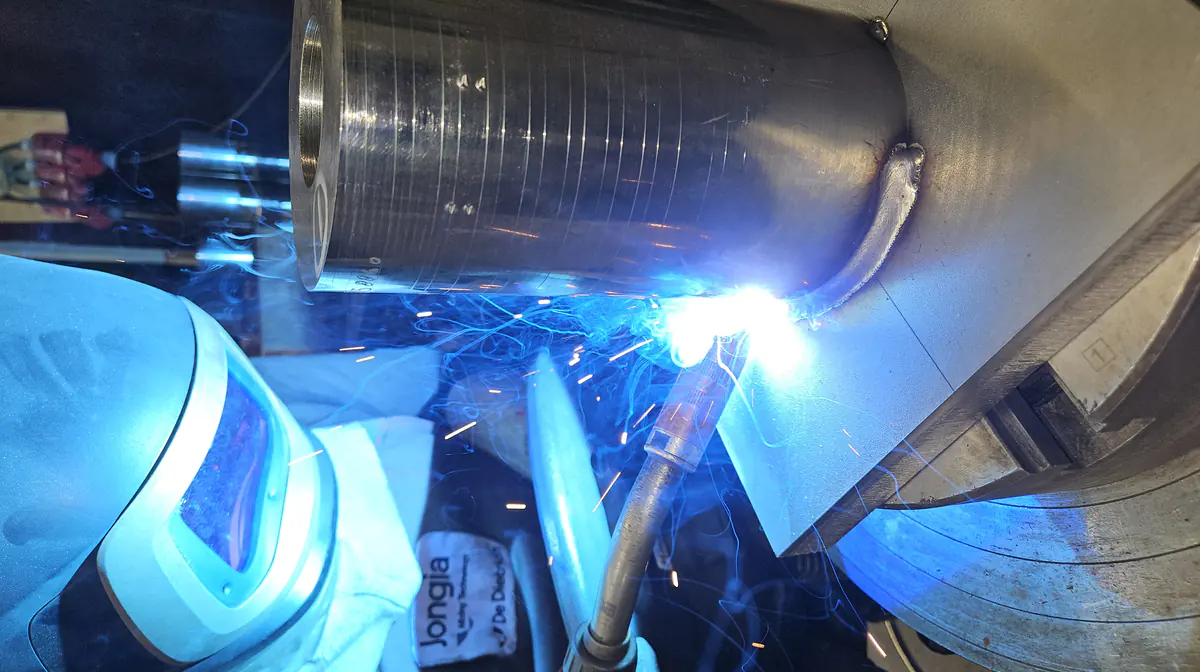
WPQR cost and lead time: where the money goes and how long it takes
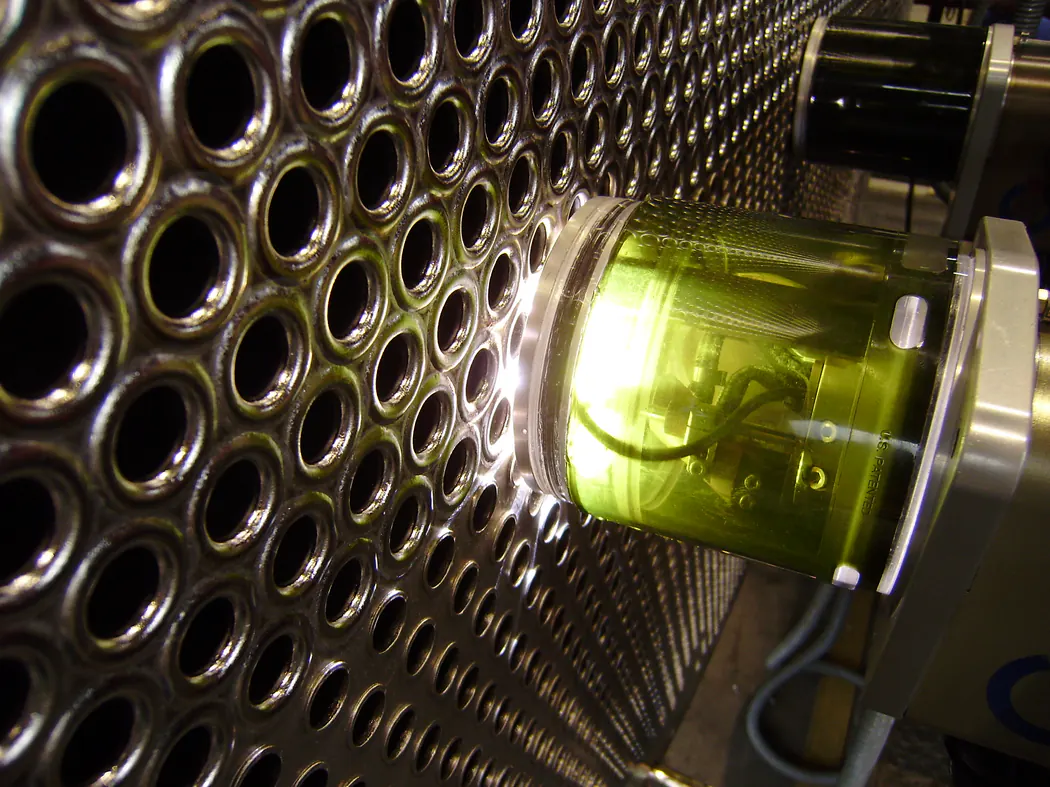
A welding procedure qualification is an investment you rarely make, yet it directly determines whether you may carry out a contract. Asking what a WPQR costs and what its lead time is makes perfect sense. The honest answer is that both depend heavily on choices made up front: material, thickness, test scope, examining body and planning.
We quote no figures here, as they vary widely by situation and supplier. Instead we set out the cost items of a procedure qualification to EN ISO 15614-1, explain what drives the lead time and show how smart combining saves time and money. For what a WPQR is and how it relates to the WPS, see our article on the difference between a WPS and a WPQR.
Cost item 1: preparation and pWPS
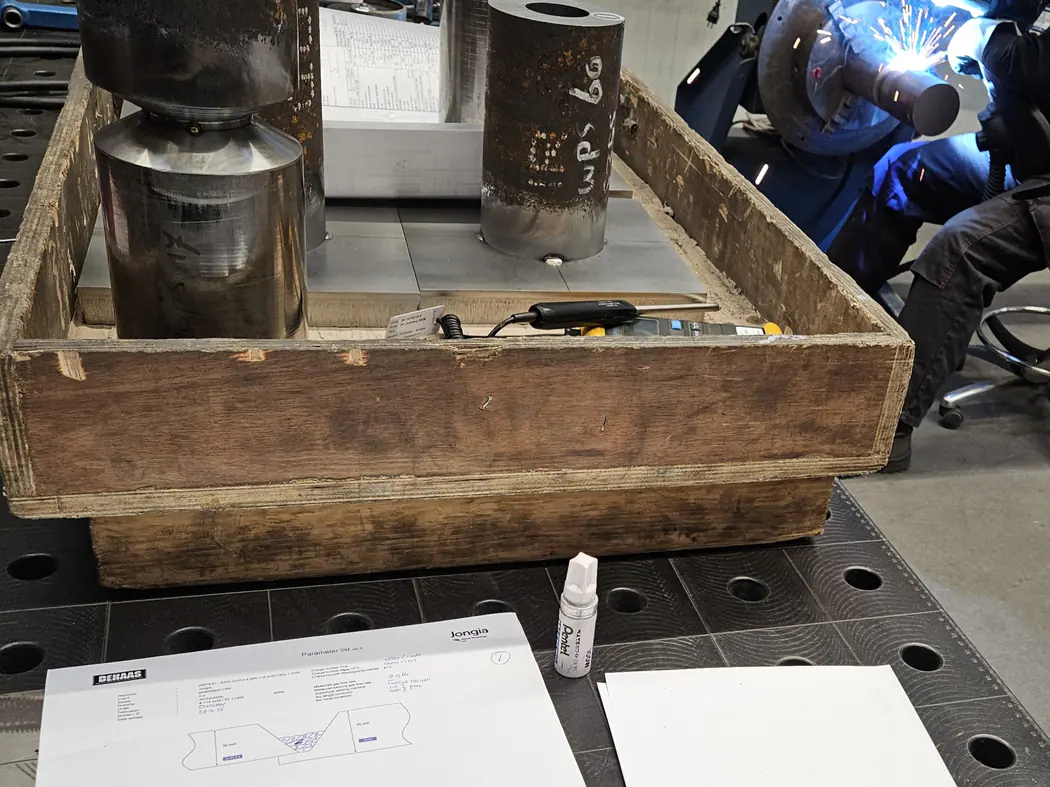
Every qualification starts with a preliminary procedure, the pWPS, setting out process, consumable, joint design, parameters, preheat and any heat treatment. A well-considered pWPS prevents failure and a second test. This is also where you choose the test piece: which thickness, joint type and position give the widest useful range? Preparation takes little time but determines much of the total cost. Expert support in developing the WPS and pWPS often pays for itself here.
Cost item 2: test piece and welding
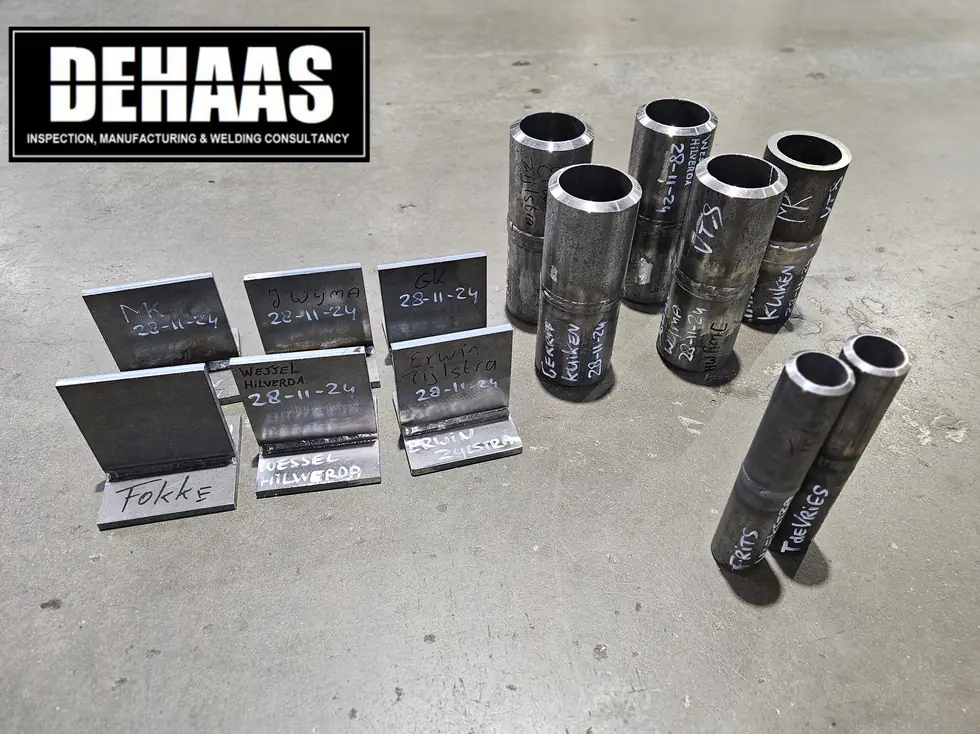
The test piece consists of certified parent material, usually with an EN 10204 3.1 certificate, and joint preparation. EN ISO 15614-1 sets minimum dimensions so there is enough material for all specimens. With thick plate, high-alloy material or duplex, material becomes a noticeable cost. Add the welder's or operator's hours, equipment time and recording the actual welding data: without measured current, voltage, travel speed, preheat and interpass temperature, the WPQR is incomplete.
Cost item 3: NDT and mechanical testing
For a level 2 butt weld, examination includes:
- visual inspection to ISO 17637
- volumetric testing by radiography or ultrasonics
- surface testing by penetrant or magnetic particle
- tensile, bend and macro tests, plus hardness where required
- impact tests where the application or client requires them
NDT is performed by personnel certified to ISO 9712; mechanical testing by a laboratory, including extracting and machining specimens. Impact testing weighs heavily, as each location, such as weld metal and heat-affected zone, needs its own set of specimens, and low-temperature tests add handling.
Cost item 4: examining body and coordination
Under EN ISO 15614-1 the test is normally witnessed by an examiner or examining body, who signs the WPQR. For pressure equipment under PED 2014/68/EU this must be a notified body or recognised third-party organisation from category II upwards. Finally there is coordination: liaising with laboratory and examining body, checking reports and drafting production WPSs from the WPQR. Skip that step and you have a certificate but no usable WPSs.
What drives WPQR lead time?
Lead time depends less on the welding itself, often done in a day, than on everything around it:
- availability of certified parent material and consumables
- scheduling of the examining body
- any post-weld heat treatment
- queues at the NDT company and laboratory
- failure and retesting
- reporting, review and signature
A simple qualification without impact requirements or heat treatment can be completed within a few weeks. Impact tests, PWHT, special materials or a busy laboratory extend that. With a hard deadline, book the examining body and laboratory before the test piece is welded.
Smart combining saves time and money
- Choose the thickness so that one test piece covers a wide range.
- Weld several test pieces in one session, so the examining body attends once.
- Bundle NDT and mechanical testing in one order.
- Use the fact that the welder of a successful WPQR test piece can also be qualified to ISO 9606-1.
Also check whether a full WPQR is needed at all. Depending on execution class and material, EN 1090-2 allows other routes in some cases, such as a standard welding procedure to ISO 15612 or previous welding experience to ISO 15611. And first check whether an existing WPQR already covers the work; see how to check the validity of a WPQR.
Frequently asked questions
Because cost depends heavily on material, thickness, test scope, impact requirements, heat treatment and the chosen examining body and laboratories. Only once these are fixed can a reliable budget be drawn up.
That depends on the cause. EN ISO 15614-1 allows retesting under conditions, for example extra specimens when a mechanical test fails. If the procedure itself is at fault, a new test with a revised pWPS is needed. Failure always extends the lead time.
A WPQR to EN ISO 15614-1 has no expiry date. It remains usable as long as production falls within its range, which makes a well-chosen test piece all the more valuable.
Yes, many companies do. Make sure NDT personnel are certified to ISO 9712, the laboratory tests to the correct standards and the examining body accepts the parties chosen.
More from the knowledge centre
Have a welding or QA/QC question?
Ask the DEHAAS Welding & Quality Assistant, have your case reviewed by a specialist, or call us directly.