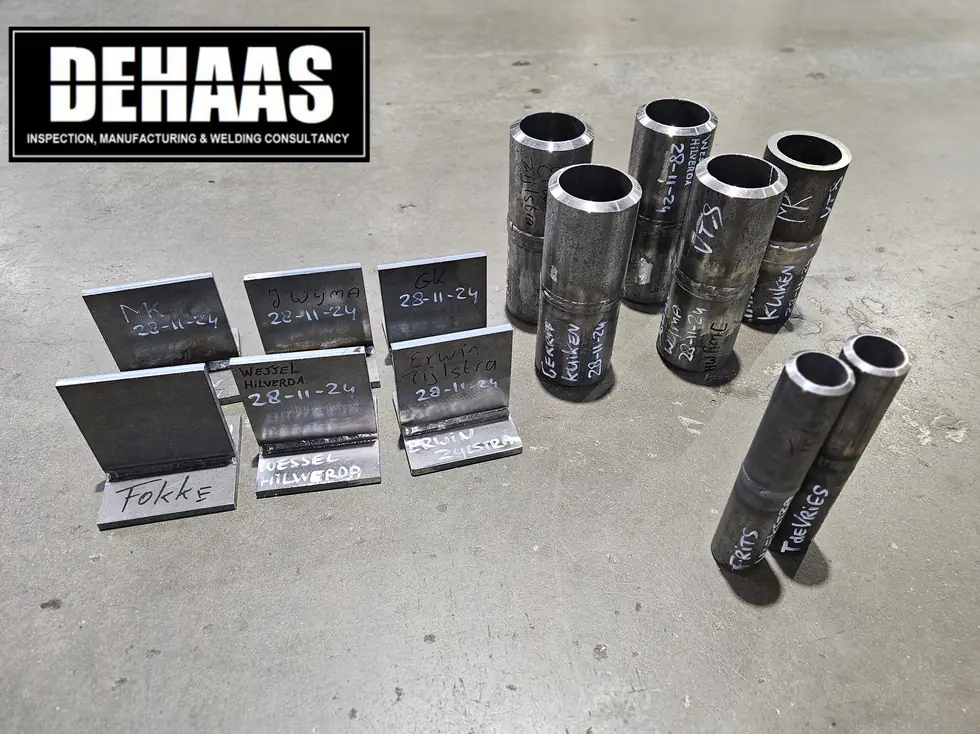
Joint preparation: which form when
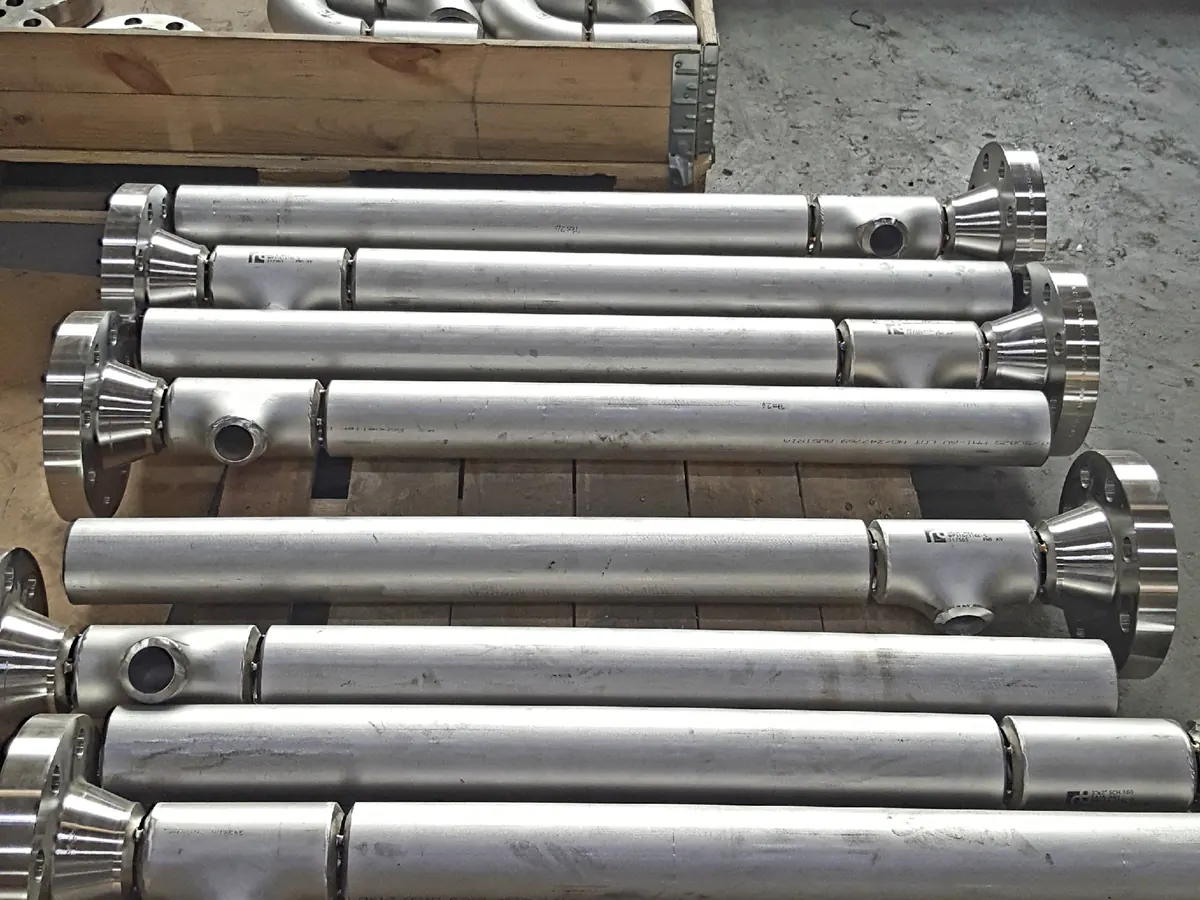
Joint preparation determines how much weld metal is needed, how well the arc reaches the root, how much the component shrinks and how much arc time the joint costs. It is therefore one of the few choices that governs both quality and cost.
ISO 9692 describes the common preparations per process and thickness. This article explains which form suits which situation and which dimensions make the difference in practice.
The common preparations
The square butt, without preparation, is the cheapest and works up to about 4 mm in MAG and somewhat thicker in submerged arc. The single V is the standard for material welded from one side up to roughly 15 to 20 mm. The double V, welded from both sides, is used above that because it needs roughly half the weld metal of a deep single V.
U and J preparations have a radiused root and a small included angle. They require machining and so cost more to prepare, but on heavy walls they save so much weld metal that they pay for themselves, and they produce less shrinkage.
Included angle, root face and gap
The included angle must be wide enough to bring the arc to the sidewalls, but every extra degree costs weld metal. For MAG, 60 degrees is usual, for covered electrodes 60 to 70 degrees, and TIG can be tighter. Too small an angle produces sidewall lack of fusion, precisely the defect radiography struggles to find.
Root face and root gap together determine whether the root penetrates without excess. Typical is a 1 to 2 mm root face with a 2 to 3 mm gap for MAG. Those dimensions belong in the WPS and must be held during tacking, because a gap that closes halfway gives incomplete penetration.
Cutting or machining
Oxyfuel cutting, plasma and laser each give a different edge quality and degree of hardening. EN 1090-2 sets requirements for the cut edge per execution class, including hardness and roughness, and on high strength steel the hardened layer often has to be removed.
Milling or planing gives the best edge quality and is unavoidable for U and J preparations. Do not forget to remove slag and oxide from the cut edge: an oxide layer in the joint produces porosity and lack of fusion.
What the choice costs
Weld metal volume scales roughly with the square of thickness on a single V. On 20 mm plate a double V costs around half a single V, and a U preparation less again. Against that, a double V requires turning the component and a U preparation requires machining.
The right trade-off depends on batch size, available machinery and the distortion requirement. For one-offs the single V usually wins; for series and heavy sections the double V or U pays back quickly. See controlling weld distortion.
Frequently asked questions
From roughly 12 to 15 mm, provided the component can be turned and both sides are accessible. The double V halves the weld metal and distributes shrinkage over both sides, considerably reducing distortion.
Only within the range stated in the WPS. A larger gap demands more weld metal and can cause excess penetration; a smaller one gives incomplete penetration. A gap that deviates structurally signals that preparation or fixturing is wrong.
That depends on the standard and the application. A permanent backing strip creates a crevice and is undesirable under fatigue loading and in corrosion prone service. A temporary backing, for example copper or ceramic, is common and must be stated in the WPS.
Yes. Oil, grease, paint, moisture and rust are all sources of porosity and hydrogen. EN 1090-2 requires a clean, dry joint, and on high strength and stainless steel it determines the outcome.
More from the knowledge centre
Have a welding or QA/QC question?
Ask the DEHAAS Welding & Quality Assistant, have your case reviewed by a specialist, or call us directly.