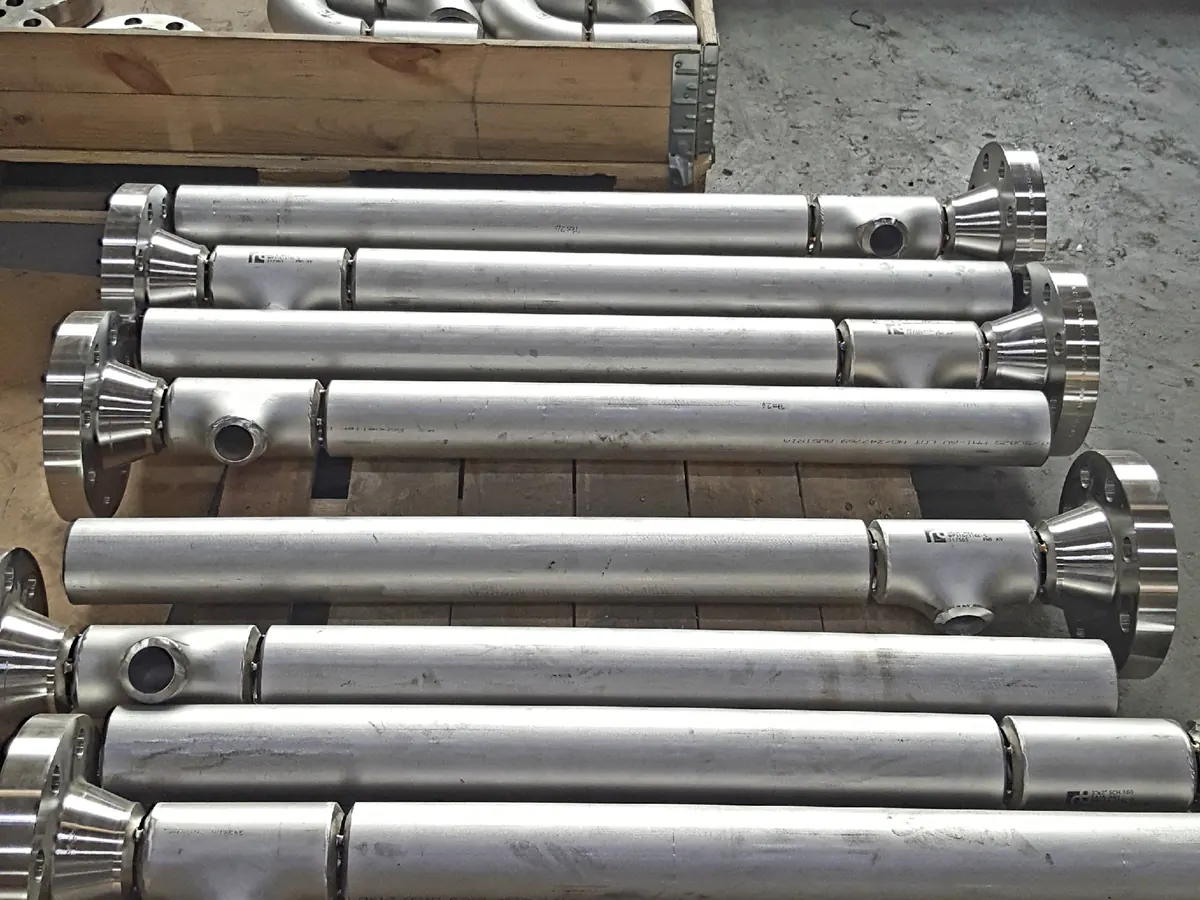
Fatigue of welded joints
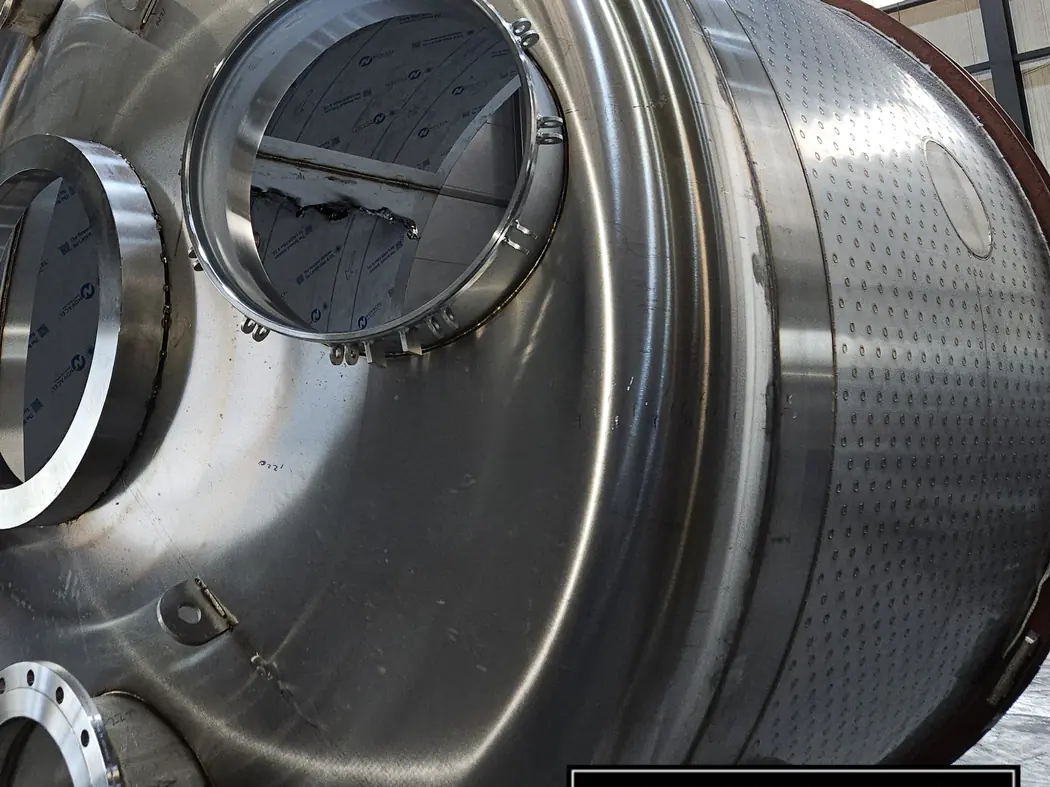
Most failures of welded structures are not overload fractures but fatigue failures: a crack that grows slowly at stresses far below yield until the remaining section gives way. In welded joints that is almost always a design issue, not a craftsmanship issue.
This article explains why joint geometry matters more than steel strength, how detail categories work and what can be done to extend service life.
Why steel strength barely helps
In unwelded steel, fatigue strength rises with tensile strength. In welded steel it does not. A welded joint always contains microscopic notches at the weld toe and residual stresses at yield level. A crack therefore starts almost immediately, and life is governed by crack growth rather than initiation.
The consequence is that S690 and S235 have virtually the same fatigue strength in a welded detail. Switching to stronger steel to solve a fatigue problem does not work; changing the geometry does.
Detail categories to EN 1993-1-9
Eurocode 3 part 1-9 classifies structural details into detail categories, designated by a number giving the stress range in N/mm2 the detail sustains for two million cycles. A butt weld dressed flush reaches category 112 or 125, an as welded butt 80 to 90, a fillet welded transverse attachment 71 or lower, and a partial penetration cruciform joint can drop to 36.
That is a factor of three in permissible stress and therefore many times in life, with exactly the same steel and the same welder. The design decision to place an attachment just inside or just outside a stress concentration is thus more decisive than any welding parameter.
What the welder can influence
Three things govern in the shop. First the shape of the weld toe: a smooth transition with a generous radius performs considerably better than a sharp, steep one. Second, undercut: sometimes acceptable under static loading, almost never under fatigue.
Third, arc strikes and remnants of temporary attachments outside the joint. An arc strike is a locally hardened, notched spot on the parent material, and more than once it has been the origin of a fracture. Both must be ground out and re-examined.
Post-treatment that genuinely works
Proven methods exist to improve the weld toe. Burr grinding gives a generous transition radius and simultaneously removes small inclusions at the toe. Hammer peening, TIG dressing and high frequency mechanical impact treatment additionally introduce compressive stress, which counteracts crack growth.
These methods can raise the detail category by one or two steps, provided they are applied under a qualified procedure and verified. The IIW publishes recommendations for them. They are labour intensive, so apply them selectively to the governing details rather than everywhere.
Frequently asked questions
In a welded detail, barely. The fatigue strength of a welded joint is virtually independent of steel grade, because the toe notch and residual stress govern. Gains come from better detailing, not from a higher steel grade.
Under fluctuating load, almost always, because a partial penetration joint carries a built-in crack in the form of the unfused root. That difference is visible in the detail categories. Under static load a correctly sized fillet is perfectly adequate.
Only after analysing the cause. Repairing without changing the loading or the geometry means the crack returns, usually faster than the first time. The repair must be accompanied by a detail improvement or a restriction on use.
In the tables of EN 1993-1-9, or for cranes in EN 13001-3-1. For details not in the tables the hot spot method or fracture mechanics is used. That is work for the designer, in consultation with welding coordination.
More from the knowledge centre
Have a welding or QA/QC question?
Ask the DEHAAS Welding & Quality Assistant, have your case reviewed by a specialist, or call us directly.