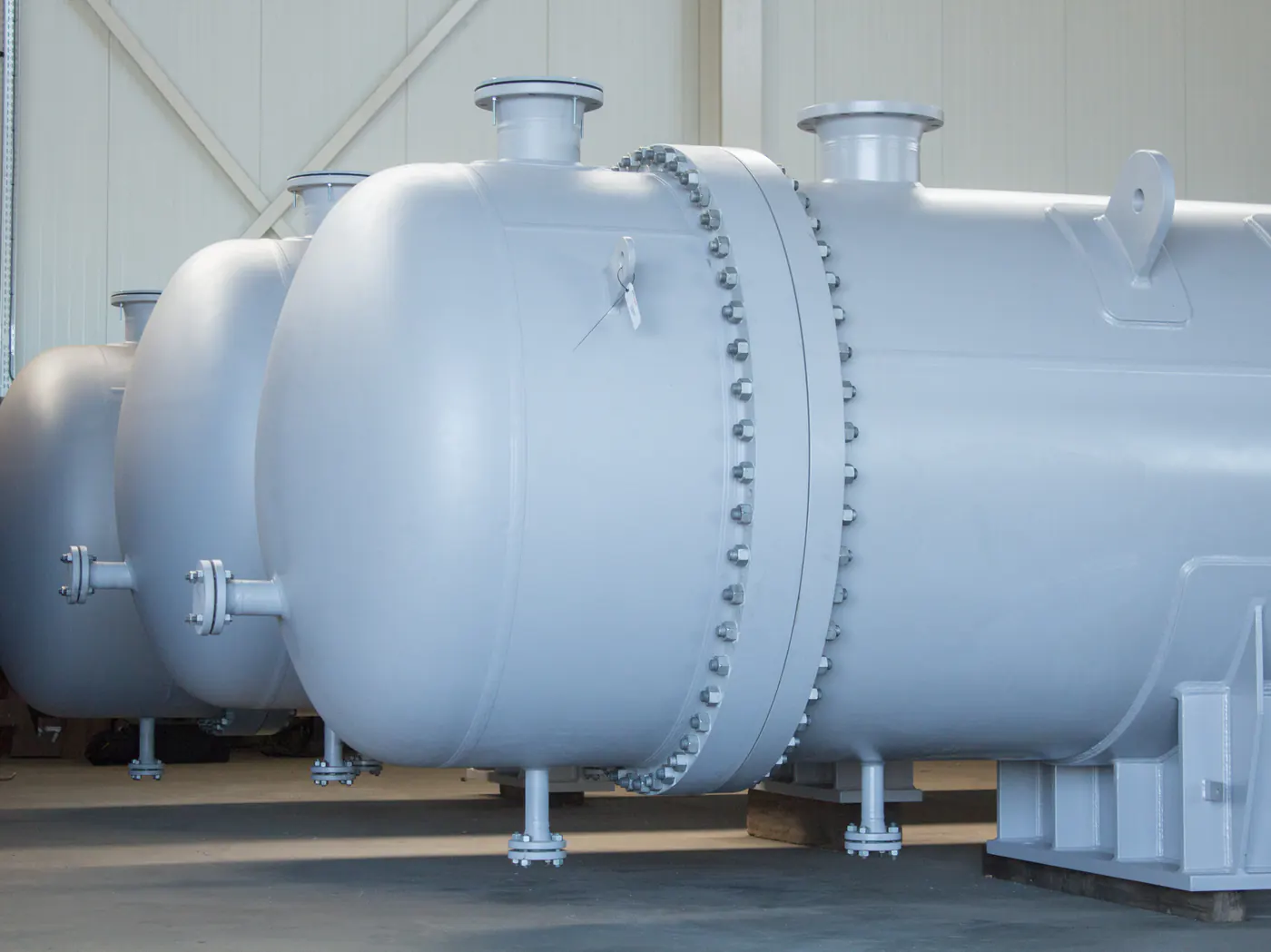
Welding under the PED 2014/68/EU: categories and approvals
The Pressure Equipment Directive 2014/68/EU sets requirements for the design and manufacture of pressure equipment: vessels, piping, safety accessories and pressure accessories with a maximum allowable pressure above 0.5 bar. For welding companies the PED is one of the most demanding frameworks, because welded joints are treated as permanent joints with their own approval regime.
Anyone welding pressure equipment, or buying it, needs to know which category the product falls into, which conformity module applies and when welding procedures and welders must be approved by an external party. This article summarises the welding-related requirements of the PED, from categorisation to the role of the notified body and the RTPO.
Categories I to IV: risk determines the regime
The PED divides pressure equipment into four categories of increasing risk. The classification follows the tables in Annex II of the directive and depends on the type of equipment (vessel, piping, steam boiler), the nature of the fluid (gas or liquid, hazardous or not, group 1 or 2), the maximum allowable pressure PS and the volume V or nominal diameter DN. The product of pressure and volume, PS times V, is often decisive. Equipment below the category thresholds falls under sound engineering practice and receives no CE marking under the PED. The higher the category, the heavier the conformity assessment: from internal production control at category I to extensive notified body involvement at category IV.
Permanent joints: the special status of welding
The PED does not mention welding by name but refers to permanent joints: joints that can only be separated by destructive methods. Welding is by far the most important of these. Annex I, section 3.1.2 sets two core requirements. First, permanent joints and adjacent zones must be free of defects detrimental to safety. Second, for equipment in categories II, III and IV, both the joining procedures and the personnel performing them must be approved by a competent third party. Category I is exempt from that external approval duty, although qualified procedures and competent personnel remain the foundation of a controlled process there too.
Approval by notified body or RTPO
Approval of welding procedures and welders for category II and above may be carried out by:
- A notified body (NoBo): the body that can also perform the conformity assessment of the product itself.
- A recognised third-party organisation (RTPO): an independent body notified specifically for these approvals and for NDT personnel.
In practice this means that a welding procedure qualification to EN ISO 15614-1 and welder qualifications to ISO 9606-1 for PED work must be witnessed or endorsed by the NoBo or RTPO. A qualification assessed only internally or by a non-recognised party does not count. When buying welded pressure parts, always check who approved the qualifications and whether that party is notified for the PED.
Modules: the route to CE marking
For each category the manufacturer selects from fixed combinations of conformity modules, from module A (internal production control, category I) via A2, D1 or E1 to modules with EU-type examination and full quality assurance at categories III and IV, such as B with D or F, G and H1. The choice determines how deeply the notified body is involved in production: from random checks to assessment of the complete quality system and witnessing of tests. For the welding shop the core does not change: qualified procedures, approved personnel, controlled execution and a complete dossier. A quality system to ISO 3834-2 is the usual backbone.
NDT and final assessment
Non-destructive testing of permanent joints on category III and IV equipment must be performed by personnel approved by an RTPO. Qualification to ISO 9712 is the accepted foundation. The PED also requires a final assessment: a final visual inspection, a review of the documentation and a proof test, normally a hydrostatic pressure test at the prescribed level. The extent of in-process testing follows from the harmonised product standards, such as EN 13445 for unfired pressure vessels and EN 13480 for industrial piping, combined with the project's inspection and test plan.
Materials and documentation
Pressure-bearing materials must be suitable and traceable. For main pressure parts the PED requires certificates with specific testing; in practice this means certificates to EN 10204 type 3.1 or 3.2, depending on category and application. The final dossier further contains the design calculations, approved welding procedure specifications and qualification records, weld logs with welder assignment, NDT reports, the results of the final assessment and the EU declaration of conformity. Independent welding inspection and QA/QC during fabrication prevents gaps in this dossier surfacing only at final assessment, when repair is most expensive.
Frequently asked questions
From category II. For equipment in categories II, III and IV, the procedures for permanent joints and the personnel performing them must be approved by a notified body or a recognised third-party organisation. Category I can rely on internal assurance, though qualifications remain strongly advisable there too.
A notified body performs the full conformity assessment of pressure equipment. An RTPO is notified specifically for approving procedures and personnel for permanent joints and for NDT personnel. Both may approve welding and welder qualifications for PED work; only the NoBo assesses the product itself.
The PED applies to placing new pressure equipment on the market. Repair and modification fall under national rules for equipment in use. A substantial modification, however, can cause the equipment to be regarded as a new product and fall under the PED again.
The PED does not demand an ISO 3834 certificate as such, but it does demand controlled processes, approved procedures and approved personnel. ISO 3834-2 is the accepted way to organise and demonstrate that control, and notified bodies commonly use it as their assessment framework under the quality assurance modules.
More from the knowledge centre
Have a welding or QA/QC question?
Ask the DEHAAS Welding & Quality Assistant, have your case reviewed by a specialist, or call us directly.