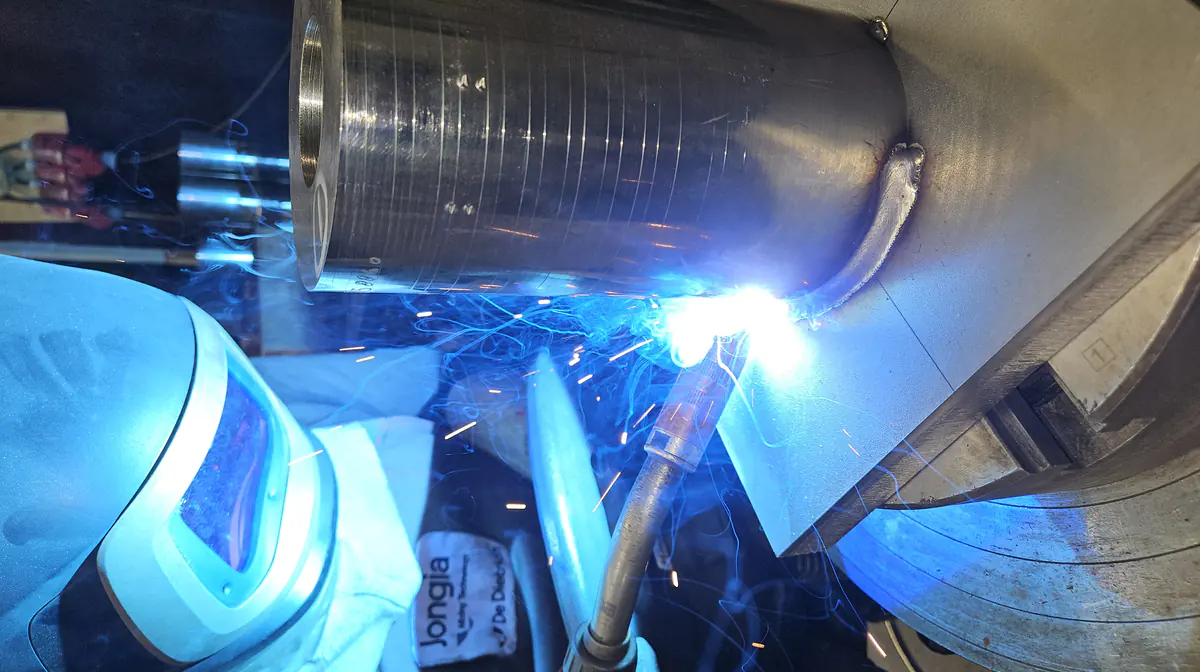
Welder certification compared: AWS, ASME IX and ISO 9606-1
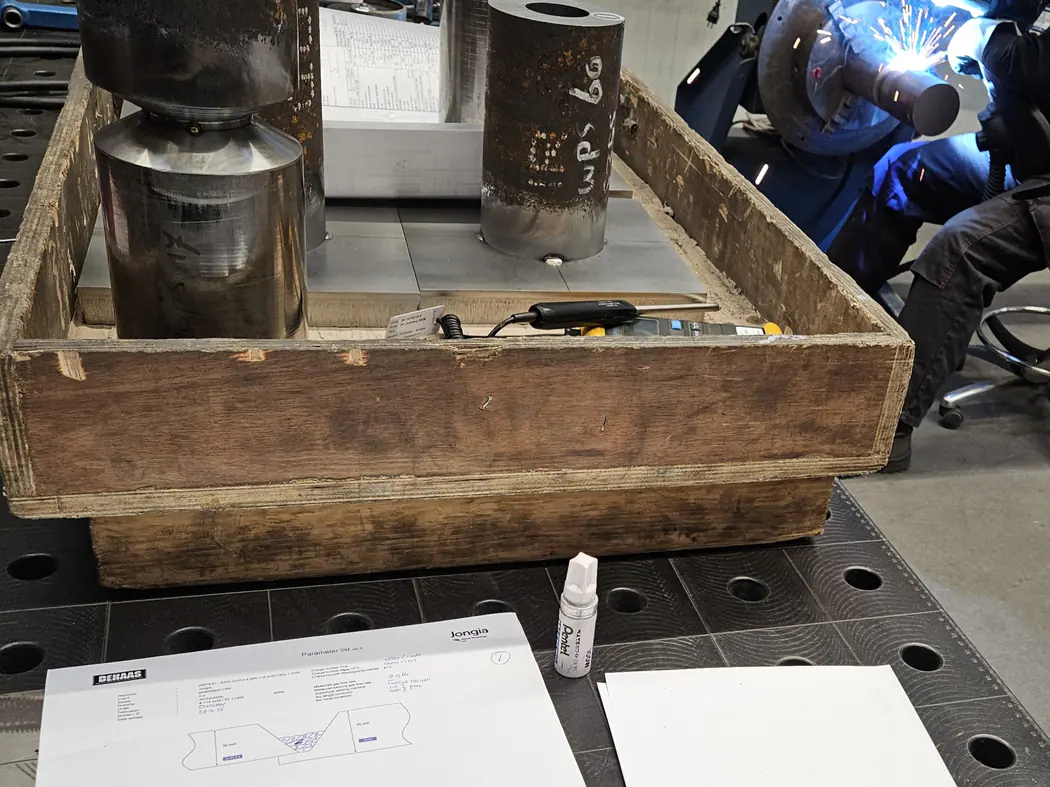
Welder certification works differently depending on where the work is going. Fabricators serving international clients meet three systems: AWS, with the D1.1 structural code and the AWS Certified Welder program; ASME Section IX, with its Welder Performance Qualification (WPQ); and ISO 9606-1, used across Europe and well beyond. All three prove that a welder can make a sound weld with a given process, position and material. Who runs the test, how long it stays valid and whether the welder can take it to the next employer differ considerably.
A valid ISO 9606-1 certificate does not make a welder qualified under an American code, and a 6G ASME qualification does not satisfy a European notified body by default. This article compares the systems side by side. The ISO route is covered in more depth in our article on welder qualification to ISO 9606-1.
Welder qualification or welder certification?
In American codes, welder qualification is the test itself: the welder welds a coupon to a WPS, the coupon is tested and the employer records the result. Certification is the written statement that goes with it, or a personal credential such as the AWS Certified Welder card. In Europe, the result is a welder's certificate issued by an examiner or examining body.
The difference goes beyond vocabulary. Under AWS D1.1 and ASME IX, responsibility lies with the employing organisation. Under ISO 9606-1 an examiner plays a central role, and for PED 2014/68/EU equipment from category II upwards this must be a notified body or a recognised third-party organisation.
AWS D1.1 and the AWS Certified Welder program
AWS D1.1 qualifies welders within the code itself, with the manufacturer or contractor responsible for test and records. Positions use American notation: 1G to 4G for groove welds in plate, 5G and 6G for pipe, and 6GR for tubular T-, Y- and K-connections. A 3/8 in plate test covers a limited thickness range, a 1 in plate test unlimited thickness. Assessment is visual plus bend tests or radiography.
The AWS Certified Welder program sits alongside the code. The welder tests at an AWS Accredited Test Facility, witnessed by a Certified Welding Inspector, and is entered in a central registry. The credential belongs to the welder, so a new employer can verify it directly.
ASME Section IX: the WPQ
ASME IX requires each organisation to qualify its own welders for every process used in production. The welder welds a coupon to a qualified WPS, and the organisation records and certifies the result on a WPQ. On Section VIII vessels, the Authorized Inspector reviews these records.
The range follows from the welder's essential variables: process, backing, P-number, F-number, deposited thickness, pipe diameter, position and vertical progression. Testing is by bend tests or volumetric examination; radiography is permitted for most processes, but not for short-circuit GMAW (GMAW-S).
ISO 9606-1: the international route
ISO 9606-1 covers fusion welding of steel and is the default under EN 1090-2, ISO 3834 and the PED. An examiner or examining body witnesses the test, reviews the results and issues the certificate. The range follows from variables such as process, product form, weld type, filler material group, thickness, diameter and position, with ISO positions PA to PH and H-L045 or J-L045 for pipe at 45 degrees.
Validity and continuity compared
- AWS D1.1: remains in effect indefinitely, unless the welder has not used the process for more than six months or there is a specific reason to question their ability.
- AWS Certified Welder: stays active as long as a maintenance form is submitted to AWS every six months.
- ASME IX: expires when the welder has not used the process for six months or more; a single new test coupon renews it. It can be revoked when there is reason to question the welder's ability.
- ISO 9606-1: six-monthly confirmation by the employer or welding coordinator, plus periodic revalidation by retest, by testing production welds or, for the same manufacturer with an ISO 3834-2 or -3 system, by documented weld quality.
In every system, continuity records are the weak spot. A missing entry makes a capable welder unqualified on paper.
Portability between employers
- AWS D1.1 and ASME IX are tied to the qualifying organisation. A new employer normally retests, unless the Engineer accepts previous evidence under D1.1, or ASME B31.3 allows acceptance of another employer's qualification under strict conditions and with the Inspector's approval.
- AWS Certified Welder is designed as a portable credential, provided maintenance continues.
- ISO 9606-1 certificates are in the welder's name and often move with them, if the new employer can support uninterrupted confirmation. Practice varies, and the ISO 3834 revalidation route stays with the original manufacturer.
Which welder certification for which project?
- Structural steel for the European market under EN 1090-2 and PED pressure equipment: ISO 9606-1.
- Structural steel to an American specification, for US projects or offshore work with AWS requirements: AWS D1.1. See AWS D1.1 versus the EN standards.
- ASME pressure vessels, boilers and process piping, such as Section VIII or B31.3: ASME IX.
- Pipelines to API 1104 and work in Canada under CSA W47.1 and the Canadian Welding Bureau follow their own rules.
On multi-code projects, one test coupon can sometimes serve more than one system, provided process, position, testing and witnessing meet all requirements. Plan this together with WPS and WPQR qualification, so procedures and welder qualifications line up.
Frequently asked questions
Not automatically. For EN 1090-2 structures and PED pressure equipment, ISO 9606-1 is the normal basis. An AWS qualification only counts if the specification or notified body explicitly accepts it, in writing.
Often, yes, if the coupon, testing and witnessing satisfy both systems. The result is two separate records, each with its own range and continuity rules. Agree this before welding starts.
6G is the American designation for a fixed pipe test at 45 degrees. In ISO notation it corresponds to H-L045 welding upwards and J-L045 welding downwards. A 6G test covers many positions, but the exact range depends on the code.
More from the knowledge centre
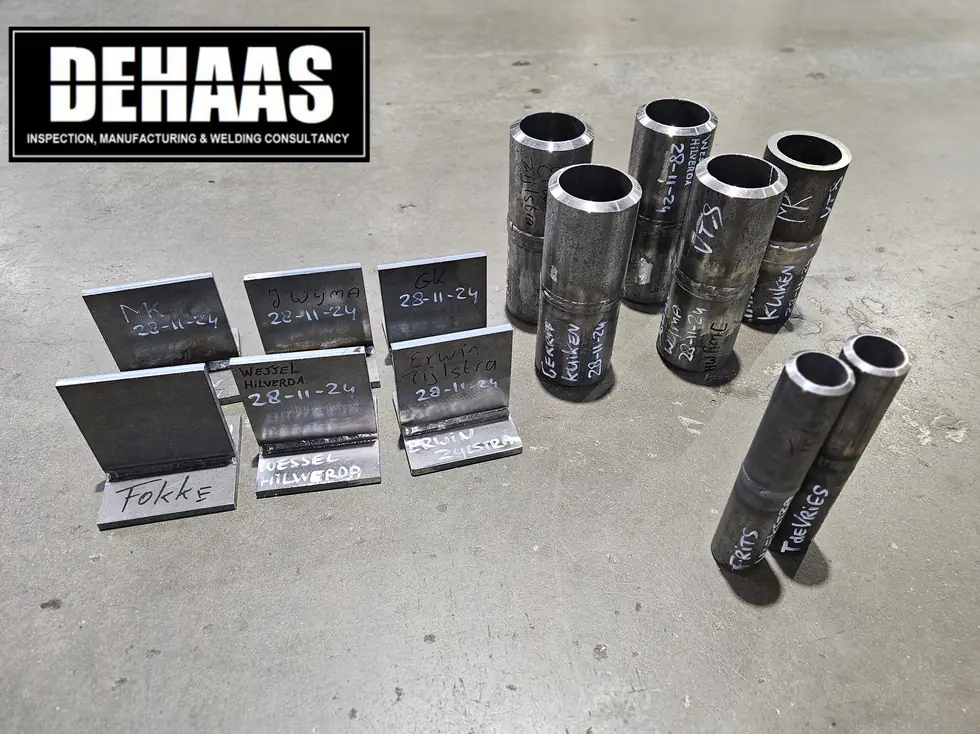
Have a welding or QA/QC question?
Ask the DEHAAS Welding & Quality Assistant, have your case reviewed by a specialist, or call us directly.