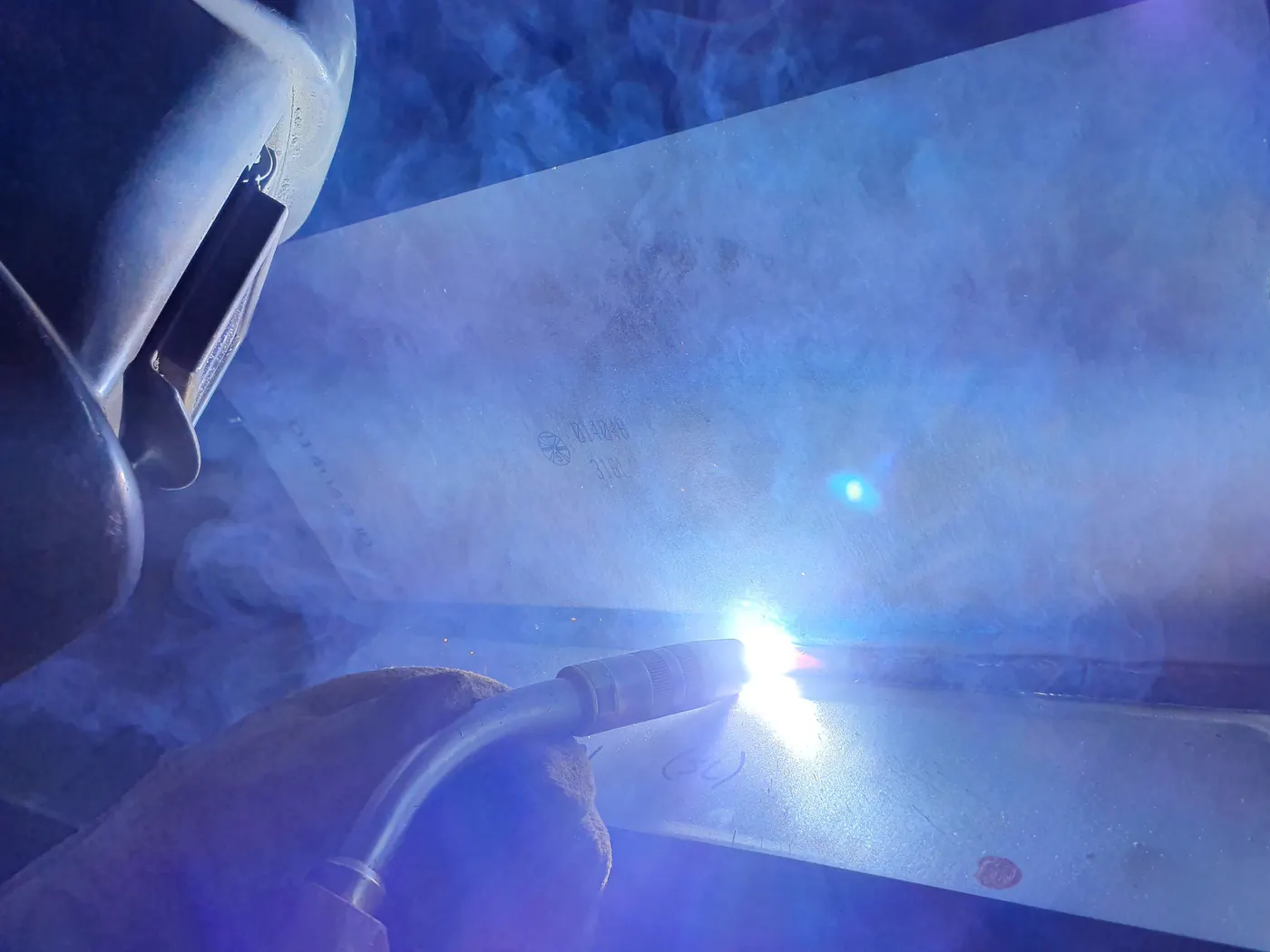
Selecting shielding gas
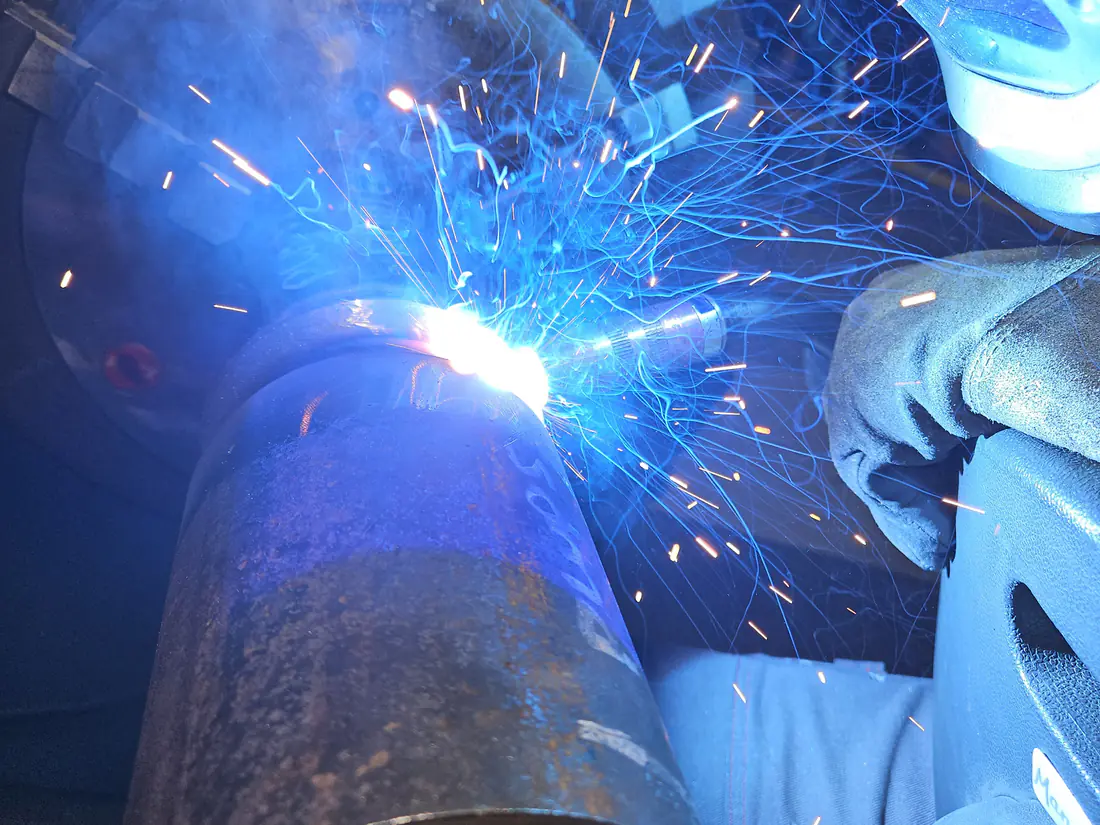
Shielding gas does more than keep the air out. It determines the penetration profile, arc stability, spatter, weld pool fluidity and even the impact toughness of the weld metal. Yet many procedures record it simply as mixed gas.
This article works through the common gases using the ISO 14175 classification and describes what a change does in practice.
The ISO 14175 classification
ISO 14175 groups gases. I denotes inert: I1 is pure argon, I2 pure helium, I3 an argon helium mixture. M denotes mixtures with an active component: M20 and M21 are argon with carbon dioxide, M12 and M13 contain oxygen. C1 is pure carbon dioxide. R gases contain hydrogen and are intended as backing or TIG gas.
The designation to this standard belongs in the WPS, with the composition alongside. Mixed gas is not a designation: dozens of mixtures exist with different behaviour.
What the choice does on steel
M21, typically argon with 15 to 25 percent carbon dioxide, is the workhorse for MAG welding of unalloyed and low alloy steel. More carbon dioxide gives deeper, rounder penetration and more spatter; less gives a calmer arc and a flatter bead.
Pure carbon dioxide, C1, gives the deepest penetration and is cheap, but produces heavy spatter and does not support spray transfer. It is still used on heavy material and where appearance does not matter. Switching from M21 to C1 changes impact values and is a change that must be covered by qualification.
Stainless steel and aluminium
Austenitic stainless is welded under argon with a small active addition, for example M12 with 2 percent oxygen, or M13. That small addition stabilises the arc and improves wetting; more carbon dioxide would raise the carbon content of the weld metal and harm corrosion resistance.
Aluminium must be welded under fully inert gas: pure argon, or argon with helium on heavy material for more heat. Any active component oxidises the pool immediately. See welding aluminium.
Flow rate, hoses and leaks
A well chosen gas is useless if it does not arrive where it should. Flow must suit the nozzle diameter and the conditions, typically 12 to 18 litres per minute on MAG. Excessive flow causes turbulence and actually draws in air.
Check flow at the torch, not at the cylinder, and watch for leaks in hoses and couplings. A hose drawing in air gives exactly the same porous appearance as insufficient gas, and is often misdiagnosed.
Frequently asked questions
Not without checking that the qualification covers it. Gas composition is an essential variable in ISO 15614-1, and where impact requirements apply the result changes. The stated properties of the consumable also apply only with the stated gas.
Often from too high a carbon dioxide content combined with an unsuitable transfer mode, or from excessive stick-out. Also check the flow rate and whether the gas diffuser in the torch is fouled.
Shielding gas protects the arc and pool on the welding side; backing gas protects the root side from oxidation. Their compositions differ: backing gas often contains nitrogen or hydrogen, which would be undesirable on the arc side.
On heavy material, aluminium and copper, yes. Helium raises arc voltage and heat input at the same current, improving penetration and wetting. It is expensive and light, so flow must be higher, and it only pays where heat is the limiting factor.
More from the knowledge centre
Have a welding or QA/QC question?
Ask the DEHAAS Welding & Quality Assistant, have your case reviewed by a specialist, or call us directly.