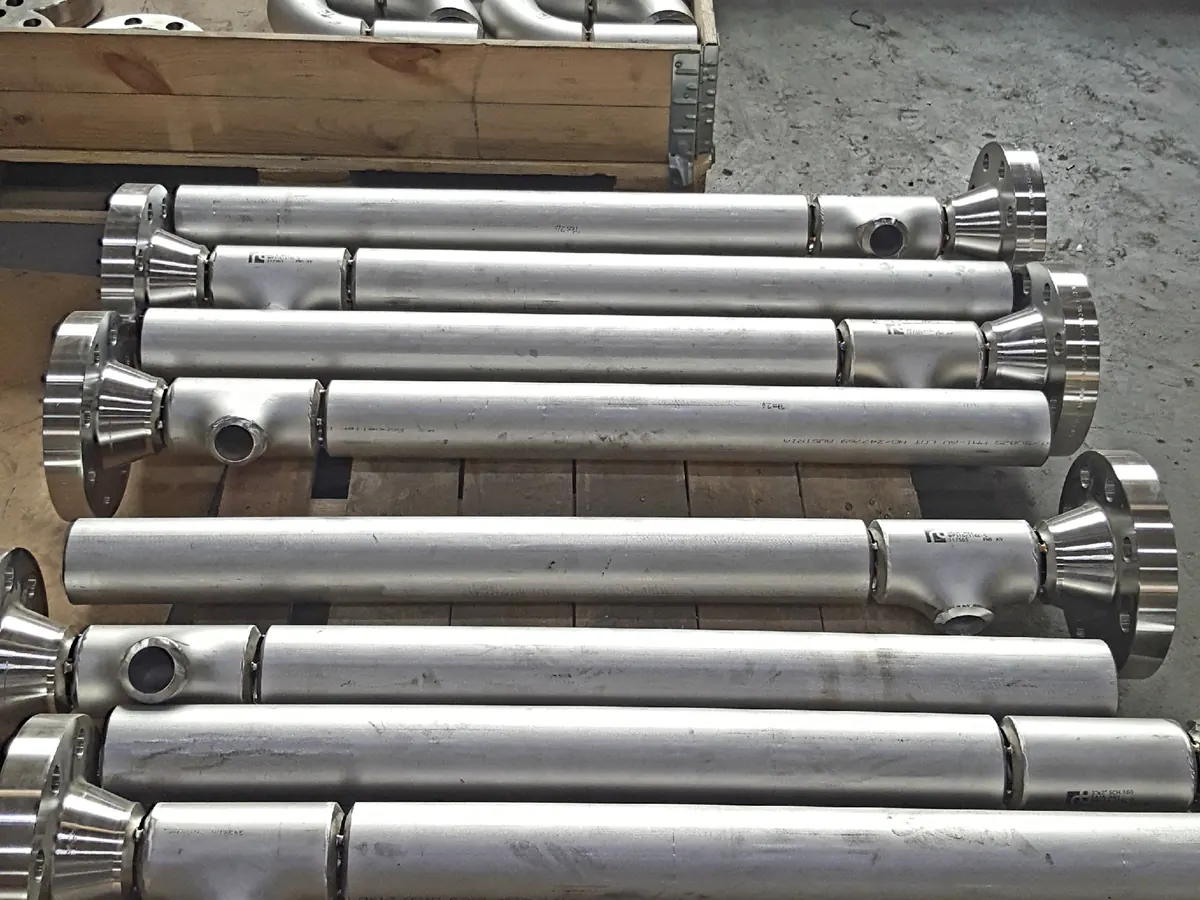
Selecting the weld quality level: B, C or D
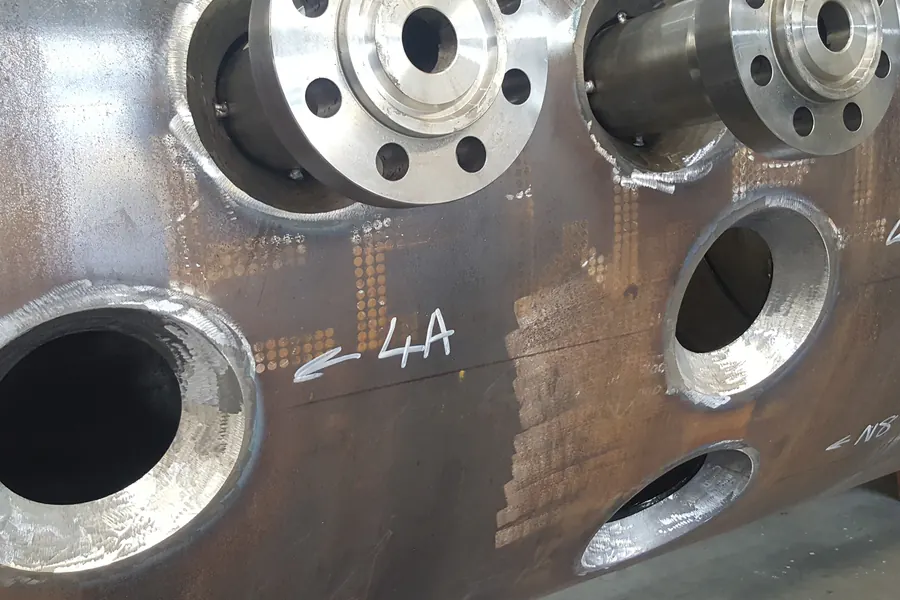
Specifying level B everywhere is the safest choice and simultaneously the most expensive. Putting everything at D is cheap until something fails. Practice calls for a justified choice per joint, and that choice is more often a design decision than a welding decision.
This article describes how to make it, what it means for examination and cost, and why a level recorded nowhere effectively does not exist.
What the levels mean
ISO 5817 defines three quality levels: B is stringent, C intermediate and D moderate. They differ in the permitted size of imperfections, not in the permitted types. Cracks are unacceptable at every level; the difference lies in how much porosity, undercut or shape deviation is allowed.
It is a common misconception that level B means no imperfections at all. Even at level B, pores and slight undercut are permitted within limits. See ISO 5817 explained.
The decision in three questions
Question one: is the joint cyclically loaded? If so, the weld toe geometry governs and level B or C is the obvious choice, with attention to undercut. Question two: what happens if this weld fails? Where personal injury or environmental damage is at stake there is no room for a moderate level.
Question three: will the joint still be inspectable and repairable after assembly? A weld that ends up inaccessible deserves a stricter level than one that remains reachable. Those three questions usually produce a mixed picture within one product, and that is exactly the intention.
What the level costs
The chosen level flows through into the extent of non-destructive testing, the acceptance limits and the number of repairs. A step from C to B means not only stricter limits but also more examination and more rejection, and every repair puts additional heat into the structure.
Against that, too moderate a level on a critical joint only costs money at the moment it goes wrong, and then disproportionately. The trade-off is therefore not cheap versus expensive, but visible cost now versus risk later.
Record it, otherwise it does not exist
The level belongs on the drawing, in the welding symbol or a general note, and should be repeated in the welding plan. If it appears nowhere, the welder applies his own yardstick and the inspector applies theirs, and those two do not align by themselves at inspection.
Under EN 1090-2 the level follows from the execution class: EXC2 usually requires level C, EXC3 and EXC4 level B, with additional requirements for certain imperfections. Outside EN 1090, for example in machine building, the manufacturer must determine and record it.
Frequently asked questions
Under EN 1090-2, EXC2 usually corresponds to quality level C, with some imperfections tightened to D or B. The standard provides a table; transfer it literally rather than reducing it to 'C and done'.
Yes, and that is often the most sensible approach. Critical, cyclically loaded joints at B, load bearing but statically loaded at C, and non structural attachments at D. Record what applies per joint, otherwise confusion arises on the floor.
No. The quality level says what is permitted, the extent of examination says how much is looked at. Those two are specified separately. A level B weld with 10 percent examination is conceivable, though rarely wise in critical work.
Then you must establish it before welding, together with the client or designer. Choosing a level afterwards means applying a yardstick to work already completed, which almost always leads to dispute.
More from the knowledge centre
Have a welding or QA/QC question?
Ask the DEHAAS Welding & Quality Assistant, have your case reviewed by a specialist, or call us directly.