Vendor inspection abroad: control of quality at a distance
More and more welded components, pressure equipment, piping and steel structures are sourced from suppliers outside the Netherlands. Prices are often attractive, but distance makes it hard to see what actually happens in the workshop. Vendor inspection abroad restores that visibility: an inspector assesses on your behalf, at agreed stages, whether the supplier is working to contract, specification and standards.
This article is written for buyers, planners and QC staff responsible for monitoring an overseas order. It covers the typical risks, the inspection stages from pre inspection meeting to final inspection, reporting, desk expediting and what a structured approach delivers.
The risks of sourcing abroad
An overseas supplier is not inherently worse than a domestic one. The risk lies mainly in distance and in differing interpretations. The same patterns recur:
- Specifications are read differently, for example a different ISO 5817 quality level than intended, or weld procedures not qualified to EN ISO 15614-1 or ASME IX as the contract requires.
- Material certificates do not match the delivered material, or the required EN 10204 type 3.1 or 3.2 is missing.
- Parts of the work are subcontracted without notice.
- Welders work without a valid ISO 9606-1 qualification for the position and material used.
- Progress reports are more optimistic than reality, so delays surface late.
Each of these can usually be established on site within an hour. From your desk they stay invisible until the product arrives on site.
The pre inspection meeting
The most important inspection happens before any welding starts. At the pre inspection meeting, also called kick off or pre production meeting, the inspector walks through the order with the supplier, covering:
- The inspection and test plan with hold, witness and review points and notice periods.
- Weld procedures, their qualification records and welder qualifications.
- Material ordering, certificate level and traceability.
- Use of subcontractors, for example for NDT, heat treatment or coating.
- Schedule, reporting format and the structure of the final dossier.
Ambiguities resolved here cost nothing; the same ambiguity at final inspection costs weeks. Our article on how to write an ITP explains the basis for these agreements.
Interim inspections during fabrication
Interim inspections target the moments after which defects can no longer be seen or only repaired at great effort: checking joint preparation and fit up before a weld is closed, witnessing a pressure test, reviewing NDT results or sampling the weld register.
The number of visits depends on product complexity, experience with the supplier and the consequences of a defect. With a new supplier or a critical product, more visits early on make sense. Once the supplier proves reliable, oversight can be reduced to the contractual hold points.
Final inspection before shipment
The final inspection is the last chance to intervene without freight costs and customs formalities. The inspector checks dimensions, welds, finish, marking, completeness and packing, and confirms the documentation is complete. Only then is an inspection release note issued.
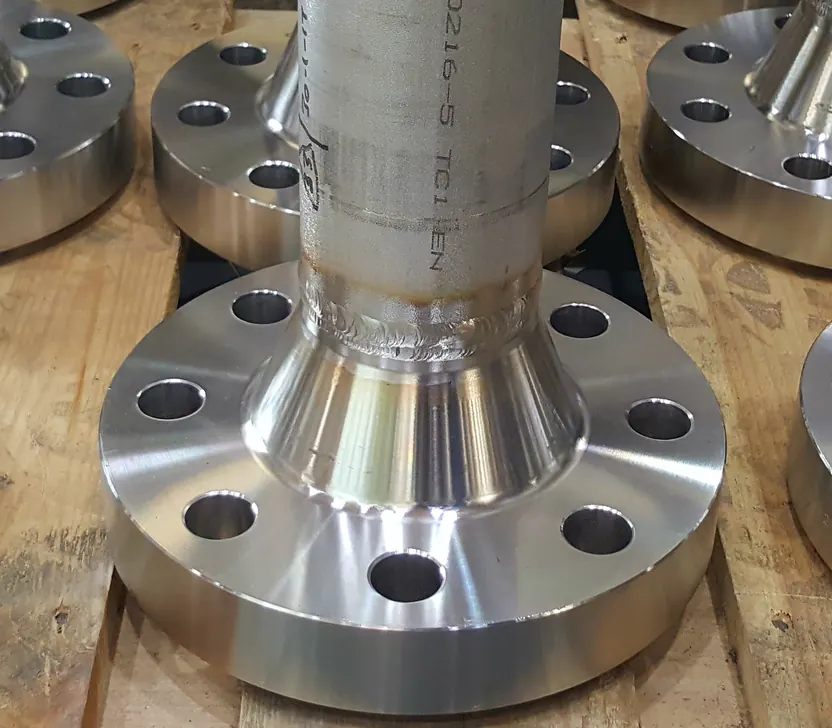
Packing and preservation deserve extra attention on overseas deliveries. A product that is sound in the workshop can still be rejected after weeks at sea due to corrosion or transport damage, so flange covers, protection of machined faces and proper securing belong on the checklist.
Reporting and desk expediting
Vendor inspection only adds value if findings reach you quickly and clearly. A good report states the status per ITP line, includes photos and measured values, lists any deviations with a proposed disposition and ends with a clear conclusion: released, conditionally released or not released.
Desk expediting complements the visits. Progress is monitored remotely: schedules are requested and challenged, documents such as WPSs and certificates are reviewed in advance, and delays are flagged before they affect delivery. Combining desk expediting with targeted visits keeps costs under control without losing sight. See our vendor inspection service for more.
What vendor inspection abroad delivers
The return lies mainly in what does not happen. A rejected weld repaired in the supplier's workshop costs a few hours. The same repair on site means a crew standing idle, extra NDT, arguments over costs and often a delayed schedule. A structured approach also delivers:
- A complete, verified dossier on delivery.
- Early insight into delays, so you can act in time.
- Fact based input for supplier evaluation.
- Fewer disputes at handover, because deviations were recorded and closed during fabrication.
We cover dossier structure in our article on the MRB and MDR.
Frequently asked questions
At least a pre inspection meeting and a final inspection. In between, product complexity, supplier experience and the ITP hold points determine the number of visits. With a new supplier, an extra visit early in fabrication is often the best investment.
Partly. Document review and progress monitoring work well remotely, and a video inspection can supplement them. Dimensions, weld appearance, traceability on the product and witnessing tests still require someone on site who measures and looks for themselves.
That depends on the contract. Many purchase conditions state that reinspection costs are borne by the supplier when caused by their own non conformity. Put this in the order to avoid argument later.
Vendor inspection is about quality: does the product meet specification and standards. Expediting is about progress: will it be delivered on time. They reinforce each other, because an inspector on site also sees how far fabrication has really progressed.
More from the knowledge centre
Have a welding or QA/QC question?
Ask the DEHAAS Welding & Quality Assistant, have your case reviewed by a specialist, or call us directly.