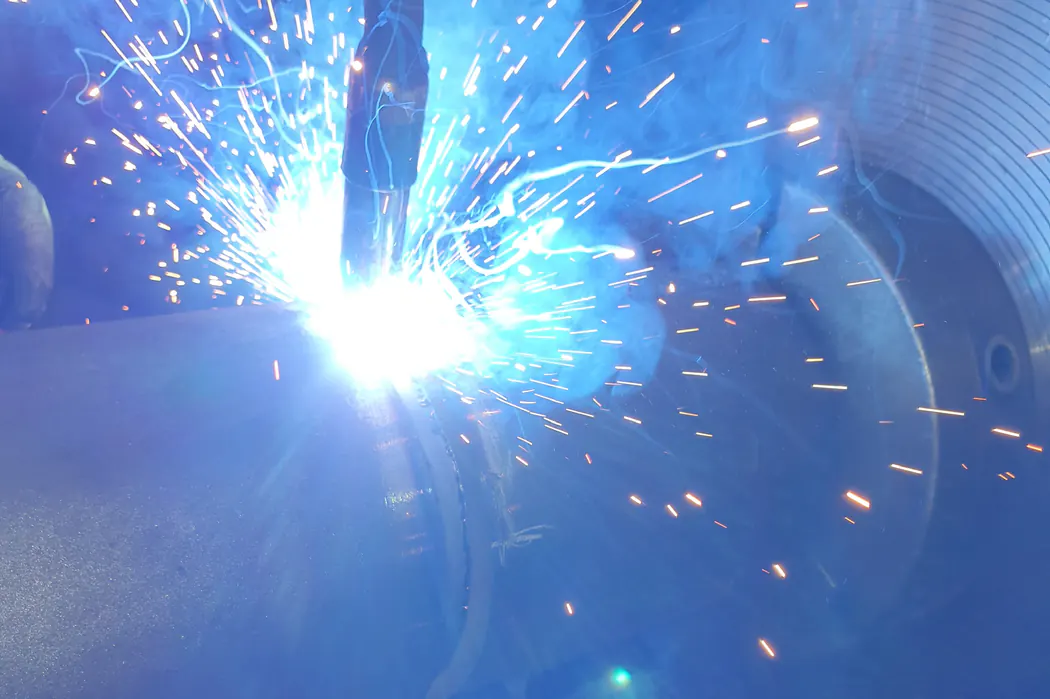
Heat tint on stainless welds: pickling and passivation
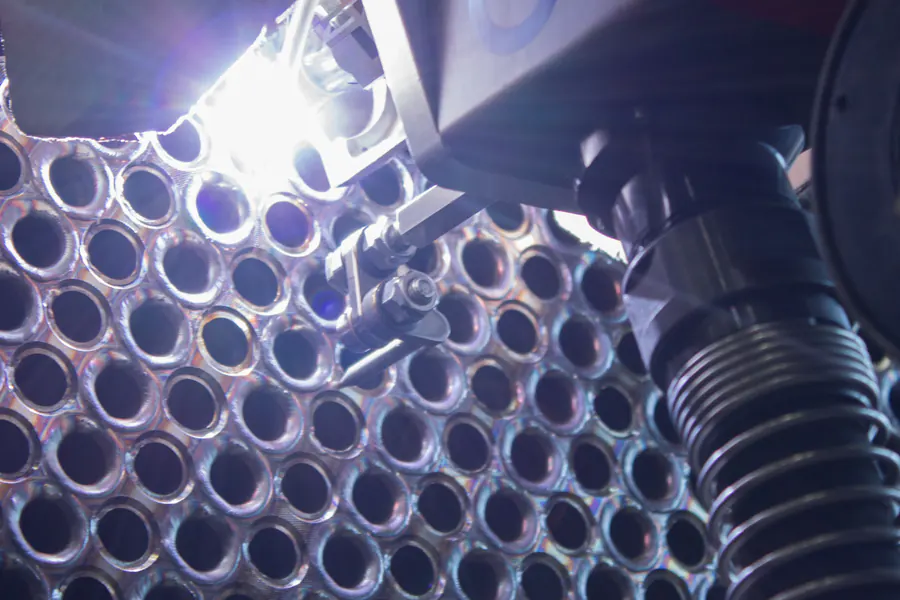
Stainless steel owes its corrosion resistance to an invisibly thin chromium oxide film that repairs itself as long as enough chromium is available at the surface. Welding heat disturbs that balance: temper colours appear, from pale yellow to blue and grey, and beneath those colours the chromium bearing layer is depleted. What looks like harmless discolouration is in reality a weakened zone where pitting corrosion strikes first.
This article explains what heat tint actually is, which acceptance criteria are commonly applied, how to prevent tint inside pipework using backing gas and oxygen monitoring, and how pickling and passivation fully restore corrosion resistance.
What the temper colours tell you
Temper colours are interference colours of a thickened oxide layer. The higher the temperature and the more oxygen present, the thicker the layer and the darker the colour: from straw yellow through gold and purple to blue and dull grey. The colour therefore directly indicates the damage beneath it. Under a light straw tint the chromium depletion is limited. Under blue and grey oxides the underlying layer is markedly chromium depleted and porous, and pitting starts there as soon as chlorides and moisture are present.
The key insight: the problem is not the colour itself but the depleted zone beneath it. Polishing a tint away until the surface shines, without removing the depleted layer, does not restore corrosion resistance.
Acceptance criteria for heat tint
How much tint is tolerable depends on the medium and the industry. In practice, colour reference cards are widely used, such as the well known series in AWS D18.1 for hygienic tube welding, showing numbered sample colours from bright to dark blue.
Typical agreements:
- Pharmaceutical, food and drinking water: at most a light straw tint on the product side, often expressed as sample 2 or 3 of the reference card
- Chemical and offshore: light tint acceptable provided it is post treated, dark oxides never
- Architectural work: criteria are largely visual, though chloride attack remains the real risk outdoors and near the coast
Fix the criterion before work starts, in the project specification or the inspection and test plan, including the reference card and whether post treatment is permitted or the tint must stay within the limit as welded.
Backing gas and oxygen monitoring in pipework
Inside pipes and fittings you usually cannot pickle after welding, so tint must be prevented with a backing gas, normally argon or nitrogen, that displaces oxygen at the root. In practice: dam the pipe with purge dams or water soluble paper, flush with a generous gas volume and start welding only once the residual oxygen is low enough.
Measure with an oxygen meter rather than judging by feel. Many specifications require below 100 ppm residual oxygen; for critical work such as pharmaceutical pipework or duplex, below 50 ppm and sometimes below 25 ppm is standard. Maintain the purge through the first filling passes, since the surface remains prone to oxidation up to several hundred degrees. For duplex this weighs even more heavily, as chromium depletion directly undermines its pitting resistance.
Pickling: removing the depleted layer
Pickling is a chemical treatment with a mixture of nitric and hydrofluoric acid, applied as an immersion bath, spray pickle or paste for local treatment of welds. The acid dissolves both the oxide layer and the chromium depleted zone beneath it, leaving a surface with the full alloy composition. That is the essential difference from polishing or brushing: pickling removes the problem, polishing hides it.
Practical points:
- Match pickling time and temperature to alloy and product: too short leaves depleted material, too long roughens the surface
- Rinse thoroughly with clean water and remove all pickling residues
- Pickling acids are hazardous to people and the environment: follow the safety rules and dispose of rinse water responsibly
- Mechanical alternatives such as blasting with clean media or electrolytic cleaning are possible, provided the depleted layer is genuinely removed
Passivation: rebuilding the oxide film
After pickling, stainless steel exposed to air rebuilds its passive film by itself. Passivating with dilute nitric or citric acid accelerates and improves that process: it dissolves free iron particles and promotes a dense, chromium rich film. Passivation is particularly worthwhile after machining, blasting or contact with carbon steel, since embedded iron otherwise acts as a starting point for rust.
Do not confuse the terms: pickling removes material and is the correction after welding, passivation builds the protective film and is the finishing step. Passivation alone does not repair heat tint. The sequence on welded work is: assess the tint, pickle or mechanically clean, rinse, passivate, and only then carry out final inspection.
Verification and safeguarding in practice
Final inspection comprises a visual assessment against the agreed reference card, preferably documented with photographs, plus additional tests where required. A ferroxyl test reveals free iron on the surface, and portable electrochemical meters can spot check the quality of the passive layer. On pipework, the oxygen readings per weld belong in the records as well.
Do not forget the surroundings: carbon steel grinding dust, transport damage and weld spatter cause rust later on otherwise sound work. Segregated tools, protective covering and a clean workshop are part of the safeguard. To anchor criteria, test methods and hold points properly in the inspection and test plan, NDT coordination helps; for material selection and procedures, welding engineering advice is the right channel.
Frequently asked questions
No. A light straw tint indicates a thin oxide with limited chromium depletion and is accepted in many industries, particularly when post treatment follows. What governs is the agreed acceptance criterion: in pharmaceutical or food work even a light tint on the product side may already be outside the limit.
Yes, but only if you demonstrably remove the chromium depleted layer beneath the colour and leave a clean, smooth surface. Merely brushing the colour away leaves a bright surface with a hidden weak spot. After mechanical removal, passivation remains advisable.
Many specifications use below 100 ppm as a general limit. Hygienic pipework and duplex typically require below 50 ppm, and the most critical work below 25 ppm. Measure with a calibrated oxygen meter at the joint and keep purging during the first passes.
After correct pickling and thorough rinsing, the passive film reforms by itself in air. A separate passivation treatment accelerates this, removes any free iron and gives a demonstrably better result. In critical applications, and whenever iron contamination is possible, passivation is the standard finishing step.
More from the knowledge centre
Have a welding or QA/QC question?
Ask the DEHAAS Welding & Quality Assistant, have your case reviewed by a specialist, or call us directly.