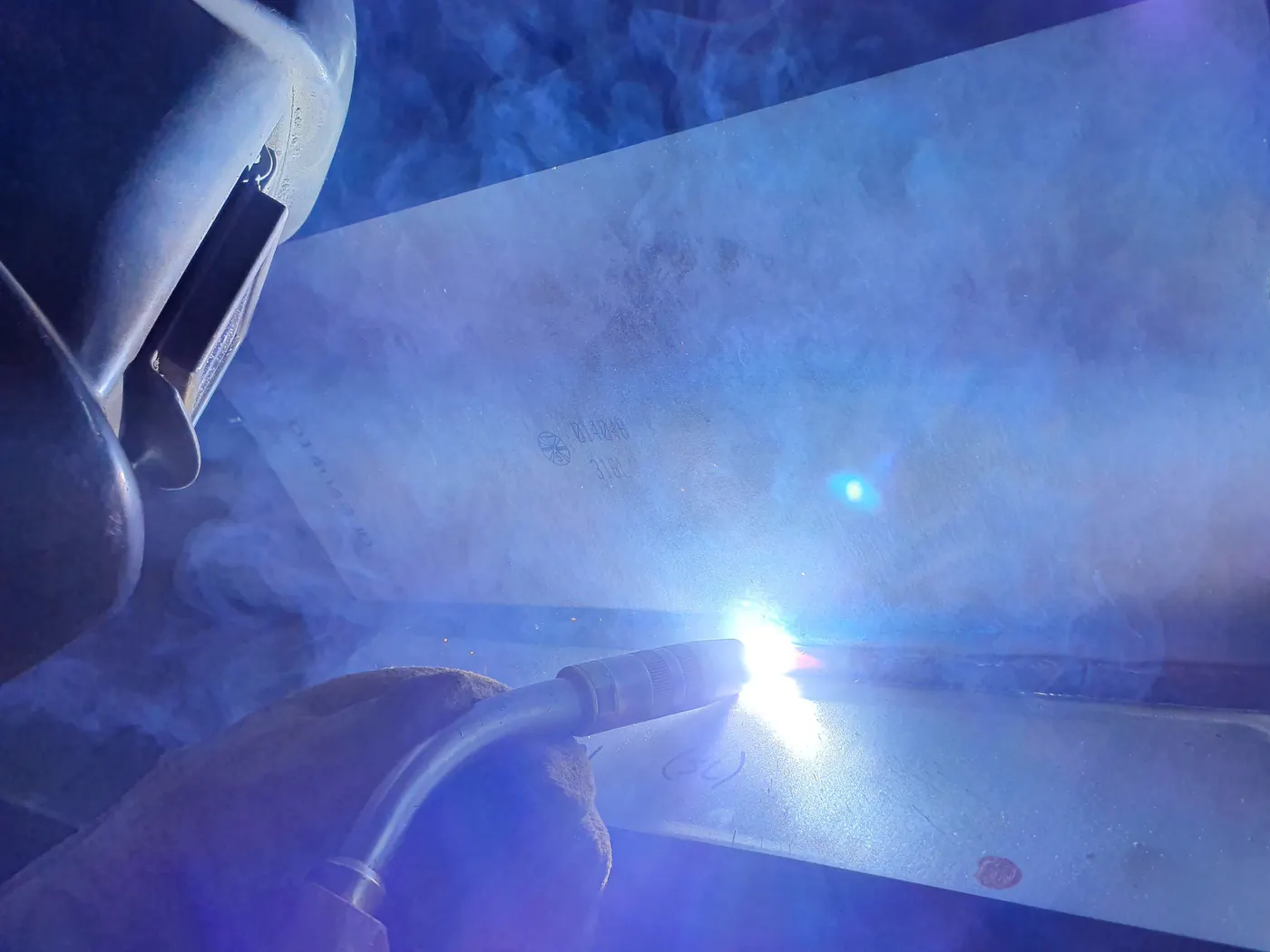
Welding nickel alloys and Inconel
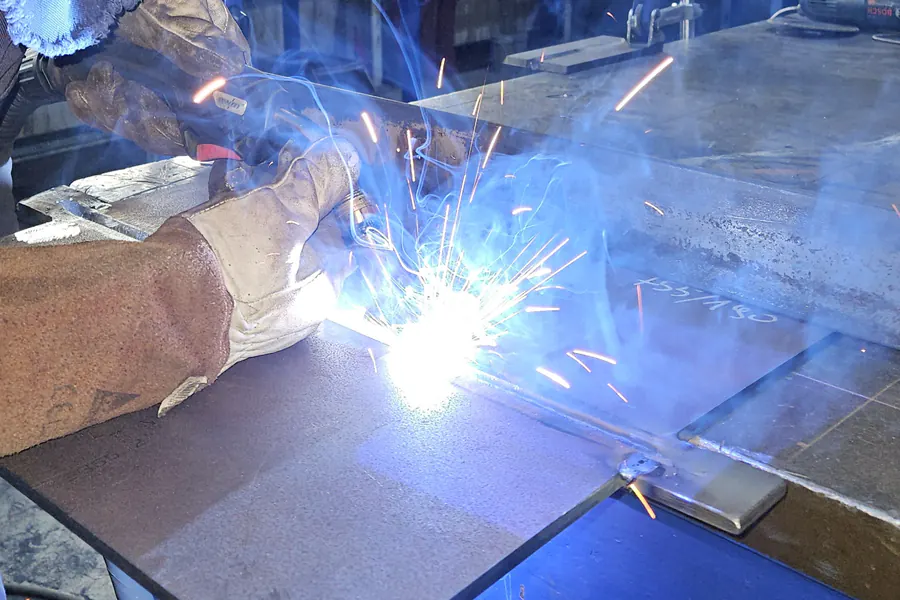
Nickel alloys are used where steel and stainless give up: in hot, acidic and chloride rich environments, in flue gas cleaning, offshore and in chemical process plant. They are expensive, which is exactly why designers use them sparingly, often as a clad layer or weld overlay on carbon steel. That places its own demands on the welding process.
Anyone used to stainless steel meets three surprises with nickel: the weld pool barely flows, the alloy is hot crack sensitive, and dilution with the parent material can completely undo the corrosion resistance of the overlay. This article covers those three points and the applicable standards.
Which alloy are you dealing with
The most commonly welded grades are Alloy 625 (2.4856, NiCr22Mo9Nb), Alloy 825 (1.4538, a nickel iron chromium alloy), Alloy 276 and Alloy 59 for the most aggressive chemical service, and Alloy 600 and 800 for elevated temperature. Alloy 400 (Monel) is a nickel copper alloy with its own welding behaviour.
The key distinction is between solid solution alloys, which are almost always weldable, and precipitation hardening alloys such as Alloy 718 and Waspaloy, which are sensitive to cracking during and after welding through ageing of the structure. For that second group a weldability study and a tailored heat treatment cycle are unavoidable.
The weld pool does not flow
Nickel alloys have high surface tension and a narrow solidification range. The result is a pool that stays where you put it: it does not wash out to the joint faces the way steel does. Welders who are unaware of this lay a good looking bead with lack of fusion along the sidewalls.
The answer lies in technique: weaving with a distinct dwell at the sidewalls, a wider joint preparation than for steel, and narrower beads with more layers. At the same time penetration must stay limited, which calls for low current. That combination, shallow penetration yet complete fusion, is precisely the skill that makes nickel joints demanding.
Hot cracking and heat input
Nickel alloys are sensitive to hot cracking in the solidifying weld metal, aggravated by sulphur, phosphorus and lead. A drop of oil or a sweaty fingerprint on the joint face is enough to cause a crater crack. Cleaning with a suitable solvent and wearing gloves is process control here, not excessive tidiness.
Keep heat input low, typically below 1.5 kJ/mm, and interpass temperature below 150 degrees Celsius. Always fill craters; an open end crater on nickel is almost always cracked. Preheat is not required and usually undesirable, the only exception being warming above the dew point on cold material.
Dilution in weld overlay
In cladding or weld overlay on carbon steel the weld metal mixes with the parent material. That dilution lowers the nickel, chromium and molybdenum content of the overlay. Specifications therefore usually set a maximum iron content at a given depth, for example 5 or 10 percent Fe measured 2 mm below the surface, verified by PMI or spectrometry.
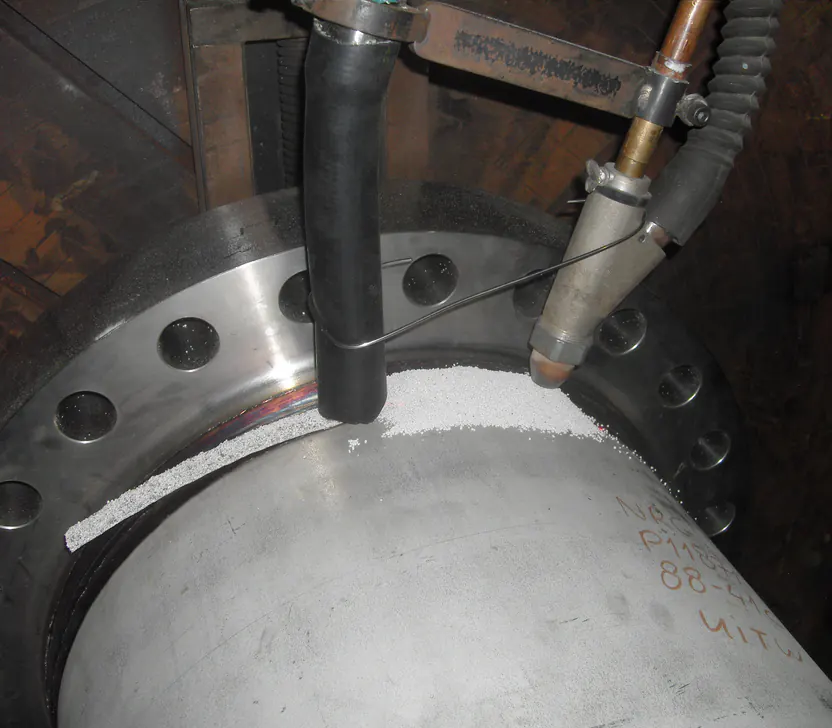
Control it by depositing two layers instead of one, by choosing a low heat input process such as cold wire GTAW or pulsed GMAW, and by generous bead overlap. On large areas, strip cladding with submerged arc or electroslag is used, giving low dilution and a high deposition rate.
Shielding gas, cleanliness and tools
Nickel alloys are welded under argon, often with a small helium addition for heat transfer. Hydrogen in the gas is permitted on some grades and forbidden on others; follow the consumable maker's recommendation. Full penetration joints need backing gas, just as with stainless.
Use tools dedicated to nickel only. Steel particles, zinc from galvanised material and copper from a backing bar are all crack sources. Zinc is notorious: a drop of molten zinc on a nickel surface causes liquid metal embrittlement.
Qualification and testing
In the European framework nickel alloys fall in material groups 41 to 48 of ISO/TR 15608, qualified to EN ISO 15614-1. In the ASME framework they are P numbers 41 to 47, qualified to Section IX. See ASME IX versus ISO 15614 for the difference in approach.
For corrosion resistant service, a corrosion test to ASTM G28 or G48 and a chemical analysis of the weld metal are often required alongside the usual mechanical testing. Capture those requirements in the inspection and test plan; producing an extra coupon after the fact is expensive with these materials. See writing an ITP.
Frequently asked questions
No, that sacrifices exactly the properties the material was selected for. For 625 you use ERNiCrMo-3. That consumable is also widely used for dissimilar joints between stainless and carbon steel, precisely because it tolerates a wide dilution range.
Crater cracks are the most common defect on nickel. They form because the last pool is pulled apart while solidifying. Fill the crater by walking the arc back onto the bead, or use the crater fill function of the power source. Also check for sulphur or grease contamination.
On common solid solution alloys usually not: they are austenitic and do not harden. On precipitation hardening alloys such as 718 the heat treatment governs the properties and belongs in the procedure. Stress relief on nickel can also cause embrittlement and must be assessed per alloy.
With positive material identification, usually a handheld XRF analyser, or optical emission spectrometry for lighter elements. Measure at the specified depth after machining; measuring on the as welded surface samples the dilution rich final layer and gives a flattering result.
Preferably not. While the risk is lower than with carbon steel, a shared disc embeds residues of other alloys in the surface. In corrosion critical service that can cause local attack. Keep tooling separated per material group and mark it.
More from the knowledge centre
Have a welding or QA/QC question?
Ask the DEHAAS Welding & Quality Assistant, have your case reviewed by a specialist, or call us directly.