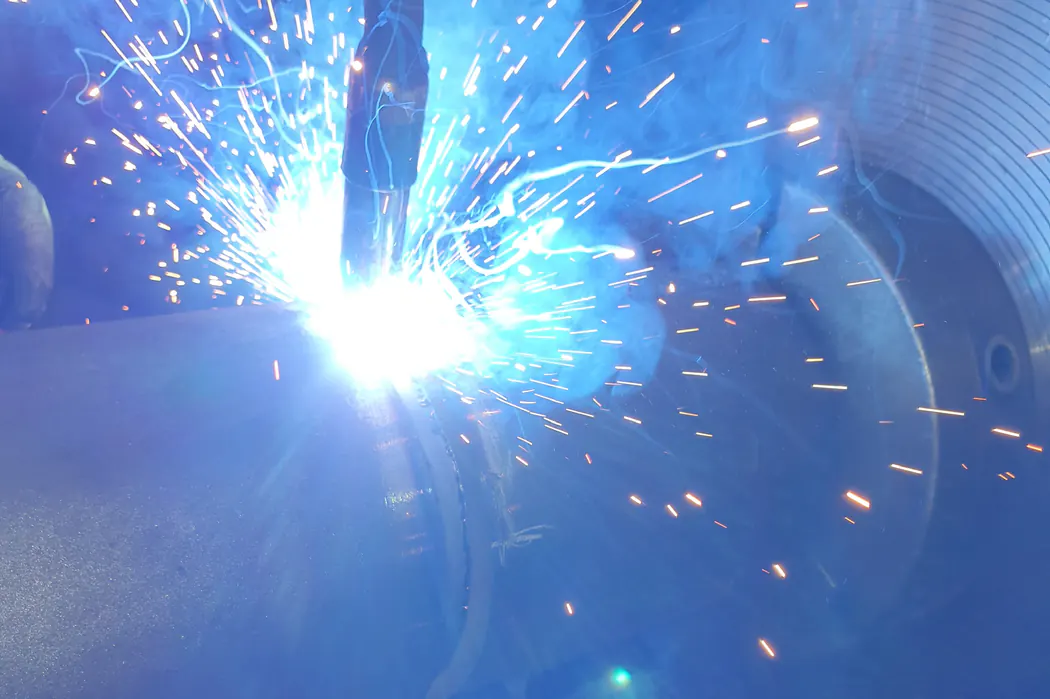
TIG welding (141) and orbital welding of pipework
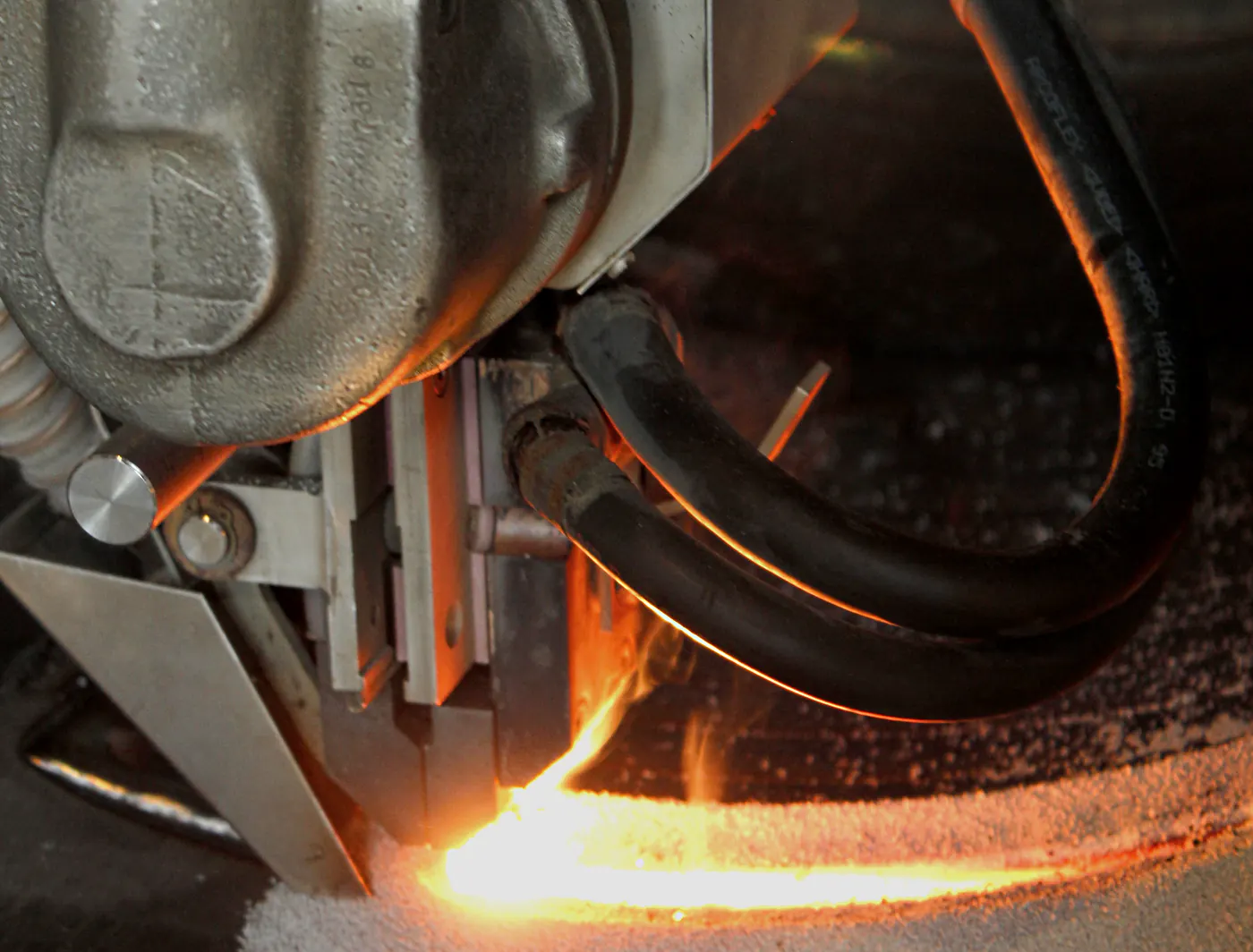
TIG welding, designated process 141 in ISO 4063, uses a non consumable tungsten electrode under inert gas with solid wire or rod as filler. It is slower than MAG welding but produces a very clean, controllable weld and an excellent root. Orbital welding is the mechanised variant, in which a weld head travels automatically around a tube, delivering repeatable welds in stainless, duplex and titanium pipework.
This article covers when TIG is the right choice, how orbital welding works, the role of backing gas, and what to consider for quality assurance and qualification, including ISO 14732 for operators.
When to choose TIG welding (141)
TIG is the first choice when quality, appearance and a sound root matter more than deposition rate. Because heat and filler are controlled independently, the welder has full command of the pool. Typical applications:
- Root runs in pipework and pressure equipment, even when fill passes use another process
- Thin wall stainless steel, aluminium, copper and nickel alloys
- Reactive metals such as titanium and zirconium
- Hygienic systems in food and pharmaceutical plants
- Visible work where appearance counts
The trade off is low deposition and high dependence on welder skill, so on heavy wall work TIG is often combined with MAG or MMA for fill and cap.
Variants within the TIG process
ISO 4063 distinguishes process 141 with solid filler, 142 without filler and 143 with cored filler. Orbital welding of thin wall tube is often autogenous, process 142, fusing the tube walls directly. With heavier walls the weld head adds wire and the process is 141 again.
Electrodes are tungsten alloys to ISO 6848. Ceriated and lanthanated types have largely replaced thoriated electrodes because of the mildly radioactive thorium oxide. DC electrode negative is standard for steel, stainless and titanium; aluminium is welded on AC.
How orbital welding works
An enclosed or open weld head clamps around the tube. The electrode rotates around the joint while the power source adjusts parameters by sector, compensating for the changing effect of gravity between flat, vertical and overhead. Enclosed heads flood the weld zone with shielding gas and suit thin wall tube; open heads with wire feed handle larger diameters and walls.
Benefits are repeatability, consistent penetration, a smooth bore and full parameter records. Quality depends heavily on preparation: square, burr free tube ends, accurate fit up without misalignment and clean, degreased surfaces. Differences in sulphur content between two tubes can also pull the pool to one side.
Backing gas and heat tint
With stainless steel and titanium, the inside of the weld also needs protection from oxygen. The tube is sealed with plugs or bladders and purged until residual oxygen, measured with an oxygen analyser, is low enough. For hygienic and corrosion critical systems a limit in the order of a few tens of ppm is common, and lower still for titanium.
- Austenitic stainless: argon or a nitrogen hydrogen mixture
- Duplex: argon or nitrogen, without hydrogen
- Titanium: pure argon, plus a trailing shield on the outside
Poor shielding leaves heat tint and reduced corrosion resistance. See our article on stainless heat tint and pickling, and for the specific heat input and ferrite requirements of duplex, welding duplex stainless.
Welding titanium: extra care
Above roughly 400 degrees Celsius titanium readily absorbs oxygen, nitrogen and hydrogen and becomes brittle, so shielding must continue well below that temperature. Weld colour is a direct measure: silver and light straw are generally acceptable, while blue, grey or white deposits indicate contamination and mean rejection.
Work in a clean, segregated area, solvent clean the joint just before welding and never handle the joint or filler with bare hands. An enclosed orbital head is a real advantage here, as the weld can cool entirely in argon.
Qualification: WPS, welders and ISO 14732
Manual TIG welders are qualified to ISO 9606-1 for steel, or the relevant part for other metals. Orbital welding is mechanised or automatic welding, where operators and weld setters are qualified to ISO 14732, for example through a procedure test, a pre production test or a production test, with the emphasis on setting up, operating and monitoring the equipment.
Procedures are qualified to EN ISO 15614-1 for steels and to EN ISO 15614-5 for titanium and zirconium. The WPS should fix the weld program, including current levels per sector, rotation speed, pulse parameters, gas types and flow rates. Under PED 2014/68/EU or ASME IX similar principles apply, with their own essential variables.
Quality assurance in practice
Orbital welding is repeatable but not infallible. Good practice is a test weld at the start of every shift and after any change, assessed for penetration, bore profile and discoloration. Record parameters, residual oxygen and inspection results per weld in the weld log; hygienic pipework is often inspected internally with a borescope.
If you are introducing, qualifying or reviewing an orbital welding cell, welding engineering and coordination ensures that programs, documentation and qualifications fit together.
Frequently asked questions
Not automatically. ISO 9606-1 applies to manual and partly mechanised welding by a welder. Anyone setting up and operating an orbital system needs an operator qualification to ISO 14732.
Argon or pure nitrogen. A nitrogen bearing backing gas helps maintain the nitrogen content of the root. Hydrogen mixtures are unsuitable because hydrogen in the ferrite phase can cause cracking.
On thin wall tube up to a few millimetres, autogenous welding is fast and gives a smooth bore without excessive penetration. Heavier walls, or the need to adjust weld metal composition, call for filler wire.
It depends on material and application and should be stated in the WPS or project specification. Hygienic stainless pipework often uses limits of a few tens of ppm, titanium stricter values. Always measure at the outlet of the purged volume.
More from the knowledge centre
Have a welding or QA/QC question?
Ask the DEHAAS Welding & Quality Assistant, have your case reviewed by a specialist, or call us directly.